
Building Refugee-Inclusive Labor Mobility Pathways: A Visa Evaluation Framework

Helping well-qualified refugees access mainstream work visas holds benefits for both displaced people and destination countries. For refugees, moving to another country for work can be a chance to find safety and stability. For destination countries, tapping into this underutilized pool of talent can help fill labor gaps in key sectors.
Visa Evaluation Scorecard
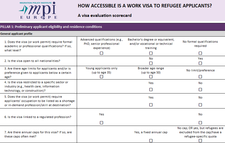
This scorecard aims to help users evaluate how accessible a work visa is to refugees, identifying hard barriers and explaining why these and other features affect a visa’s accessibility for applicants who have experienced displacement.
At least nine countries—including Canada, the United Kingdom, and Australia—have launched pilot projects to admit refugees on work visas, including helping workers connect with sponsoring employers, obtain required documents, and cover application costs. But the very need for such bespoke initiatives, which to date have remained small in scale, speaks to the difficulties qualified refugees can encounter when trying to access mainstream work visas.
This visa evaluation framework, developed by MPI Europe as part of the Skills, Talent, and Empowerment through Pathways (STEP) project, aims to help policymakers, civil society, and other stakeholders gauge how accessible existing work visas are for refugees and other people in need of international protection. The framework and accompanying scorecard can be used to explore how different design elements affect accessibility, and to identify ways to make a migration corridor more transparent, easy to navigate, and predictable—not only for refugees but for all applicants and employers.
Introduction
About This Visa Evaluation Framework
Key Design and Procedural Elements of Work Visas
Pillar 1: Preliminary Applicant Eligibility and Residence Conditions
Pillar 2: Application Requirements and Documentation
Pillar 3: Checks and Visa Processing
Final Thoughts
