From Forced Migration to Forced Returns in Afghanistan: Policy and Program Implications
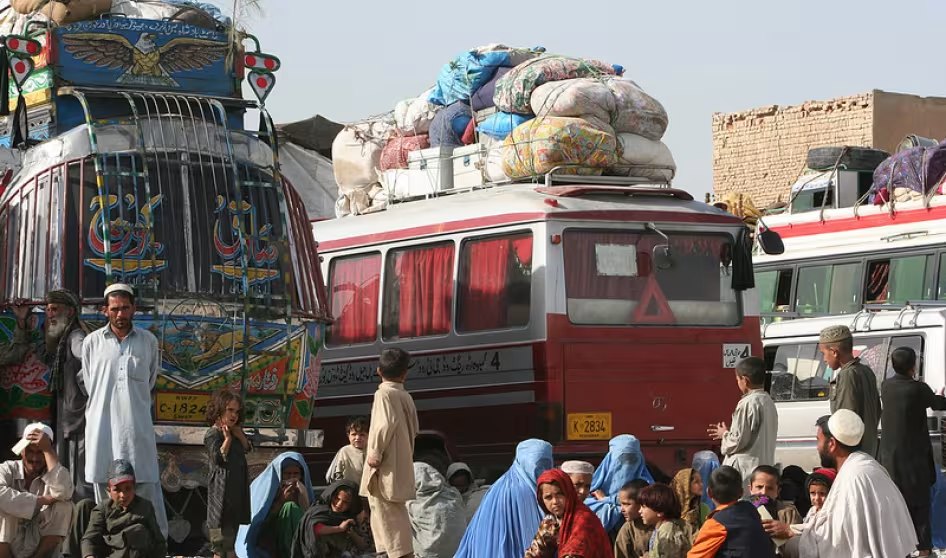
Forced returns to Afghanistan are rising despite ongoing conflict, and high re-emigration rates suggest that narrowly economic reintegration programs are not working.
With as many as 1 million people forcibly returned to Afghanistan in 2016 alone, where insecurity and instability greet them, the nature of return policies and reintegration assistance from European governments and others merits significant attention. These returns have significant implications for the individuals returned, Afghan society, and the migration-management and development objectives of the countries initiating returns, as this report explores.
The report draws on field research on Afghan returnees that the Co-Founder of Samuel Hall has carried out since 2008. Beyond examining current return trends to Afghanistan and the characteristics of those returning, chiefly from Europe, it considers the return and reintegration policies employed and the obstacles that limit their effective implementation. As more and more Afghans and others sought asylum in Europe in 2015 and 2016, European policymakers looked for ways to forestall new arrivals. They have favored two approaches: (1) attempting to address the root causes of migration through development and humanitarian assistance, and (2) facilitating repatriation through return and reintegration programs for those who are judged not to have legitimate protection needs.
Many returnees choose to leave again—a trend that suggests such policies are not achieving their goals. The report finds that reintegration assistance programs face numerous limitations, including the inability to see beyond economic integration to address returnees’ more complex health care, psychological support, housing, and education needs. The programs also are hampered by limited coordination within the Afghan government and with international partners, lack of consultation and information-sharing with returnees, and a post-return focus that ignores the fact that engagement pre-return assures better outcomes.
Table of Contents
I. Introduction
II. Characteristics and Trends in Returns to Afghanistan
A. The Role of Migration in Afghanistan
B. Current Return Trends
III. Managing Returns from Europe
IV. Evaluating Reintegration Needs and Support
A. Understanding the Needs of Returnees
B. Providing Assistance for Reintegration
C. Assessing the Effectiveness of Reintegration Support
V. Conclusions and the Road Ahead
A. Put People at the Center of Return Programs
B. Have an Open and Continuous Dialogue on Returns
C. End Forced Returns to Countries in Conflict and Open Legal Pathways for Migration
About the Transatlantic Council on Migration
Through rigorous research, high-level convenings, and tailored policy advice, the Council provides policymakers with essential analysis and cutting-edge policy recommendations to help tackle the most vexing policy questions.
About the Global Program
The Global Program bridges policy advice, research, and candid dialogue to design effective migration policies, drawing on global evidence and anticipating the forces reshaping how people move.