Integration

All Content
Showing 361–370 of 1207 results
Immigrants from the Dominican Republic in the United States
Nearly 1.2 million Dominican immigrants lived in the United States in 2019, making them the fourth-largest Hispanic immigrant group.

Laying the Foundation for Regional Cooperation: Migration Policy & Institutional Capacity in Mexico and Central America
Since 2015, Mexico and Central America have built fragmented, enforcement-heavy migration systems. This report maps gaps and paths toward improved regional cooperation.
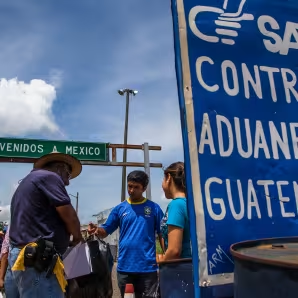
Sentando las bases para una cooperación regional: Política migratoria y capacidad institucional en México y Centroamérica
Desde 2015, México y Centroamérica han ampliado su capacidad migratoria de forma fragmentada y con énfasis en control, dejando brechas en protección y vías legales.
Immigrant and U.S.-Born Parents of Young and Elementary-School-Age Children: Key Sociodemographic Characteristics
Drawing on analysis of Census Bureau data, this fact sheet shows immigrant parents of young children face disproportionate barriers in education, income, English, and digital access.

The Integration of Immigrant Health Professionals: Looking beyond the COVID-19 Crisis
In 2019, about 270,000 immigrant and refugee health professionals in the United States were underemployed. This brief examines barriers and reforms to better tap their skills.

Movement after Migration: Immigrants’ Disproportionate Reliance on Public Transportation
Immigrants are the backbone of public transit ridership in North America and Europe, making COVID-19-era service cuts fall harder on the foreign born and affect their integration.

Immigrants from Asia in the United States
Following the end of exclusionary laws, migration from Asia to the United States has risen since the mid-1960s. As of 2019, migrants from Asia represented nearly one-third of U.S. immigrants.

A Bridge to Firmer Ground: Learning from International Experiences to Support Pathways to Solutions in the Syrian Refugee Context
This report draws on international cases to highlight models that could expand Syrian refugees’ access to protection, social safety nets, and education.

Funding English Learner Education: Making the Most of Policy and Budget Levers
Equitable education for English Learners requires using federal, state, and local budget levers; federal Title III funds alone do not suffice to meet schools’ civil-rights obligations.

¿Qué sigue ahora luego de que Colombia haya dado un paso histórico en materia de migración?
El anuncio del presidente de Colombia que los estimados 1,7 millones de migrantes venezolanos recibirán un estatus de protección temporal migratoria por un periodo de diez años representa un hecho valiente y sin precedentes en América Latina. El reto que sigue será el de poder materializar este esfuerzo en una política pública que abogue por un proceso de cohesión social en el país.
