Immigration Systems

All Content
Showing 341–350 of 1266 results
A Solvable Challenge: Improving Asylee Access to Health and Other Benefits
While asylees are eligible for many of the same public benefits and services as resettled refugees, including health care and employment assistance, there is no system to inform them of their eligibility and to help connect them to resources. MPI estimates that fewer than 20 percent of those granted asylum in recent years received Office of Refugee Resettlement benefits during their first year. The U.S. government could address this gap with a few simple measures.

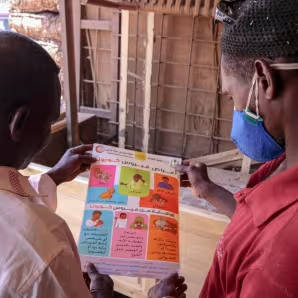
From Unilateral Response to Coordinated Action: How Can Mobility Systems in Sub-Saharan Africa Adapt to the Public-Health Challenges of COVID-19?
COVID-19 exposed weak cross-border governance across sub-Saharan Africa. Regional coordination and data reform can better balance public health and migration management.
Slowing U.S. Population Growth Could Prompt New Pressure for Immigration Reform
The 2020 decennial Census revealed near-record-low U.S. population growth, driven by declining immigration and birth rates. Will this drive immigration policy change?


Rethinking the U.S. Legal Immigration System: A Policy Road Map
Last updated in 1990, the U.S. legal immigration system needs deep reforms so employment and family pathways better match today’s economic and demographic realities.

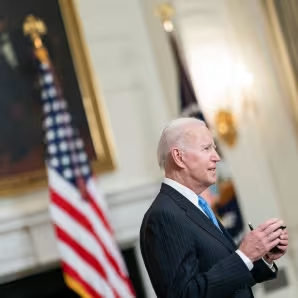
Border Challenges Dominate, But Biden’s First 100 Days Mark Notable Under-the-Radar Immigration Accomplishments
President Joe Biden's first 100 days brought sweeping immigration changes. But a record surge of border arrivals exposed significant gaps between promises and policy capacity.
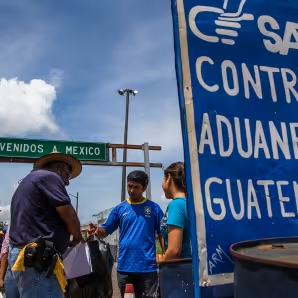
Building Effective Migration Management Capacity in Mexico and Central America
This report release event examines migration management in Mexico and Central America, and the growing government attention to migration functions, enhanced immigration enforcement, increased investments in asylum systems and existing protection frameworks, as well as labor migration policies. The discussion explores strategies that regional and U.S. governments, as well as civil society, can employ to better manage migration, as governments in the region are being confronted with rapidly changing migration trends.

COVID-19 and the State of Global Mobility in 2020
In 2020, COVID-19 sharply curtailed global mobility, slashing international flights and leaving nearly 3 million people stranded by mid-year.

Laying the Foundation for Regional Cooperation: Migration Policy & Institutional Capacity in Mexico and Central America
Since 2015, Mexico and Central America have built fragmented, enforcement-heavy migration systems. This report maps gaps and paths toward improved regional cooperation.
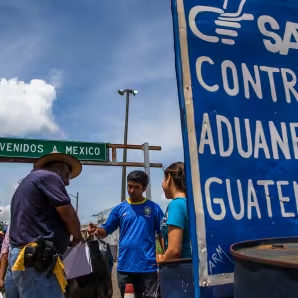
Sentando las bases para una cooperación regional: Política migratoria y capacidad institucional en México y Centroamérica
Desde 2015, México y Centroamérica han ampliado su capacidad migratoria de forma fragmentada y con énfasis en control, dejando brechas en protección y vías legales.