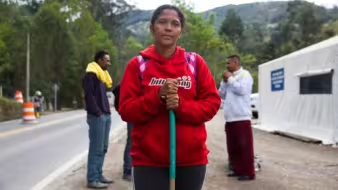
Socioeconomic Integration of Venezuelan Migrants and Refugees: The Cases of Brazil, Chile, Colombia, Ecuador, and Peru
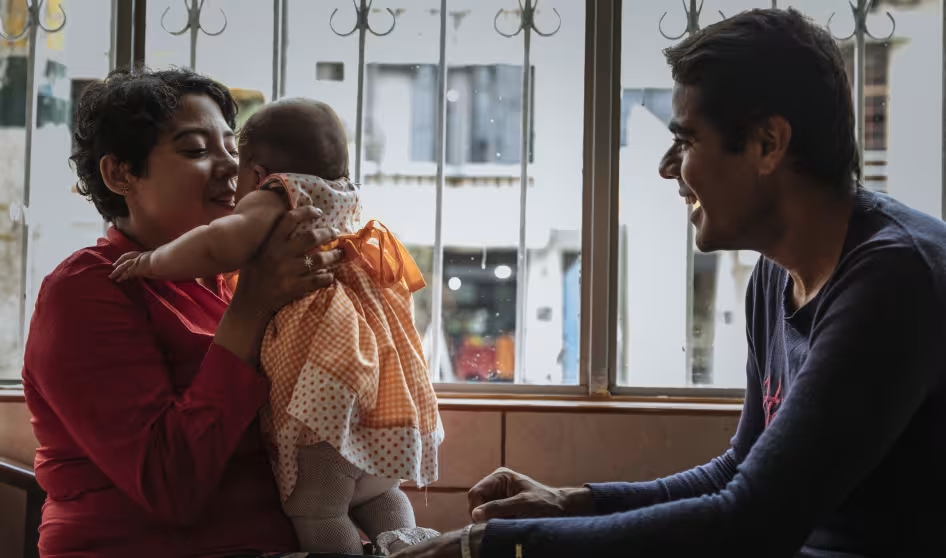
IOM/Muse Mohammed
As of mid-2021, five South American countries hosted more than 70 percent of the 5.6 million Venezuelans living abroad. Informality and credential barriers hindered integration.
At least 4.6 million Venezuelan migrants and refugees are living in other Latin American and Caribbean countries, with many having moved since 2015 as political and economic conditions in Venezuela deteriorated. As it has become clear that many of the displaced will remain abroad for an extended period, if not permanently, focus has begun to shift from the provision of humanitarian aid for new arrivals to include facilitating their integration into receiving-country labor markets, health-care and education systems, and local communities.
To examine the socioeconomic integration of Venezuelan migrants and refugees, this report analyzes data from the International Organization for Migration’s Displacement Tracking Matrix, as well as a variety of other surveys and studies. This report offers a sociodemographic profile of Venezuelans in Brazil, Chile, Colombia, Ecuador, and Peru, which together host more than 70 percent of the total Venezuelan migrant and refugee population worldwide. It also explores several key dimensions of integration for Venezuelans in the five countries—levels of economic inclusion, education, access to health care, and social cohesion.
In considering these dimensions of integration, the report looks at how conditions have changed since 2017, including during the COVID-19 pandemic. Finally, the report identifies gaps in existing data and research, and opportunities to design policies that support Venezuelans’ integration—something that promises to benefit receiving communities as well as individual migrants and refugees.
Para leer este reporte en español, haga clic aquí.
Table of Contents
1 Introduction
2 A Sociodemographic Profile of Venezuelan Migrants and Refugees
3 Economic Inclusion
4 Education
5 Health
6 Social Cohesion
7 Reflections and Recommendations
A. Gaps in the Research
B. Recommendations for Regional Governments
Latin America and Caribbean Initiative
The Initiative combines rigorous research with direct engagement of governments, institutions, and stakeholders to help build orderly, rights-respecting migration systems across one of the world's most dynamic migration regions.
About the Global Program
The Global Program bridges policy advice, research, and candid dialogue to design effective migration policies, drawing on global evidence and anticipating the forces reshaping how people move.




Related Content