The Winding Road to Marrakech: Lessons from the European Negotiations of the Global Compact for Migration

Related Content
Highlights
EU negotiations of the 2018 Global Compact for Migration exposed deep divisions. Compromise diluted ambition and left legal pathways largely nonbinding.
- EU Member States entered negotiations on the Global Compact for Migration divided, with some pushing for stronger language on legal pathways and integration while others prioritized border control and return, preventing a united EU stance.
- Contentious issues included climate-related mobility, return and readmission commitments, and references to diasporas. Many provisions were softened or left vague to secure broad agreement.
- The European Commission’s coordination role was limited, and national governments often negotiated on their own, weakening the overall influence and coherence of the European position.
- The Marrakech experience suggests future processes need stronger EU coordination, earlier engagement with civil society and origin countries, and clearer political mandates to achieve meaningful outcomes.
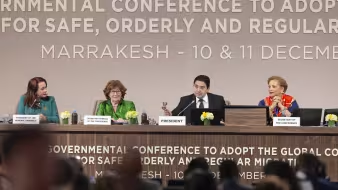
In the summer of 2018, negotiations of the Global Compact for Safe, Orderly, and Regular Migration suddenly became front-page news, drawing far more attention than nonbinding UN agreements before it. The compact’s proponents argued it would help address transnational issues related to migration, while its opponents alleged it posed a threat to state sovereignty and would lead to an increase in migration to Western countries. Although the European Union was initially one of the driving forces behind the pact, as public demonstrations multiplied, these divisions culminated in the fall of the Belgian government and nine EU Member States voting against the compact or abstaining.
This report from MPI's Transatlantic Council on Migration explores how the compact negotiations triggered a multilayered institutional and political crisis in the European Union. It charts how the pact became a proxy for broader debates about how external migration policy is decided within the European Union, especially when doing so touches on multiple policy areas, and about democratic accountability in handling nonbinding international agreements.
This analysis, which draws in part on interviews with policymakers from EU institutions and Member States, offers lessons learned for public communications about migration policy and assesses the implications of these events for the European Union’s external migration policy, including its implementation of the compact and role in multilateral migration matters.
Table of Contents
1 Introduction
2 How the Global Compact for Migration Played Out in Europe
A. The Origins of the Compact
B. The EU Position on the GCM
C. The Loss of EU Unity
D. The Fallout in Europe
3 Why the GCM Became a Mirror for EU Divisions
A. How the Compact Turned into a Proxy for Other Unresolved Questions
B. Difficulties Developing Strategic Communication around the GCM
4 A Winding Road Ahead?
A. Impact on EU External Migration Policy
B. GCM Implementation from a European Perspective
C. Implications for Europe’s Role in Multilateral Discussions on Migration
5 Conclusion
About the Transatlantic Council on Migration
Through rigorous research, high-level convenings, and tailored policy advice, the Council provides policymakers with essential analysis and cutting-edge policy recommendations to help tackle the most vexing policy questions.
About the Global Program
The Global Program bridges policy advice, research, and candid dialogue to design effective migration policies, drawing on global evidence and anticipating the forces reshaping how people move.



Related Content