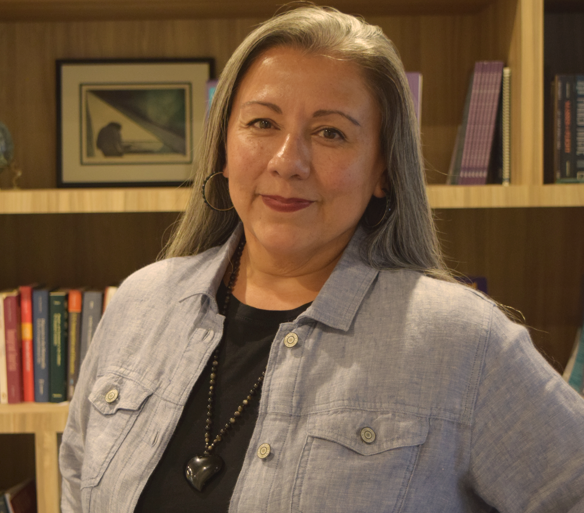
Lorena Mancilla
Lorena Mancilla is Associate Director for K-12 Partnerships and Policy at MPI’s National Center on Immigrant Integration Policy, where she oversees a range of program activities that assist stakeholders at state and local levels in understanding and addressing policy challenges and opportunities affecting English Learners (ELs) and immigrant-background students.
Dr. Mancilla came to MPI with extensive experience serving ELs and immigrant-background students across early childhood and K-12 systems. She worked at WIDA at the Wisconsin Center for Education Research at the University of Wisconsin-Madison. During her tenure at WIDA, she served in a variety of roles, including Director of WIDA Early Years, and led the design and development of professional learning resources for EL educators across the United States. At WIDA, she also served as Principal Investigator and Co-Principal Investigator of research focused on multilingual families and family engagement. More recently, she worked at Hope Chicago, a Chicago-based nonprofit where she served as Parent Program Director and contributed to the development of a two-generation scholarship program for Chicago students and families.
Dr. Mancilla holds a BS in human computer interaction and a MS in education from DePaul University. She earned her PhD in curriculum and instruction at the University of Wisconsin-Madison with a concentration in multicultural education. Her research focuses on the intersection of family engagement and language education.
- Media Inquiries
-
Michelle Mittelstadt
202 266 1910 [email protected]
Explore Content by Lorena Mancilla
Showing 1-6 of 6 total results
Secondary Schools' Bilingual Gap: Promising Practices and a Path Forward
How can states and districts expand bilingual education access and better serve English Learner students in secondary schools?
Paving the Way for Secondary Bilingual Education Programs: An Analysis of Policy and Practice
Secondary schools need tailored policies, strong coordination tools, and teacher pipelines to expand bilingual education opportunities.
Native Language Assessments for K-12 English Learners: A 2025 State-Level Snapshot
As of 2025, a growing number of states offered assessments of academic knowledge for K-12 English Learners in their home languages. Still, gaps persisted.

Making Preschool Classroom Assessments Work for Dual Language Learners
Most preschool assessments shortchange Dual Language Learners, who are one-third of U.S. children ages 0–5, by overlooking home languages and relying on English proficiency.

Refining State Accountability Systems for English Learner Success
State accountability systems misread English Learner academic progress by omitting language proficiency. This study proposes fixes and program quality indicators.

ESSER: Moving the Needle on Equitable and Adequate Education Funding for English Learners
The $189.5 billion in ESSER federal pandemic education relief approved by Congress gave school districts a rare opportunity to address chronic underfunding for the nation's 5 million English Learners.
