Native Language Assessments for K-12 English Learners: A 2025 State-Level Snapshot

Highlights
As of 2025, a growing number of states offered assessments of academic knowledge for K-12 English Learners in their home languages. Still, gaps persisted.
- 35 states and the District of Columbia offered native language assessments for English Learner (EL) students, up from 31 in 2020; Alabama, Iowa, Oklahoma, and Utah were the new entrants.
- Still, 15 states lacked any native language assessments, and the “significant languages” identified by many states did not match the languages in which assessments were available.
- All 35 states offered Spanish-language assessments, except for Hawaii, which offered only Hawaiian. Math was the most widely offered subject.
- Clearer state definitions of significant languages, better alignment between identified languages and available assessments, and stronger guidance are needed to improve EL data accuracy.
Executive Summary
Native language assessments provide an important means to measure what K–12 English Learners (ELs) know in core academic subjects independent of their English proficiency level.
As of 2025, 35 states and the District of Columbia offered at least one native language assessment, an increase of four states since 2020. Yet gaps remain: EL students in 15 states still lack access to native language assessments, and in many states the languages identified as significant do not align with the languages in which assessments are available.
This data snapshot documents how states define significant languages, what languages states define as significant, and the most recent types of native language assessments states offer.
1. Introduction
Public school districts nationwide have been required by the federal government for the past quarter century to periodically assess their students, including English Learners (ELs), in core academic subjects. For the nation’s 5.3 million EL students, though, these assessments in reading/language arts, mathematics, and science present a persistent challenge. Testing students in a language they are actively learning makes it difficult to determine whether gaps uncovered by assessments reflect deficits in content knowledge or English proficiency.
To address this, 35 states and the District of Columbia offer an assessment accommodation designed to test content knowledge in students’ home language. These native language assessments, as they are known, can take various forms, including written translations of English tests, oral translations administered by a person or by audio recording, or assessments designed from the outset in a language other than English. These assessments are provided with the intention of producing more accurate data on what ELs know in academic content areas and are often offered to ELs at the beginning stages of English language development.
"35 states and the District of Columbia offer an assessment accommodation designed to test content knowledge in students’ home language."
Several states have expanded their use of native language assessments since 2020, when the Migration Policy Institute (MPI) last examined the issue.1 This fact sheet updates the landscape, drawing from the most recently approved state plans under the federal Every Student Succeeds Act (ESSA) and publicly available assessment and accommodation documents for all 50 states and the District of Columbia.
Box 1. The History of Assessments
With the enactment of the No Child Left Behind Act of 2001 (NCLB), the federal government began requiring that all public school students in all 50 states and the District of Columbia be regularly assessed in core academic subjects.
Students are to be assessed annually in reading/language arts and mathematics in grades 3 through 8 and once in high school, as well as three times in science across grades 3 through 12.
While the Every Student Succeeds Act of 2015 (ESSA) introduced more flexibility for states with regard to assessment and accountability, it retained the assessment requirements laid out in the NCLB. The results of these assessments serve to monitor whether schools are closing achievement gaps and ensure that traditionally underserved students, such as English Learners (ELs), have equitable access to quality education.
2. Differing State Definitions of Significant Language
Under ESSA, states must submit consolidated state plans that outline how they will implement federal education programs and meet accountability requirements. The plans require them to provide a definition for languages other than English that are “present to a significant extent in the participating student population of the state.”2
Identifying which languages meet this definition can help inform states of current testing accommodations needs, which may include the use of native language assessments. Although states must define these significant languages, they have flexibility in their approach, resulting in variation across states.
Box 2. Federal Requirements for Assessments in Languages Other than English
Under ESSA Title 1, Part A, Section 3, states are required to include in their consolidated state plans:
- Definitions of significant language: Define and identify languages present to a significant extent.
- Existing assessments: Identify any assessments that already exist in languages other than English.
- Assessment gaps: Indicate which significant languages do not have annual academic assessments.
- Development plans: Explain how the state will develop the needed annual academic assessments.
Source: Code of Federal Regulations Title 34. Education § 34.200.6(f)(2)(ii), “Inclusion of All Students.”
Of the 50 states that clearly define significant language, 43 use percentage thresholds to define significant language. For instance, Florida defines a significant language as one “spoken by more than 5 percent of the student population.” Three states do not include percentage thresholds. Indiana’s definition, for instance, mandates assessment of “the second most spoken language in the state.” Four other states use a combination of percentage and non-percentage criteria, such as Maryland, which defines significant language as “a language group comprising 5 percent of the total tested population or 1,000, whichever is less.”
Among the states using percentage thresholds, there are considerable differences in the thresholds set. Some states, such as Pennsylvania, have percentage thresholds as low as 0.5 percent, while others, such as Illinois, for example, set their threshold at 60 percent. The higher the threshold, the harder it is for a language population to meet it, meaning states with higher thresholds are likely to identify fewer languages as significant. Most states use thresholds on the lower end of this scale, with 29 states setting significance thresholds at 5 percent or below.
Although states may share the same percentage threshold, this does not mean their definitions of significant languages are the same. This is because states apply their thresholds to different populations. Thirteen states apply the thresholds to their total student population, 17 states and the District of Columbia apply them to their total tested student population, 16 to their total EL population, two to their total state population, and two others to multiple populations.
While ESSA requires states to define what “significant” means, it does not require them to identify any languages as meeting that definition. Nor does it require them to develop native language assessments for the significant languages identified. Currently, 45 states and the District of Columbia identify at least one significant language in their state plans, while Arizona, Arkansas, Maine, Missouri, and Montana do not. Thirty-eight states that identify significant languages only identify one language as such; two states identify two languages as significant, and five states identify three or more languages as significant. The most common significant language identified is Spanish, with 42 states identifying it as such.
More information on states’ definitions of significant language and the languages they have identified to be significant can be found in the Appendices.
3. Current State of Native Language Assessments
The native language assessments that states offer do not consistently match the languages they identify as significant. Among the 45 states and the District of Columbia that identify at least one significant language, 28 states and the District of Columbia offered native language assessments in the language(s) they identified as significant as of 2025. Three other states offered assessments in at least one, but not all, of their significant languages. By contrast, 14 states did not offer native language assessments in their significant languages; 11 of these provided no native language assessments at all, while three offered assessments, but not in the languages they identified as significant. Additionally, four states neither identified a significant language nor offered native language assessments in any language. One state, Montana, offered a native language assessment in Spanish despite not identifying Spanish or any other language as significant.
As of 2025, 35 states and the District of Columbia offered native language assessments, an increase of four states from 2020, with Alabama, Iowa, Oklahoma, and Utah joining in the practice. Collectively, the 35 states and the District of Columbia offered assessments in Arabic, Bengali, Chinese (simplified, traditional), French, Haitian Creole, Hawaiian, Korean, Russian, Somali, Spanish, Swahili, and Vietnamese. All also offered at least one native language assessment in Spanish, except for Hawaii, which offers assessments only in the Hawaiian language.
Figure 1. States Offering Native Language Assessments, by Subject, 2025
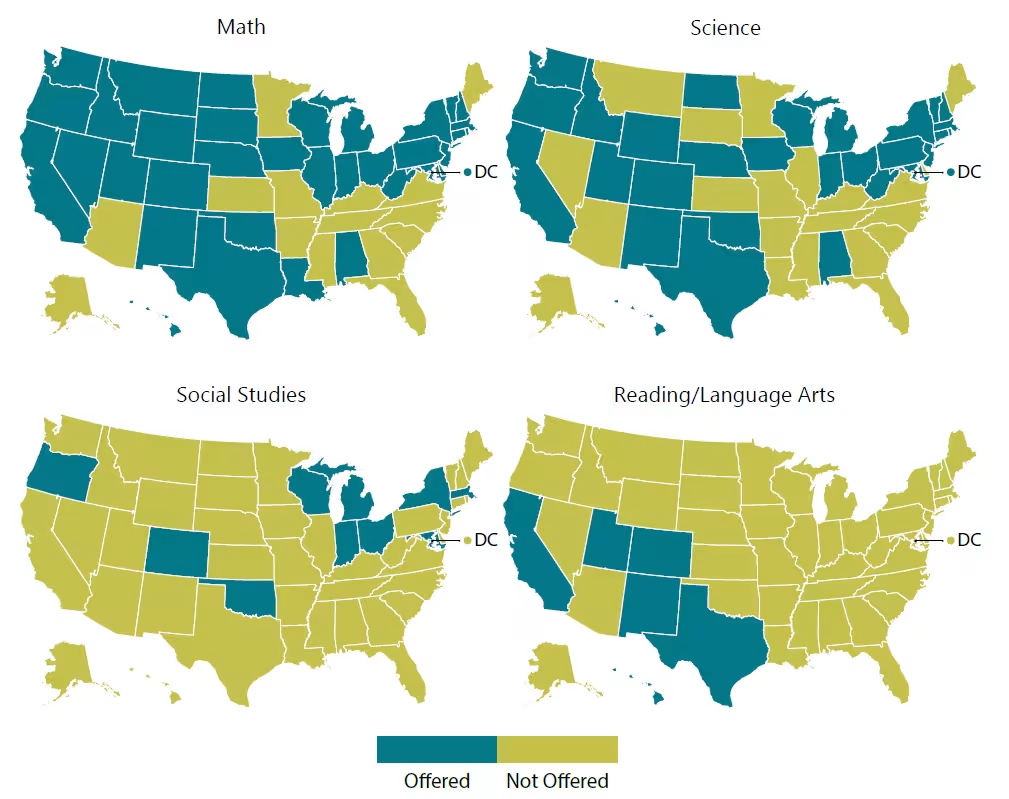
States offer native language assessments across all four core academic subjects, with math being offered by every state. Six states offered native language assessments solely in math, 14 states and the District of Columbia in math and science, and 14 in math, science, and social studies or reading/language arts. Colorado is the only state to offer native language assessments in all four subjects. It is important to note that most states do not offer native language assessments in reading and language arts, as the assessments are specifically designed to measure English reading and language skills. Only five states do—California, Colorado, Hawaii, New Mexico, and Texas.
Nine of the 35 states and the District of Columbia offering native language assessments use tests developed by a test consortium, down from 17 states in 2020. Test consortia are groups of states that collaborate to create and share standardized tests, such as the Smarter Balanced Assessment Consortium (SBAC) and the Partnership for the Assessment of Readiness for College and Careers (PARCC). This decline is in part due to the dissolution of PARCC and Montana and Vermont leaving SBAC.
When considered across states, subject matter, and language, there were 82 individual native language assessments as of 2025. Of these, 43 were offered in a monolingual format, where assessments are only provided in a language other than English. In contrast, 36 were offered in a bilingual format. Nebraska’s two native language assessments are offered in both formats, depending on whether the test is administered online or on paper. Both assessment formats may be accompanied by additional testing accommodations, including text-to-speech, bilingual word-to-word dictionaries, human readers, response transcription, and other supports.
For more information on the types of native language assessments offered by states, including the subject, language, and grade levels in which they are offered, as well as other accommodations, see Appendix Table A-2.
4. Thoughts for the Future
There have been notable shifts in the native language assessment landscape in recent years, with more state educational agencies offering this form of assessment accommodation. Between 2020 and 2025, four additional states began to offer native language assessments.
Despite this increase, gaps remain. English Learner (EL) students in 15 states still lack access to native language assessments, and there continues to be a mismatch between identified significant languages and the availability of assessments in those languages. When states incorporate inclusive definitions of significant languages that reflect their current and future student populations and clearly define eligibility criteria for such native language assessments, the assessments can serve their purpose of capturing more accurate EL data.
Significant questions around the implementation of native language assessments persist, including the need to examine how these assessments fit into state accountability systems. With further research and clearer guidance for states and school districts, these forms of assessments have the potential to capture a more accurate picture of what English Learners know and can do, ensuring that ELs, as all students, can succeed and reach their full potential.
"With further research and clearer guidance for states and school districts, these forms of assessments have the potential to capture a more accurate picture of what English Learners know and can do."
Appendix
Table A–1. Definitions and Identification of Significant Languages, and Native Language Assessments Offered, by State, 2025
|
State |
Significant Language Definition |
Applicable Population(s) |
Percentage Threshold(s) |
Language(s) Identified |
Native Language Assessments Offered |
|---|---|---|---|---|---|
| Alabama | Languages that account for 2 percent or more of the student population | Total student population | 2 percent or more | Spanish | Spanish |
| Alaska | Language represented by the greatest percentage of English Learners (ELs) | EL population | Greatest percent | Yup'ik | None |
| Arizona | When that language exceeds 10 percent of the total tested population | Total tested population | 10 percent or more | None | None |
| Arkansas | When the number of students speaking that language exceeds 15 percent of total student population, or the most populous language within the state | Total student population | 15 percent or more | None | None |
| California | Any native language other than English spoken by 15 percent or more of the student population in K-12 | Total student population | 15 percent or more | Spanish | Spanish |
| Colorado | 5 percent or 1,000 persons, whichever is less, of the state grade-level Multilingual Learner (ML) population eligible to be served or likely to be affected | ML population | 5 percent or 1,000 persons | Spanish | Spanish |
| Connecticut | Any language among more than 1 percent of its students | Total student population | 1 percent or more | Spanish | Spanish |
| Delaware | Any language present statewide in at least 5 percent of the EL population in tested grades | Tested EL population | 5 percent or more | Spanish (grades 3-8, 11) Haitian Creole (grades 3-8, 11) Arabic (grade 11) |
Spanish |
| District of Columbia | 5 percent of the total tested student population | Total tested population | 5 percent or more | Spanish | Spanish |
| Florida | Languages spoken by more than 5 percent of the student population | Total student population | 5 percent or more | Spanish | None |
| Georgia | Any language spoken by 3 percent or more of the participating student population | Not clearly specified | 3 percent or more | Spanish | None |
| Hawaii | A primary language used by a student group that exceeds 5 percent of the state student population. Should no language used as a primary language by a student group exceed 5 percent of the student population, the most populous language other than English would be identified as a language other than English that is present to a significant extent in the participating student population | Total student population | 5 percent or more, or non-percentage | Ilokano | Hawaiian |
| Idaho | A language spoken by 5 percent or more of all students, or 20 percent or more of ELs | Total student population, or EL population | Multiple percentages | Spanish | Spanish |
| Illinois | Any language spoken by more than 60 percent of ELs in the state | EL population | 60 percent or more | Spanish | Spanish |
| Indiana | Second most spoken language in the state | Total state population | Non-percentage | Spanish | Spanish |
| Iowa | Any language that represents 4 percent or more of the native languages spoken by identified ELs | EL population | 4 percent or more | Spanish | Spanish |
| Kansas | Any language where more than 5 percent of the participating student population statewide speaks the identified language, receives instruction in the native languages and services in the EL program | EL population | 5 percent or more | Spanish | None |
| Kentucky | A language other than English that is present in greater than 5 percent of the total school population, or the most populous language | Total student population | 5 percent or more, or non-percentage | Spanish | None |
| Louisiana | Languages spoken by greater than 1 percent of all students statewide | Total student population | 1 percent or more | Spanish | Spanish |
| Maine | Threshold of 3 percent of the assessed student population | Total tested population | 3 percent or more | None | None |
| Maryland | Language group comprising 5 percent of the total tested population or 1,000 whichever is less | Total tested population | 5 percent or 1,000 persons | Spanish | Spanish |
| Massachusetts | First language of 10 percent or more of students eligible to take assessments in the state | Total tested population | 10 percent or more | Spanish | Spanish |
| Michigan | Any language other than English that accounts for 10 percent or more of the EL student population | EL population | 10 percent or more | Spanish, Arabic | Spanish, Arabic |
| Minnesota | Three most populous languages other than English | Total state population | Non-percentage | Spanish, Somali, Hmong | None |
| Mississippi | Most populous language other than English as well as any language for which 5 percent or more of students in tested grades speak the language | Total tested population | 5 percent or more | Spanish | None |
| Missouri | 5 percent of the statewide tested population and the most prevalent language | Total tested population | 5 percent or more, and non-percentage | None | None |
| Montana | 10 percent or more of students statewide identifying a particular home language other than English | Total student population | 10 percent or more | None | Spanish |
| Nebraska | Any language that represents 15 percent or more of the native languages spoken by identified ELs statewide | EL population | 15 percent or more | Spanish | Spanish |
| Nevada | Not clearly specified | Not clearly specified | Not clearly specified | Spanish | Spanish |
| New Hampshire | Exceeds 5 percent of the total tested population or the most prevalent language if none are greater than 5 percent | Total tested population | 5 percent or more, or non-percentage | Spanish | Spanish |
| New Jersey | 1.The most common language other than English spoken by the tested ML population and 2. Any native language other than English that is present in the ML population for three or more years, spoken by more than 5 percent of the total tested student population overall or in a given grade span. | Tested ML population | 5 percent or more, and non-percentage | Spanish | Spanish |
| New Mexico | When a language exceeds 10 percent of the total tested population | Total tested population | 10 percent or more | Spanish | Spanish |
| New York | As those spoken by 5 percent or more of New York State’s ELs/MLs | EL population | 5 percent or more | Spanish, Chinese | Chinese [Traditional], Haitian-Creole, Korean, Russian, Spanish |
| North Carolina | Any language other than English that accounts for 2 percent or more of the overall tested student population | Total tested population | 2 percent or more | Spanish | None |
| North Dakota | Any language spoken by an EL population that is at or above 30 percent of the state EL population or if there is no population 30 percent or greater, “significant language” is the language with the largest EL student population | EL population | 30 percent or more | Spanish | Spanish |
| Ohio | Those that include at least 20 percent of the state’s EL student population | EL population | 20 percent or more | Spanish | Spanish |
| Oklahoma | Students speaking a given language must both qualify as ELs and make up 5 percent or more of the total student population | Total student population, and EL population | 5 percent or more | Spanish | Spanish |
| Oregon | The language of origin for at least 9 percent of state student population in K-12. Translation occurs within three years after the language first exceeds the 9 percent threshold | Total student population | 9 percent or more | Spanish | Spanish |
| Pennsylvania | Languages spoken as a first or home language by 0.5 percent of the statewide public school enrollment | Total student population | 0.5 percent or more | Spanish | Spanish |
| Rhode Island | 5 percent or more of the total tested population | Total tested population | 5 percent or more | Spanish | Spanish |
| South Carolina | Languages that are equal to or greater than 1.5 percent of the overall percentage of ELs statewide | EL population | 1.5 percent or more | Spanish, Russian, Vietnamese, Chinese, Arabic | None |
| South Dakota | The native Lakota, Dakota, and Nakota languages, and secondly, any language at least 5 percent of the tested student population | Total tested population | 5 percent or more, and non-percentage | Lakota, Dakota, Nakota | Spanish |
| Tennessee | As the five languages other than English that are most commonly spoken by ELs at home and present in (1) at least 4 percent of the overall student population or (2) 20 percent of the student population within a single local education agency (LEA) or (3) 20 percent within a single grade level at the state | EL population | Multiple percentages | Spanish | None |
| Texas | Greater than 10 percent of the total student population | Total student population | 10 percent or more | Spanish | Spanish |
| Utah | Any native language other than English spoken by 5 percent or more of the participating student population statewide | Total tested population | 5 percent or more | Spanish | Spanish |
| Vermont | The language represents 10 percent or more of the testing population or the most prevalent language if none are greater than 10 percent | Total tested population | 10 percent or more | Nepali | Spanish, Arabic, Chinese (simplified), French, Swahili |
| Virginia | Languages other than English that are spoken by 5 percent or more of the EL population | EL population | 5 percent or more | Spanish, Arabic | None |
| Washington | As any student/language combination that exceeds 1,000 in total across the state | Total student population | Non-percentage | Spanish, Russian, Vietnamese, Somali, Arabic, Ukrainian, Tagalog, Marshallese, Korean, Punjabi, Chinese – Unspecified, Chinese – Mandarin | Spanish, Russian, Korean, Vietnamese, Chinese, Somali, Arabic |
| West Virginia | If it represents at least 50 percent of the total state EL student population or it is the language with the highest representation of the total EL population | EL population | 50 percent or more | Spanish | Spanish |
| Wisconsin | A language that has a written form and is the first language of students who represent at least 20 percent of the pupils enrolled in grades K-12 who are current or former ELs | EL population | 20 percent or more | Spanish | Spanish |
| Wyoming | Native languages that represent 1 percent or more of the total student population taking the assessment | Total tested population | 1 percent or more | Spanish | Spanish |
Table A–2. Native Language Assessments Offered, by State, Grade, Type, and Other Accommodations, 2025
|
Subject |
Language(s) |
Grade(s) |
Assessment Type |
Source |
Other Accommodations |
|---|---|---|---|---|---|
| Alabama | |||||
|
Math |
Spanish | 2-8 | Bilingual translation | State-developed | Stacked translation (Spanish), word-to-word dictionary (multiple languages), human read aloud (Spanish), text-to-speech (Spanish) |
|
Science |
Spanish | 2-8 | Bilingual translation | State-developed | Stacked translation (Spanish), word-to-word dictionary (multiple languages), human read aloud (Spanish), text-to-speech (Spanish) |
| Alaska | |||||
|
None listed |
None listed | None listed | None listed | None listed | None listed |
| Arizona | |||||
|
None listed |
None listed | None listed | None listed | None listed | None listed |
| Arkansas | |||||
|
None listed |
None listed | None listed | None listed | None listed | None listed |
| California | |||||
|
Math |
Spanish | 3-8, 11 | Bilingual translation | Smarter Balanced Assessment Consortium (SBAC) | Stacked translation (Spanish), text-to-speech (Spanish), word-to-word glossary (multiple languages) |
|
Science |
Spanish | 5, 8, High School | Bilingual translation | State-developed | Stacked translation (Spanish), text-to-speech (Spanish), word-to-word glossary (multiple languages) |
|
Spanish Language Arts* |
Spanish | 3-8, High School | Monolingual translation | State-developed | Parallel development (Spanish), text-to-speech (Spanish), word-to-word glossary (Spanish) |
| Colorado | |||||
|
Math |
Spanish | 3-8 | Monolingual translation | State-developed | Transadaptation (Spanish), word-to-word dictionary (multiple languages), text-to-speech (Spanish), speech-to-text (Spanish), response transcription (Spanish) |
|
Science |
Spanish | 5, 8, 11 | Monolingual translation | State-developed | Transadaptation (Spanish), word-to-word dictionary (multiple languages), text-to-speech (Spanish), speech-to-text (Spanish), response transcription (Spanish) |
|
Social Studies |
Spanish | 4, 7 | Monolingual translation | State-developed | Transadaptation (Spanish), word-to-word dictionary (multiple languages), text-to-speech (Spanish), speech-to-text (Spanish), response transcription (Spanish) |
|
Spanish Language Arts** |
Spanish | 3-4 | Monolingual translation (paper) | State-developed | Parallel development (Spanish), word-to-word dictionary (multiple languages), speech-to-text (Spanish), response transcription (Spanish) |
| Connecticut | |||||
|
Math |
Spanish | 3-8 | Bilingual translation | SBAC | Text-to-speech (Spanish), human read aloud (Spanish) |
|
Science |
Spanish | 5, 8, 11 | Bilingual translation | State-developed | Word-to-word glossary (Multiple languages), text-to-speech (Spanish), human read aloud (Spanish) |
| Delaware | |||||
|
Math |
Spanish | 3-8 | Bilingual translation | SBAC | Text-to-speech (Spanish), speech-to-text (Spanish) |
| District of Columbia | |||||
|
Math |
Spanish | 3-8, High School | Monolingual translation | State-developed | Transadaptation (Spanish), text-to-speech (Spanish), word-to-word dictionary (multiple languages) |
|
Science (Biology) |
Spanish | 5, 8, High School | Monolingual translation | State-developed | Transadaptation (Spanish), text-to-speech (Spanish), word-to-word dictionary (multiple languages) |
| Florida | |||||
|
None listed |
None listed | None listed | None listed | None listed | None listed |
| Georgia | |||||
|
None listed |
None listed | None listed | None listed | None listed | None listed |
| Hawaii | |||||
|
Math |
Hawaiian | 3-8 | Monolingual translation | State-developed | Human reader (Hawaiian), text-to-speech (Hawaiian) |
|
Science |
Hawaiian | 5, 8 | Monolingual translation | State-developed | Human reader (Hawaiian), text-to-speech (Hawaiian) |
|
Hawaiian Language Arts |
Hawaiian | 3-8 | Monolingual translation | State-developed | Human reader (Hawaiian) |
| Idaho | |||||
|
Math |
Spanish | 3-8, High School | Bilingual translation | SBAC | Text-to-speech (Spanish), human reader (Spanish), stacked translation (Spanish), translation glossary (Spanish, math only) |
|
Science |
Spanish | 5, 8, 11 | Bilingual translation | State-developed | Text-to-speech (Spanish), human reader (Spanish), stacked translation (Spanish) |
| Illinois | |||||
|
Math |
Spanish | 3-8 | Monolingual translation | State-developed | Transadaptation (Spanish), Text-to-speech (Spanish), human reader (Spanish) |
| Indiana | |||||
|
Math |
Spanish | 3-8 | Bilingual translation | State-developed | Toggle (Spanish), word-to-word dictionaries (multiple languages) |
|
Science (Biology) |
Spanish | 4, 6, High School | Bilingual translation | State-developed | Toggle (Spanish), word-to-word dictionaries (multiple languages) |
|
Social Studies (U.S. Government) |
Spanish | 5, High School | Bilingual translation | State-developed | Toggle (Spanish), word-to-word dictionaries (multiple languages) |
| Iowa | |||||
|
Math |
Spanish | 3-11 | Monolingual translation | State-developed | Translation (Spanish), text-to-speech (Spanish), human reader (Spanish) |
|
Science |
Spanish | 5, 8, 10 | Monolingual translation | State-developed | Translation (Spanish), text-to-speech (Spanish), human reader (Spanish) |
| Kansas | |||||
|
None listed |
None listed | None listed | None listed | None listed | None listed |
| Kentucky | |||||
|
None listed |
None listed | None listed | None listed | None listed | None listed |
| Louisiana | |||||
|
Math |
Spanish | 3-8, High School | Monolingual translation | State-developed | Text-to-speech (Spanish), translation (Spanish) |
| Maine | |||||
|
None listed |
None listed | None listed | None listed | None listed | None listed |
| Maryland | |||||
|
Math (Algebra 1, Algebra 2, Geometry) |
Spanish | 3-8, High School | Monolingual translation | State-developed | Text-to-speech (Spanish), human reader (Spanish), translation (Spanish), word-to-word dictionary (multiple languages) |
|
Science |
Spanish | 5-8, High School | Monolingual translation | State-developed | Text-to-speech (Spanish), human reader (Spanish), translation (Spanish), word-to-word dictionary (multiple languages) |
|
Social Studies (U.S. Government) |
Spanish | 8, High School | Monolingual translation | State-developed | Text-to-speech (Spanish), human reader (Spanish), translation (Spanish), word-to-word dictionary (multiple languages) |
| Massachusetts | |||||
|
Math |
Spanish | 3-8, High School | Bilingual translation | State-developed | Stacked translation (Spanish), bilingual word-to-word dictionary, |
|
Science and Technology/ Engineering |
Spanish | 3-8, High School | Bilingual translation | State-developed | Stacked translation (Spanish) |
|
Civics |
Spanish | 8 | Bilingual translation | State-developed | Stacked translation (Spanish) |
| Michigan | |||||
|
Math |
Spanish | 3-8 | Bilingual translation | SBAC | Stacked translation (Spanish), human interpreter (Spanish), bilingual word-to-word dictionaries (multiple languages), translated glossary (Arabic or Spanish) |
|
Science |
Arabic, Spanish | 4, 7, 11 | Bilingual translation | State-developed | Video translation (Arabic or Spanish), bilingual word-to-word dictionaries (multiple languages) |
|
Social Studies |
Arabic, Spanish | 5, 8, 11 | Bilingual translation | State-developed | Stacked translation (Spanish), video translation (Arabic or Spanish), bilingual word-to-word dictionaries (multiple languages) |
| Minnesota | |||||
|
None listed |
None listed | None listed | None listed | None listed | None listed |
| Mississippi | |||||
|
None listed |
None listed | None listed | None listed | None listed | None listed |
| Missouri | |||||
|
None listed |
None listed | None listed | None listed | None listed | None listed |
| Montana | |||||
|
Math |
Spanish | 3-8 | Monolingual translation | State-developed | Text-to-speech (Spanish), translation (Spanish) |
| Nebraska | |||||
|
Math |
Spanish | 3-8 | Monolingual translation (online), Bilingual translation (paper) | State-developed | Word-to-word dictionaries (multiple languages), bilingual word list (Spanish), human reader (Spanish), text-to-speech (Spanish) |
|
Science |
Spanish | 3-8 | Monolingual translation (online), Bilingual translation (paper) | State-developed | Word-to-word dictionaries (multiple languages), bilingual word list (Spanish), human reader (Spanish), text-to-speech (Spanish) |
| Nevada | |||||
|
Math |
Spanish | 3-8 | Monolingual translation | SBAC | Text-to-speech (Spanish), human reader (Spanish), speech-to-text (Spanish), translated glossary (Spanish) |
| New Hampshire | |||||
|
Math |
Spanish | 3-8 | Monolingual translation | State-developed | Text-to-speech (Spanish) |
|
Science |
Spanish | 3-8 | Monolingual translation | State-developed | Text-to-speech (Spanish) |
| New Jersey | |||||
|
Math |
Spanish | 3-12 | Monolingual translation | State-developed | Transadaptation (Spanish), Human reader (Spanish), text-to-speech (Spanish), word-to-word dictionary (multiple languages) |
|
Science |
Spanish | 5, 8, 11 | Monolingual translation | State-developed | Transadaptation (Spanish), Human reader (Spanish), text-to-speech (Spanish), word-to-word dictionary (multiple languages) |
| New Mexico | |||||
|
Math |
Spanish | 3-8 | Monolingual translation | State-developed | Text-to-speech (Spanish, interim assessment), human reader (Spanish, paper test) |
|
Science |
Spanish | 5, 8, 11 | Monolingual translation | State-developed | Pop up glossary (Spanish) text-to-speech (Spanish), human reader (Spanish, paper test) |
|
English Language Arts |
Spanish | 3-8, 11 | Monolingual translation | State-developed | Text-to-speech (Spanish, session two), human reader (Spanish, paper test) |
| New York | |||||
|
Math |
Arabic, Bengali, Chinese (Simplified), Chinese (Traditional), Haitian Creole, Korean, Russian, Spanish | 3-8, High School | Monolingual translation | State-developed | Word-to-word dictionaries (multiple languages), bilingual glossaries (multiple languages), human reader (multiple languages) |
|
Science |
Arabic, Bengali, Chinese (Simplified), Chinese (Traditional), Haitian Creole, Korean, Russian, and Spanish | 5, 8, High School | Monolingual translation | State-developed | Word-to-word dictionaries (multiple languages), bilingual glossaries (multiple languages), human reader (multiple languages) |
|
Social Studies |
Arabic, Bengali, Chinese (Simplified), Chinese (Traditional), Haitian Creole, Korean, Russian, Spanish | High School | Monolingual translation | State-developed | Word-to-word dictionaries (multiple languages), bilingual glossaries (multiple languages), human reader (multiple languages) |
| North Carolina | |||||
|
None listed |
None listed | None listed | None listed | None listed | None listed |
| North Dakota | |||||
|
Math |
Spanish | 3-8, 10 | Monolingual translation | State-developed | Bilingual dictionary (Spanish), human translator (Spanish), text-to-speech (Spanish) |
|
Science |
Spanish | 4, 8, 10 | Monolingual translation | State-developed | Bilingual dictionary (Spanish), human translator (Spanish), text-to-speech (Spanish) |
| Ohio | |||||
|
Math |
Spanish | 3-12 | Bilingual translation | State-developed | Toggle (Spanish), text-to-speech (Spanish), word-to-word dictionaries (multiple languages), human reader (multiple languages) |
|
Science |
Spanish | 3-12 | Bilingual translation | State-developed | Toggle (Spanish), text-to-speech (Spanish), word-to-word dictionaries (multiple languages), human reader (multiple languages) |
|
Social Studies |
Spanish | 3-12 | Bilingual translation | State-developed | Toggle (Spanish), text-to-speech (Spanish), word-to-word dictionaries (multiple languages), human reader (multiple languages) |
| Oklahoma | |||||
|
Math |
Spanish | 3-8 | Monolingual translation | State-developed | Text-to-speech (Spanish), human reader (Spanish) |
|
Science |
Spanish | 3-8, 11 | Monolingual translation | State-developed | Text-to-speech (Spanish), human reader (Spanish) |
|
U.S. History |
Spanish | 11 | Monolingual translation | State-developed | Text-to-speech (Spanish), human reader (Spanish) |
| Oregon | |||||
|
Math |
Spanish | 3-8, 11 | Bilingual translation | SBAC | Toggle (Spanish), translation glossary (multiple languages), human reader (Spanish), text-to-speech (Spanish) |
|
Science |
Spanish | 5, 8, 11 | Bilingual translation | State-developed | Human reader (Spanish), text-to-speech (Spanish) |
|
Social Science |
Spanish | 3-8, 11 | None listed | State-developed | None listed |
| Pennsylvania | |||||
|
Math |
Spanish | 3-8, 11 | Bilingual translation | State-developed | Word-to-word dictionary (multiple languages), human reader (multiple languages) |
|
Science |
Spanish | 4-8, 11 | Bilingual translation | State-developed | Word-to-word dictionary (multiple languages), human reader (multiple languages) |
| Rhode Island | |||||
|
Math |
Spanish | 3-8 | Monolingual translation | State-developed | Human reader (Spanish), transcribed responses (Spanish) |
|
Science |
Spanish | 5, 8, 11 | Bilingual translation | State-developed | Text-to-speech (Spanish), human reader (Spanish) |
| South Carolina | |||||
|
None listed |
None listed | None listed | None listed | None listed | None listed |
| South Dakota | |||||
|
Math |
Spanish | 3-8, 11 | Bilingual translation | SBAC | Text-to-speech (Spanish), speech-to-text (Spanish), human reader (Spanish), translated glossaries (multiple languages) |
| Tennessee | |||||
|
None listed |
None listed | None listed | None listed | None listed | None listed |
| Texas | |||||
|
Math |
Spanish | 3-5 | Monolingual translation | State-developed | Bilingual dictionaries (Spanish), text-to-speech (Spanish), spell check (Spanish) |
|
Science |
Spanish | 5 | Monolingual translation | State-developed | Bilingual dictionaries (Spanish), text-to-speech (Spanish), word prediction (Spanish), spell check (Spanish) |
|
English Language Arts |
Spanish | 3-5 | Monolingual translation | State-developed | Text-to-speech (Spanish), speech-to-text (Spanish), word prediction (Spanish), spell check (Spanish), pop-ups (Spanish), rollovers (Spanish), prereading (Spanish) |
| Utah | |||||
|
Math |
Spanish | 9-10 | Monolingual translation | State-developed | Text-to-speech (Spanish) |
|
Science |
Spanish | 9-10 | Monolingual translation | State-developed | Text-to-speech (Spanish) |
|
English Language Arts |
Spanish | 9-10 | Monolingual translation | State-developed | None listed |
| Vermont | |||||
|
Math |
Spanish (Nicaraguan), Arabic (Standard MENA), Chinese (simplified Mandarin), French, Swahili | 3-8, High School | Monolingual translation | State-developed | Word-to-word dictionaries (multiple languages) |
|
Science |
Spanish (Nicaraguan), Arabic (Standard MENA), Chinese (simplified Mandarin), French, Swahili | 5, 8, 11 | Monolingual translation | State-developed | Word-to-word dictionaries (multiple languages) |
| Virginia | |||||
|
None listed |
None listed | None listed | None listed | None listed | None listed |
| Washington | |||||
|
Math |
Spanish | 3-8, 11 | Bilingual translation | SBAC | Text-to-speech (Spanish), human reader (Spanish) |
|
Science |
Spanish, Russian, Korean, Vietnamese, Chinese, Somali, Arabic | 5, 8, 11 | Bilingual translation | State-developed | Text-to-speech (Spanish), human reader (Spanish) |
| West Virginia | |||||
|
Math |
Spanish | 3-8 | Bilingual translation | State-developed | Stacked translation (Spanish), human reader (Spanish), bilingual word-to-word dictionaries (Spanish) |
|
Science |
Spanish | 3-8 | Bilingual translation | State-developed | Toggle translation (Spanish), human reader (Spanish), bilingual word-to-word dictionaries (Spanish) |
| Wisconsin | |||||
|
Math |
Spanish | 3-8 | Bilingual translation | State-developed | Text-to-speech (Spanish), human reader (Spanish) |
|
Science |
Spanish | 4, 8 | Bilingual translation | State-developed | Text-to-speech (Spanish), human reader (Spanish) |
|
Social Studies |
Spanish | 4, 8, 10 | Bilingual translation | State-developed | Text-to-speech (Spanish), human reader (Spanish) |
| Wyoming | |||||
|
Math |
Spanish | 3-10 | Bilingual translation | State-developed | Word-to-word dictionary (Spanish), human reader (Spanish) |
|
Science |
Spanish | 3-10 | Bilingual translation | State-developed | Word-to-word dictionary (Spanish), human reader (Spanish) |
Acknowledgments
This fact sheet was supported by the Gates Foundation. The authors thank Delia Pompa, Julie Sugarman, and Michelle Mittelstadt for their thoughtful review, feedback, and edits.
The Migration Policy Institute (MPI) is an independent, nonpartisan policy research organization that adheres to the highest standard of rigor and integrity in its work. All analysis, recommendations, and policy ideas advanced by MPI are solely determined by its researchers.
About the National Center on Immigrant Integration Policy
The Center is a national hub connecting policymakers, educators, community leaders, and service providers with evidence-informed policy research, technical assistance, and data to advance effective immigrant integration at U.S., state, and local levels.
Notes
-
1
Julie Sugarman and Leslie Villegas, Native Language Assessments for K-12 English Learners: Policy Considerations and State Practices (Washington, DC: Migration Policy Institute, 2020).
-
2
U.S. Department of Education, “Every Student Succeeds Act Consolidated State Plan Guidance,” updated January 2017.




Related Content


