Maximizing Potential: How Countries Can Address Skills Deficits within the Immigrant Workforce
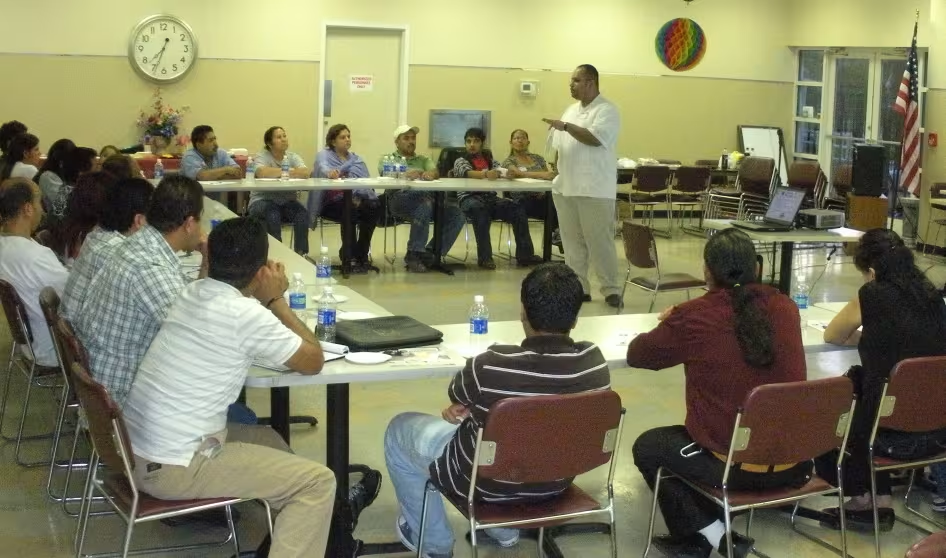
More than ever, human capital is seen as the ultimate resource. As a result, policymakers face the challenge of ensuring that workers have the skills and abilities to find productive employment and contribute to growth, innovation, and competitiveness in constantly evolving labor markets. Migrants’ skills are often seen as an untapped resource that, with the right formula of policies, can bolster competitiveness and fuel productivity.
More than ever, human capital is seen as the ultimate resource. As a result, policymakers face the challenge of ensuring that workers have the skills and abilities to find productive employment and contribute to growth, innovation, and competitiveness in constantly evolving labor markets. Migrants’ skills are often seen as an untapped resource that, with the right formula of policies, can bolster competitiveness, fuel productivity, and facilitate integration. All too often, immigrant workers across the skills spectrum experience various forms and degrees of transitional assistance needs—resulting from gaps in technical or professional competencies, limited host-country language proficiency, or poor literacy for those who failed to complete formal education.
Addressing these skills deficits is no easy task. It relies on four main actors: the migrants themselves, service providers, employers, and policymakers. This report explores the challenges to realizing the promise of utilizing immigrants’ endowments more fully and proposes some recommendations for overcoming these challenges. If policymakers can develop institutions robust enough to accommodate the complex learner profiles of migrants, they will be on much better footing to take advantage of immigration rather than seeing it as an obstacle for workforce development systems.
Table of contents
I. Introduction
II. The Skills Needs of Immigrants
III. Skills Programs Targeted at Immigrants
A. Standardized Introduction and Language Programs for New Arrivals
B. Language and Employability Training for Migrants
IV. Reforming Mainstream Services
A. Adapting Training Systems to Support Nontraditional Learners
B. Reforms to Public Employment Services
V. Engaging Employers
VI. Conclusions
Multimedia
Related links
About the Transatlantic Council on Migration
Through rigorous research, high-level convenings, and tailored policy advice, the Council provides policymakers with essential analysis and cutting-edge policy recommendations to help tackle the most vexing policy questions.
About the Global Program
The Global Program bridges policy advice, research, and candid dialogue to design effective migration policies, drawing on global evidence and anticipating the forces reshaping how people move.

Related Content