Immigration Enforcement in the United States: The Rise of a Formidable Machinery
Related Content
Highlights
The United States has built a formidable immigration enforcement system, spending nearly $187 billion since 1986—more than on all other principal federal criminal law enforcement combined.
- Since 1986, the federal government spent an estimated $186.8 billion on immigration enforcement; in fiscal year (FY) 2012 alone, it spent nearly $18 billion—roughly 24 percent more than the budgets of the FBI, DEA, Secret Service, U.S. Marshals Service, and ATF combined.
- The enforcement system rests on six pillars: border enforcement, visa controls, data interoperability, workplace enforcement, the criminal justice–immigration nexus, and detention and removal of noncitizens.
- Deportations reached record highs, border apprehensions fell to 40-year lows, and more noncitizens than ever are in detention—evidence that "enforcement first" has become the de facto singular policy response to unauthorized immigration.
- The nation has reached a historical turning point: the question is no longer whether the government can enforce immigration laws, but how resources can best be mobilized to control unauthorized immigration and uphold legal traditions.
The U.S. government spends more on federal immigration enforcement than on all other principal federal criminal law enforcement agencies combined, and has allocated nearly $187 billion for immigration enforcement since 1986. In fiscal 2012, the federal government spent nearly $18 billion on immigration enforcement—approximately 24 percent higher than collective spending for the FBI, Drug Enforcement Administration, Secret Service, U.S. Marshals Service and Bureau of Alcohol, Tobacco, Firearms and Explosives.
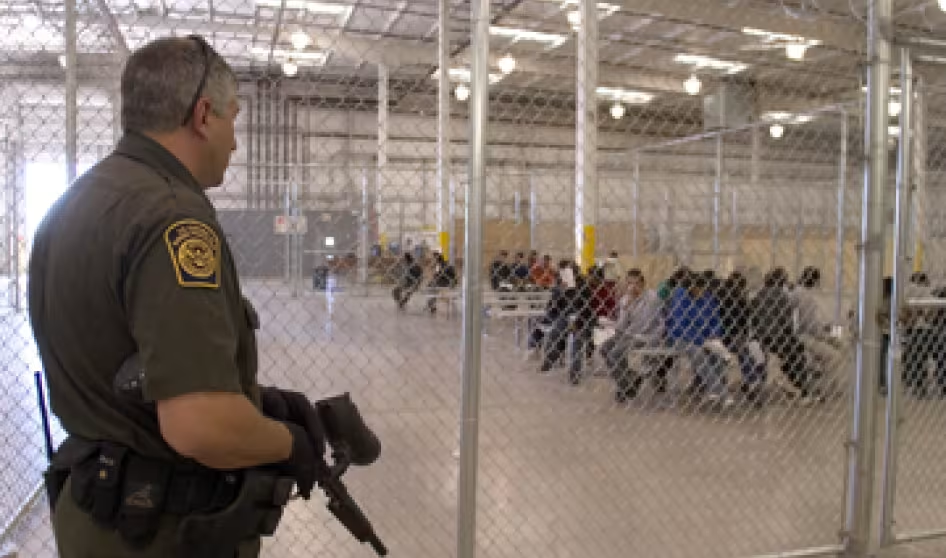
Almost three decades after IRCA, enforcement first has de facto become the nation's singular policy response to illegal immigration. Deportations have reached record highs, border apprehensions 40-year lows, and more noncitizens than ever before are in immigration detention. Additionally, 2011 was the first year that number of returns exceeded number of removals, with more of these deportations being carried out through administrative orders than through orders issued by immigration judges.
The report traces the evolution of the immigration enforcement system, particularly in the post-9/11 era, in terms of budgets, personnel, enforcement actions, and technology—analyzing how individual programs and policies have resulted in a complex, interconnected, cross-agency system.
This is the full report. For a condensed version, read the Report in Brief.
Table of Contents
CHAPTER ONE – Introduction
CHAPTER TWO – Overview: A Story of Dramatic Growth in Enforcement Resources
CHAPTER THREE – Border Enforcement
CHAPTER FOUR – Visa Controls and Travel Screening
CHAPTER FIVE – Information and Interoperability of Data Systems
CHAPTER SIX – WORKPLACE ENFORCEMENT
CHAPTER SEVEN – The Intersection of the Criminal Justice System and Immigration Enforcement
CHAPTER EIGHT – DETENTION AND REMOVAL OF NONCITIZENS
CHAPTER NINE – Conclusions
About the U.S. Immigration Policy Program
The U.S. Immigration Policy Program provides analysis of U.S. immigration pathways, the impacts of enforcement and other policies, and the characteristics of immigrant populations.