Immigration Enforcement and the Mental Health of Latino High School Students

Related Content
Highlights
Surveys of Latino high school students in 2018–19 found widespread enforcement fears, with more than half meeting clinical thresholds for anxiety, PTSD, or depression.
- 59 percent of students surveyed feared someone close to them would be deported; 56 percent knew someone who had been, with Harris County, TX students reporting higher fear than those in Rhode Island.
- More than two-thirds met the clinical threshold for anxiety, 58 percent for PTSD, and 55 percent for depression—rates higher than comparable student populations in earlier studies.
- Students who changed daily behaviors due to enforcement fear (30 percent of the sample) had the worst mental-health outcomes, including elevated PTSD and depression.
- Schools can help by creating safe environments, reforming discipline, and expanding mental-health partnerships, though funding constraints limit the scope of interventions.
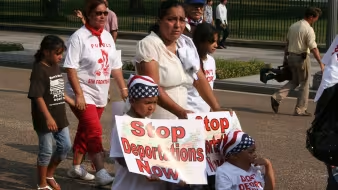
As public discourse around immigration has become more highly charged and immigration policies have seen sweeping changes in the United States, immigration enforcement has generated fear in immigrant communities across the country—fears that extend beyond the unauthorized immigrant population to immigrant families with U.S.-born children and legal immigrants.
This report explores how fear of immigration enforcement is related to the mental health and school engagement of young Latinos, the fastest-growing group of high school students nationwide. It also considers the role of other stressors, including discrimination and economic hardship, and factors that may support students’ resilience, such as spirituality and strong family relationships.
This analysis draws its findings from a study that was conducted by researchers from the Migration Policy Institute, University of Houston, and Rhode Island College during the 2018–19 school year and that had two components: self-assessments completed by hundreds of Latino students in 11 high schools, and semistructured interviews with dozens of education professionals and community experts. The two study sites—Harris County, TX and Rhode Island—offer contrasting immigration-enforcement contexts.
Among the study’s findings are:
- A majority of the students in both Harris County and Rhode Island (67 percent versus 52 percent) feared that someone close to them would be arrested and deported. While fears were more common among youth in Harris County, which has a higher level of immigration enforcement, these findings suggest deportation fears are not limited to places where enforcement is widespread.
- More than half of the students reported symptoms of mental-health conditions such as anxiety, post-traumatic stress disorder (PTSD), or depression at levels high enough to warrant treatment.
- Students who feared immigration enforcement most acutely—and who changed their behaviors as a result—had the worst mental-health outcomes. Almost one-third of students in the study had changed their behavior as a result of enforcement fears.
In interviews, educators also described school and community strategies for supporting Latino students’ mental health, including approaches to establishing a welcoming environment, reforming disciplinary practices, and connecting students with in-house and external mental-health resources.
Survey Questionnaires
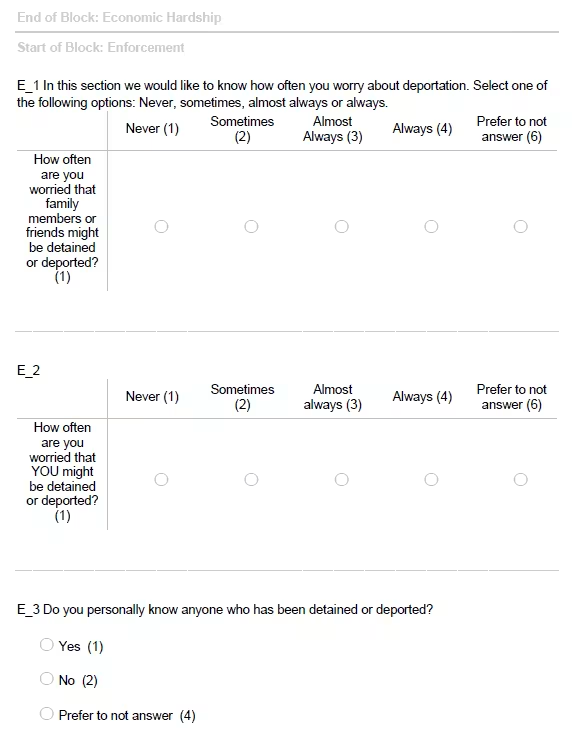
To dowload the English version of the student questionnaire used in this study, click here.
To dowload the Spanish version of the student questionnaire, click here.
Table of Contents
1 Introduction
A. Immigration Enforcement and the Current Policy Environment
B. Associations between Immigration Enforcement and Mental Health
C. Other Mental-Health Stressors
D. Study Methodology
E. Study Sites
F. Key Research Questions
2 Fear of and Exposure to Immigration Enforcement
A. Worries about Deportation and Knowing Someone Who Had Been Deported
B. Behavior Changes Due to Fear of Deportation
C. Fear of Receiving Public Benefits and Interacting with Government Agencies
3 Other Stressors for Latino Students
A. Traumatic Experiences
B. Economic Hardship
C. Discrimination
4 Symptoms of Mental-Health Conditions and Substance Abuse
A. Anxiety
B. Post-Traumatic Stress Disorder
C. Depression
D. Substance Use
5 Student Strengths
A. Personal Resilience
B. Religion and Spirituality
C. Support from Family Members
D. School Engagement and Student Work Ethic
6 Relationships among Immigration Enforcement Fears, Mental Health, Resilience, and School Engagement
A. The Association between Immigration Enforcement and Student Mental Health
B. Associations between Other Stressors and Student Mental Health
C. The Importance of Enforcement Fear Relative to Other Mental-Health Stressors
7 School and Community Responses to Latino Students’ Mental-Health Needs
A. Establishing a Welcoming and Safe Environment
B. Identifying Caring Adults
C. Reforming Disciplinary Practices
D. Providing Resources to Address Mental-Health Conditions
E. Conducting Outreach to Parents and Other Family Members
F. A Balancing Act: Supporting Mental Health amid Policy and Resource Constraints
8 Conclusions
Appendices. Details of Study Methodology
About the U.S. Immigration Policy Program
The U.S. Immigration Policy Program provides analysis of U.S. immigration pathways, the impacts of enforcement and other policies, and the characteristics of immigrant populations.
About the National Center on Immigrant Integration Policy
The Center is a national hub connecting policymakers, educators, community leaders, and service providers with evidence-informed policy research, technical assistance, and data to advance effective immigrant integration at U.S., state, and local levels.






Related Content