Constrained by its Roots: How the Origins of the Global Asylum System Limit Contemporary Protection
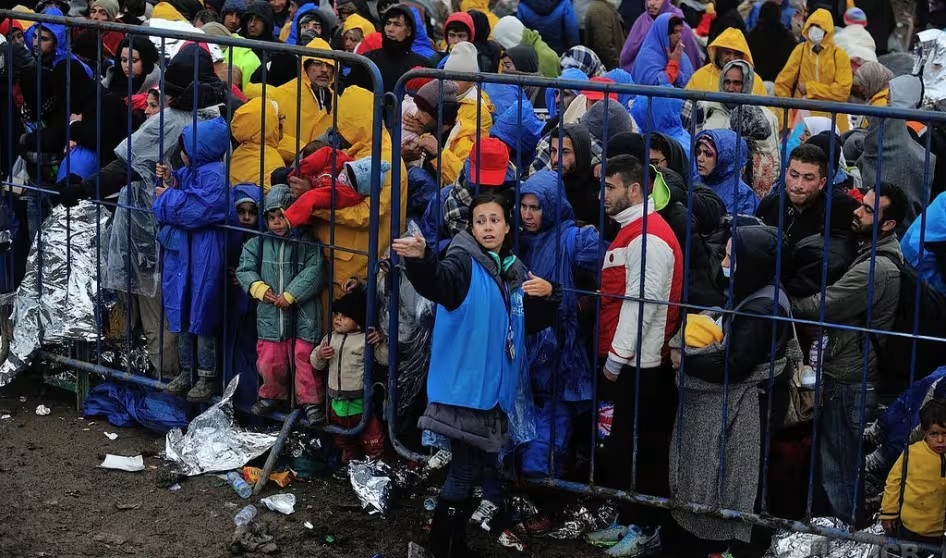
Territorial asylum, designed for manageable outflows not mass displacement, requires expanded resettlement, responsibility sharing, and Global South investment to work.
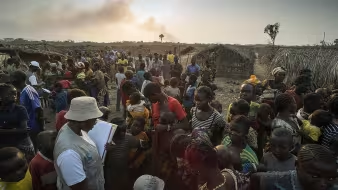
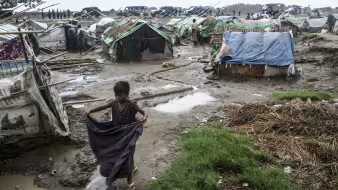
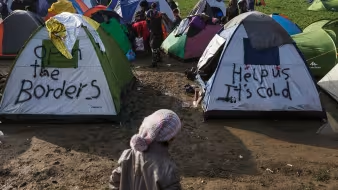
Territorial asylum—the principle that a refugee must reach the territory of a host country in order to lodge a protection claim—has evolved as the principal mechanism for providing humanitarian protection. However, the refugee regime was designed to cope with regular, manageable outflows, not mass displacement. With unprecedented global displacement, with 65.3 million displaced persons in 2015, the territorial asylum system is overwhelmed. And fewer than 1 percent of displaced people in need of protection are resettled annually.
Making access to protection contingent upon access to territory has been criticized as at best inefficient, and at worst deadly. It creates powerful incentives for asylum seekers to undertake dangerous, illegal journeys, often at the hands of smugglers, which come at high human and financial costs. But efforts to decouple access to territory from access to protection—either by processing applications in countries of first asylum or at consulates, or by resettling people directly from countries of first asylum—have remained small in scale.
This Transatlantic Council on Migration report considers whether there are viable alternatives to territorial asylum, and explores how they might be implemented. Among the solutions proposed by the author: expanding resettlement, increasing financial responsibility sharing, and concentrating resources where most refugees can be found: in the Global South.
Table of Contents
I. Introduction
II. The Origins of the Current Territorial Asylum System
A. The UN Refugee System in the Aftermath of World War II
B. The UN Convention Relating to the Status of Refugees
C. International Developments Favoring Territorial Asylum
III. Territorial Asylum in Practice
A. Territorial Asylum in Traditional Countries of Immigration in the 1980s and 1990s
B. The State Strikes Back: Externalizing Asylum Controls in the West
C. Europe’s Current Refugee Crisis
D. Refugees in the Global South
IV. Alternatives to Territorial Asylum
Is Offshore Processing Realistic?
V. Policy Recommendations
A. Recommendation I: Expand Resettlement
B. Recommendation II: Expand (Financial) Responsibility Sharing
C. Recommendation III: Concentrate the Resources Where the Refugees Are
VI. Conclusions
About the Transatlantic Council on Migration
Through rigorous research, high-level convenings, and tailored policy advice, the Council provides policymakers with essential analysis and cutting-edge policy recommendations to help tackle the most vexing policy questions.
About the Global Program
The Global Program bridges policy advice, research, and candid dialogue to design effective migration policies, drawing on global evidence and anticipating the forces reshaping how people move.



Related Content