U.S. Immigration Policy Program

The U.S. Immigration Policy Program provides thought leadership on ways to improve the U.S. immigration system so that it works most effectively in the national interest. To that end, its work focuses on immigration pathways to the United States and immigration enforcement policies and their impacts. It examines the complex demographic, economic, social, political, foreign policy, and other forces that shape U.S. immigration.
Program staff produce data and analyses of immigration trends and the characteristics of U.S. immigrant populations, including unauthorized immigrants. And they conduct original research on the impacts of policy change and the experiences of immigrant populations in diverse parts of the country. This work is frequently informed by private convenings of policymakers and key stakeholders. For more, click here.
The Latest Research
U.S. Deportations and “Self-Deportations” in the First 18 Months of the Second Trump Term
Filling a gap amid a slowdown in official data reporting from the federal government, this analysis offers a window into deportation and "self…

Featured
Physicians in an Era of Changing Immigration Policy: The Case of Nephrology
The care of kidney disease in the United States relies heavily on international medical graduates (IMGs). Recent policy changes could deepen…

Temporary Visa Holders in the United States
The number of U.S. temporary visas plummeted during the COVID-19 pandemic, rebounded, and then fell again in fiscal year (FY) 2025. Preliminary data…

Following Years of High Border Arrivals, the U.S. Unauthorized Immigrant Population Hits New Peak
MPI estimates the U.S. unauthorized immigrant population reached a new peak of 15.8 million as of mid-2024, after holding steady at around 11 million…

More Featured Work
From Counterterrorism to Immigration Enforcement: 25 Years On, Post-9/11 U.S. Changes Have Been Repointed
Post-9/11 national security tools have been repurposed for immigration, expanding the U.S. government’s capacity for surveillance, data sharing, and…

Attacked as "De Facto Amnesty," U.S. Temporary Protected Status Is Abruptly Eroded
The Trump administration moved to terminate most of the 17 Temporary Protected Status (TPS) designations in place when its second term began,…

Though Rare, Birth Tourism to the United States Sparks Outsized Concern
While rare, birth tourism has become a central but contested justification in the Trump administration's push to end the guarantee of birthright…

Key Statistics
Learn more about immigrants and immigration to the United States
14.8%
The immigrant share of the total U.S. population
Learn how this share has evolved (opens in a new tab)50.2 million
The number of immigrants in the United States
Explore Data Profiles by State (opens in a new tab)18.4%
The share of workers in the U.S. civilian labor force who are immigrants
Get the data at U.S. and state levels (opens in a new tab)
Showing 571–580 of 824 results
Platforms and Conventions Reveal Deep Divide on Immigration Between GOP, Dems
U.S. Republican and Democratic platforms in 2012 differed sharply on DACA, state enforcement, and unauthorized immigration.

The Economic Value of Citizenship for Immigrants in the United States
Naturalized U.S. citizens earn up to 70 percent more than noncitizens, yet cost and language barriers leave an estimated 8 million eligible immigrants without citizenship.
Key Factors, Unresolved Issues in New Deferred Action Program for Immigrant Youth Will Determine Its Success
As DACA launched in August 2012, unresolved questions threatened to determine the program's reach and success.
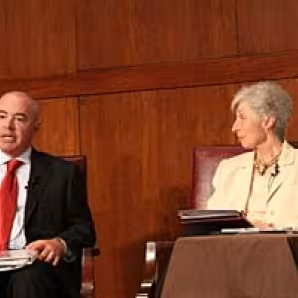
The New Deferred Action Program: Strategies for Success
U.S. Citizenship and Immigration Services Director Alejandro Mayorkas discusses the implementation of the new deferred action program, followed by a panel discussion with National Immigration Law Center Executive Director, DHS Former Principal Deputy General Counsel, and MPI analysts.

Relief from Deportation: Demographic Profile of the DREAMers Potentially Eligible under the Deferred Action Policy
Up to 1.8 million unauthorized immigrants brought to the United States as children were potentially eligible for deportation relief under the Obama-created DACA program.
Understanding Mexico's Economic Underperformance
Despite three decades of market reforms, Mexico's sluggish economic growth traces to credit failures, informality incentives, input market inefficiencies, and Chinese competition.
Central American Development: Two Decades of Progress and Challenges for the Future
Central America's transformation into stable democracies and global exporters is threatened by persistent inequality, rising violence, and climate vulnerability.
Unaccompanied Minors and Their Journey through the U.S. Immigration System
A discussion on unaccompanied minors crossing the U.S. Mexico border with representatives from Women's Refugee Commission and Kids in Need of Defense (KIND).

Contested Ground: Immigration in the United States
U.S. policy has fixated on enforcement against unauthorized immigration while neglecting integration of the second generation, where the real long-term challenge lies.

Challenges Ahead on Implementing Executive Action to Prevent Deportation of Unauthorized Youth
President Barack Obama's plans of deferred action for unauthorized youth could benefit 1.4 million people, but capacity constraints and unresolved policy gaps may limit its scope.

- General Inquiries
- Media Inquiries
-
Michelle Mittelstadt
202 266 1910 [email protected]