Higher Education
All Content
Showing 41–50 of 124 results
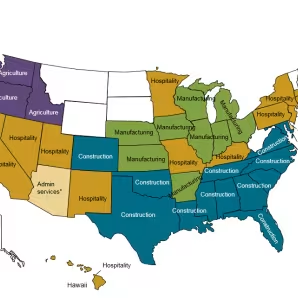
COVID-19 and Unemployment: Assessing the Early Fallout for Immigrants and Other U.S. Workers
Immigrants—especially Latina workers—suffered steeper early COVID-19 job losses than U.S.-born workers, driven largely by industry concentration.

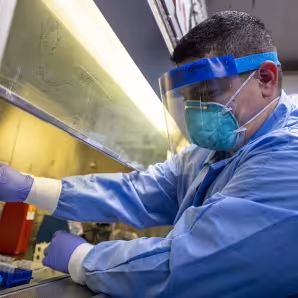
As U.S. Health-Care System Buckles under Pandemic, Immigrant & Refugee Professionals Could Represent a Critical Resource
In a time of critical shortages of U.S. health-care workers during the COVID-19 pandemic, retired doctors are being called back to work and medical students are graduating on a fast track. There is another important pool that could be tapped: Immigrants and refugees who have college degrees in health fields but are working in low-skilled jobs or out of work. MPI estimates 263,000 immigrants are experiencing skill underutilization and could be a valuable resource.
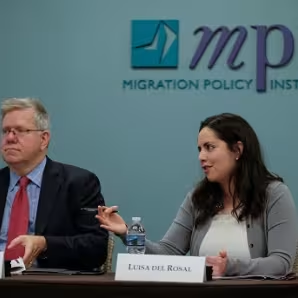
A Mirror for the Nation? The Changing Profile of Mexican Immigrants in Texas
At this event, experts from MPI and Southern Methodist University’s Texas-Mexico Center offer an overview of immigration trends and key characteristics of highly skilled Mexican immigrant adults at the national level and for Texas, and engage in a discussion on the causes behind the changing trends in immigration and implications for Texas, its economy, and more broadly for the nation.
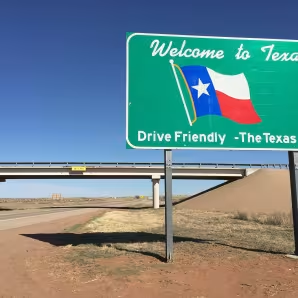
A Profile of Highly Skilled Mexican Immigrants in Texas and the United States
Many college-educated Mexican immigrants in Texas face underemployment due to credential-recognition barriers and limited English proficiency.
Mexican Migration to Canada: Temporary Worker Programs, Visa Imposition, and NAFTA Shape Flows
Mexicans represent a small but growing population in Canada, including as temporary farm workers. Imposition in 2009 of a visa requirement for Mexicans halved their arrivals.

Upskilling the U.S. Labor Force: Mapping the Credentials of Immigrant-Origin Workers
This webinar discusses the first-ever profile of the 30 million immigrant-origin adults in the United States who lack a postsecondary credential such as a college degree, apprenticeship certificate, or occupational license. The researchers discuss their findings and policy implications with leading experts.

Credentials for the Future: Mapping the Potential for Immigrant-Origin Adults in the United States
In 2017, 30 million immigrant-origin adults lacked postsecondary credentials, making them an underserved yet critical target for U.S. upskilling efforts.
Immigrant-Origin Adults without Postsecondary Credentials: A 50-State Profile
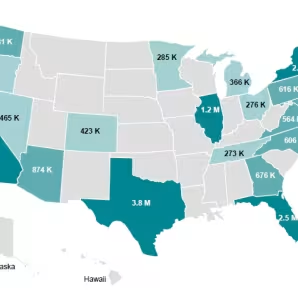
A 50-state profile finds 30 million immigrant-origin adults lacked postsecondary credentials in 2017, with English proficiency and legal status key upskilling barriers.
More Than a DREAM (Act), Less Than a Promise
The first bill introduced in the 116th Congress to offer a path to legal status to Dreamers, the American Dream and Promise Act of 2019, could legalize nearly 2.7 million, MPI estimates.
Settling In: A Profile of the Unauthorized Immigrant Population in the United States
Unauthorized immigrants in the United States are long settled, economically active, and embedded in communities, but significantly poorer than native-born residents.