Border Enforcement
All Content
Showing 411–420 of 493 results
A New Architecture for Border Management
Information-driven, risk-based “smart border” systems push controls away from the physical frontier toward advance data screening, while raising ethical concerns.

Executive Action on Immigration: Six Ways to Make the System Work Better
Six executive actions could improve U.S. border control, integration, legal admissions, and fairness in enforcement without new laws.
Transatlantic Cooperation on Travelers' Data Processing: From Sorting Countries to Sorting Individuals
Transatlantic cooperation on traveler data now targets individuals. Lasting agreements must bridge U.S.–EU gaps on privacy and redress.
Quiet Demise of the Virtual Fence
After more than $1 billion in funding, the United States’ virtual border fence program was cancelled in January 2011.
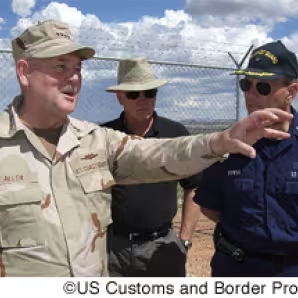
The Evolution of Border Controls as a Mechanism to Prevent Illegal Immigration
Modern border controls combine technology and risk profiling. But without legal channels, they often displace rather than deter irregular migration.
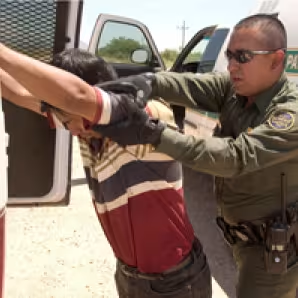
Immigration Enforcement in the United States
U.S. immigration apprehensions fell in 2009, yet removals hit a ten-year high.
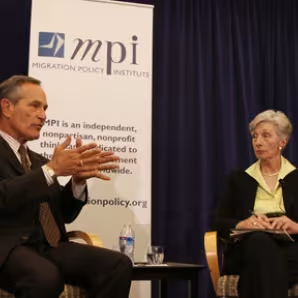
U.S. Customs and Border Protection Commissioner Alan Bersin Discusses His Vision for CBP
Commissioner Bersin details his agenda for his agency and discusses illegal immigration, border enforcement, the impact to the economy on migration flows, the future of the Secure Border Initiative, drug trafficking, and other topics in this wide-ranging conversation with MPI Senior Fellow Doris Meissner and the audience.
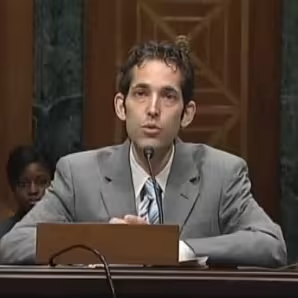
Marc Rosenblum Testimony Video: Immigration and U.S. Immigration Policy
Testimony of Marc Rosenblum, MPI Senior Policy Analyst, before the National Commission on Fiscal Responsibility and Reform.
Political Considerations Surround Decision to Deploy National Guard to Southwest Border
The Obama administration planned to send 1,200 National Guard troops to the Southwest border, fewer than senators demanded, with no authority to make arrests.