Border Enforcement
All Content
Showing 201–210 of 493 results
Ally or Exploiter? The Smuggler-Migrant Relationship Is a Complex One
The relationship of human smugglers with migrants is shaped by geography, criminal networks, and changing enforcement patterns and policies.

Latin American Responses to the Venezuelan and Nicaraguan Migration Crises
Leading policymakers and key stakeholders from Latin America, as well as representatives of major international institutions, offer their views on the challenges ahead as Latin American governments seek to chart strategies for responding to large-scale forced migration flows, such as those from Venezuela and Nicaragua.

As More Migrants from Africa and Asia Arrive in Latin America, Governments Seek Orderly and Controlled Pathways
Growing numbers of migrants from Africa and Asia are traversing Latin America en route to the United States, prompting responses from Colombia, Panama, and Costa Rica.

Changing U.S. Policy and Safe-Third Country “Loophole” Drive Irregular Migration to Canada
Nearly 50,000 asylum seekers crossed into Canada over two years starting in 2017, driven largely by U.S. policy shifts and a loophole in the Safe Third Country Agreement.

Using Fear of the “Other,” Orbán Reshapes Migration Policy in a Hungary Built on Cultural Diversity
Hungarian Prime Minister Viktor Orbán transformed a country with centuries of multicultural history into one that criminalizes asylum seeking.

16th Annual Immigration Law and Policy Conference
The 16th annual conference features thoughtful policy and legal analysis and discussion of the most important immigration topics from leading government officials, attorneys, researchers, advocates, and others.
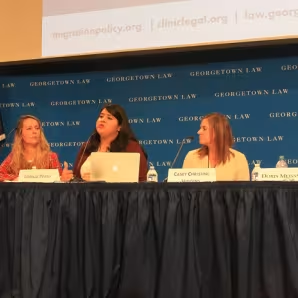
Supreme Court Asylum Ruling Latest Sign Judiciary Is Not the Brake on the Trump Administration that Immigration-Rights Activists Sought
The Supreme Court's September 2019 ruling upholding a transit-country asylum ban illustrates its consistent deference to executive authority on immigration.

Invertir en el vecindario: Cambios en los patrones de migración entre México y Estados Unidos y oportunidades para una cooperación sostenible
La migración no autorizada de mexicanos disminuye, pero los flujos centroamericanos crecen, exigiendo cooperación bilateral en materia de asilo, vías legales e integración.
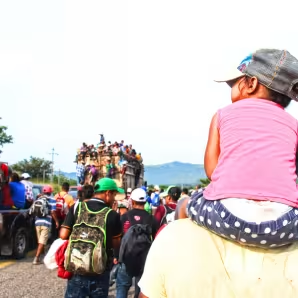
Investing in the Neighborhood: Changing Mexico-U.S. Migration Patterns and Opportunities for Sustainable Cooperation
Mexico-U.S. migration has shifted: unauthorized Mexican flows slowed while Central American arrivals surged, requiring regional cooperation on asylum reform and legal pathways.
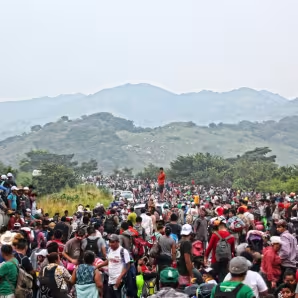
A Tightening Grip Abroad: Authoritarian Regimes Target Their Emigrant and Diaspora Communities
Authoritarian governments increasingly use surveillance, extradition, and violence to suppress the dissent of their diasporas abroad.