Integration

All Content
Showing 891–900 of 1207 results
Newcomers to the Aloha State: Challenges and Prospects for Mexicans in Hawai'i
Hawai'i's Mexican community is predominantly U.S.-born and lawfully present, yet faces disproportionate enforcement, geographic dispersal, and fragmented identity.
Demography and Migration: An Outlook for the 21st Century
Global demographic divergence makes migration an essential but limited tool: policy must also address job creation in youthful nations and labor force inclusion in aging ones.

Indian Immigrants in the United States
In 2011, 75 percent of Indian-born adults in the United States held a bachelor's degree or higher.

Side-by-Side Comparison of 2013 Senate Immigration Bill with Individual 2013 House Bills
The 2013 Senate immigration bill and five targeted House bills diverged sharply on legalization, enforcement, and legal immigration structure.

Deferred Action for Childhood Arrivals at the One-Year Mark: A Profile of Currently Eligible Youth and Applicants
One year in, the Deferred Action for Childhood Arrivals (DACA) program reached 49 percent of eligible youth, with uptake sharply divided by state, national origin, and access to education.

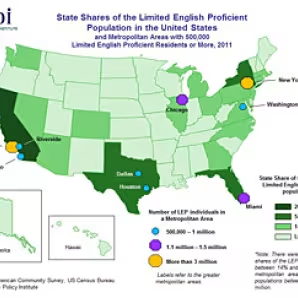
Limited English Proficient Population of the United States in 2011
In 2011, the U.S. Limited English Proficient population reached 25.3 million, and nearly one in five were native born.
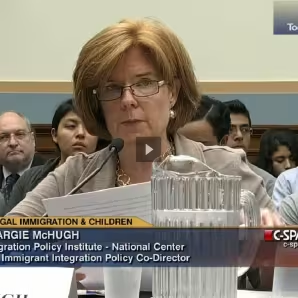
Margie McHugh Testimony Video: Illegal Immigration and Children
Testimony of Margie McHugh, Co-Director of MPI's National Center on Immigrant Integration Policy, before the House Judiciary Subcommittee on Immigration and Border Security, U.S. House of Representatives.
Is the United States Bad for Children’s Health? Risk and Resilience among Young Children of Immigrants
Children of Mexican immigrants start life with health advantages, but those advantages erode in early childhood as poverty, food insecurity, and limited access take hold.


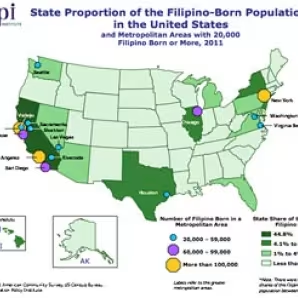
Filipino Immigrants in the United States
In 2011, 65 percent of Filipino immigrants had naturalized as U.S. citizens.