Immigration Systems

All Content
Showing 811–820 of 1266 results
Women’s Labour Migration from Asia and the Pacific: Opportunities and Challenges
Female migrants in the Asia-Pacific increasingly migrate independently. Skills mismatch and sector concentration limit their contributions and well-being.

Frequently Requested Statistics on Immigrants and Immigration in the United States
The United States was home to about 20 percent of the world's international migrants in 2013, though it represented less than 5 percent of the global population.
Following the Money: Chinese Labor Migration to Zambia
Chinese investment has driven a 60 percent rise in Chinese migration to Zambia since 2009, yet these immigrants remain a small share of the population.

As Implementation Nears, U.S. Deferred Action Programs Encounter Legal, Political Tests
With up to 5.2 million unauthorized immigrants potentially eligible, 26 states and Congress are seeking to block DACA and DAPA before they take effect.
The Geopolitical Origins of the U.S. Immigration Act of 1965
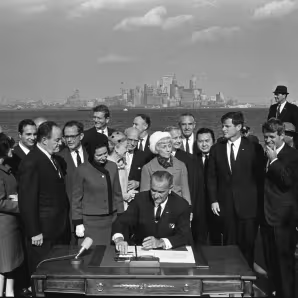
The Cold War and post-colonial pressures were major drivers of the 1965 repeal of national-origins quotas.
Through an Immigrant Lens: PIAAC Assessment of the Competencies of Adults in the United States
Immigrants make up a disproportionate share of low-skilled U.S. adults, yet limited training access leaves this human-capital potential unrealized.

Migrant Education and Community Inclusion: Examples of good practice
Family and community involvement in schools is essential for migrant student integration, and a range of European good practices show how to build those bridges effectively.


The County-Level View of Unauthorized Immigrants and Implications for Executive Action Implementation
A webinar showcasing MPI's profiles of unauthorized immigrants in the 94 U.S. counties with the largest populations potentially eligible for DACA or DAPA, and the implications of the data for implementation of the DACA and DAPA programs.

Normalization of Relations with Cuba May Portend Changes to U.S. Immigration Policy
The December 2014 U.S.-Cuba normalization deal put uniquely favorable Cuban immigration policies on uncertain footing, but permanent changes require Congress.