Settling In: A Profile of the Unauthorized Immigrant Population in the United States
Related Content
Highlights
Unauthorized immigrants in the United States are long settled, economically active, and embedded in communities, but significantly poorer than native-born residents.
- In 2012–16, 62 percent of unauthorized immigrants had lived in the United States for at least ten years; 5.1 million children—80 percent of them United States-born—lived with at least one unauthorized immigrant parent.
- Although 53 percent were from Mexico, arrivals from Central America, Asia, and Africa have grown—mostly offsetting declining Mexican inflows—and population growth has plateaued since the 2008–09 recession.
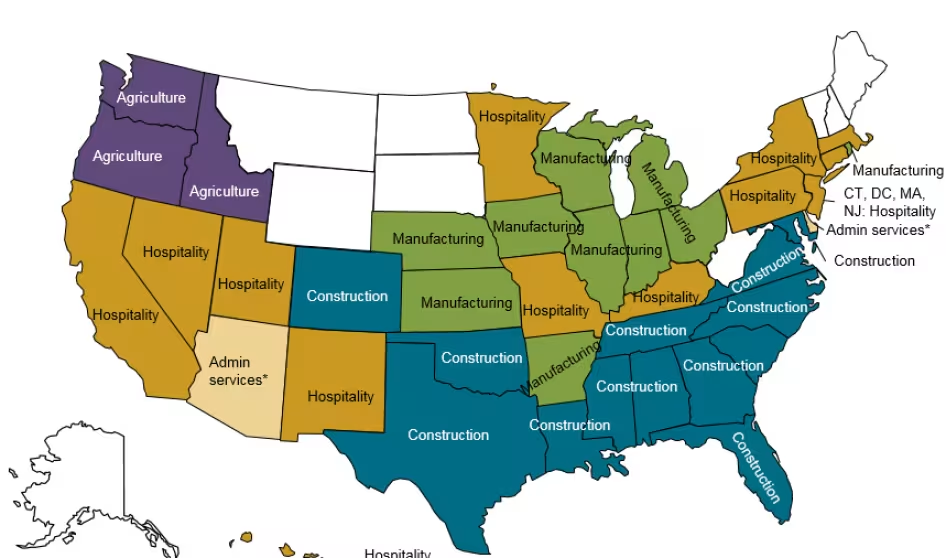
- Unauthorized immigrants had a 67 percent employment rate, higher than the 58 percent for native-born residents, and were concentrated in hospitality, construction, and manufacturing—with industry composition varying by state.
- Twenty-eight percent lived below the federal poverty level in 2012–16, well above the 17 percent for native-born residents.
This fact sheet provides an overview of the characteristics of the estimated 11.3 million unauthorized immigrants living in the United States, using a unique MPI methodology of assigning legal status to data from the U.S. Census Bureau’s American Community Survey (ACS). It examines these immigrants’ countries of origin, U.S. destinations, length of U.S. residence, educational attainment and English proficiency, employment, income, and home ownership. And it includes a section on the children, most U.S. born, who have an unauthorized immigrant parent.
The fact sheet draws from MPI’s unauthorized immigrant data tool, which offers detailed sociodemographic profiles for the United States, 41 states (plus the District of Columbia), and 135 counties with the largest unauthorized populations. A related interactive map allows users to determine the top state and county destinations for unauthorized immigrants by region/top country of origin.
Analysis of the unauthorized population shows its growth has plateaued since the Great Recession of 2008-09. Even as unauthorized arrivals from Mexico have waned significantly amid a changing demographic, economic, and labor-market picture there, illegal immigration from Central America, Asia, and Africa has increased, mostly offsetting the reduced Mexican inflows. The flattening of growth in the unauthorized population is also due to a sizeable deployment of immigration enforcement resources at the Southwest border and in the U.S. interior.
About the U.S. Immigration Policy Program
The U.S. Immigration Policy Program provides analysis of U.S. immigration pathways, the impacts of enforcement and other policies, and the characteristics of immigrant populations.




Related Content