Asia & the Pacific
All Content
Showing 221–230 of 394 results
Following the Money: Chinese Labor Migration to Zambia
Chinese investment has driven a 60 percent rise in Chinese migration to Zambia since 2009, yet these immigrants remain a small share of the population.

Chinese Immigrants in the United States
In 2013, Chinese immigrants were nearly twice as likely as all immigrants to hold a bachelor's degree, and China led all nations in U.S. asylum applications.

The Field of Migration Studies Loses a Giant: Graeme Hugo
In a personal tribute, MPI President Emeritus Demetrios G. Papademetriou reflects on the life and career of Graeme Hugo, a world-renowned scholar who died in January 2015.

Border Controls under Challenge: A New Chapter Opens
In 2014, migrants and smugglers turned rescue and protection policies into entry strategies as Mediterranean deaths surpassed 3,000, up from 700 in 2013.

A ‘Freer’ Flow of Skilled Labour within ASEAN: Aspirations, Opportunities, and Challenges in 2015 and Beyond
A breakfast briefing discussing the transformation of the ASEAN region into a single market and production base, including the steps that can be taken towards fuller labor mobility for high-skilled migrants.

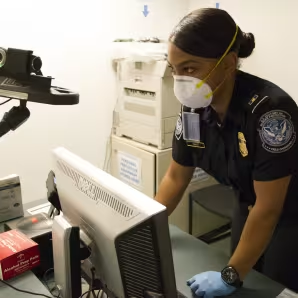
Building Borders around Ebola
Ebola-related border closures and travel bans reshaped mobility from West Africa, but also stranded refugees and may have complicated some efforts to contain the virus.
Exploitation of Migrant Workers in Asia
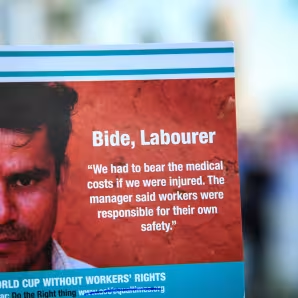
Gulf and Southeast Asian labor systems left millions of migrant workers vulnerable to debt, abuse, and only tentative reforms in 2014.
Migration with Chinese Characteristics: Hukou Reform and Elite Emigration
China’s leaders paired ambitious hukou reforms with concern over elite emigration, reshaping internal and international migration.

The Points System Is Dead, Long Live the Points System
A new generation of immigration points systems worldwide are hybrids relying on employer demand as well as supply-driven selection.

Korean Immigrants in the United States
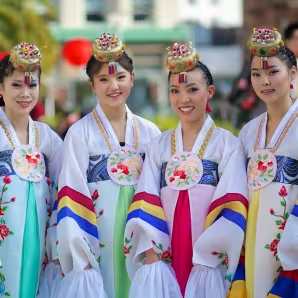
There were approximately 1.1 million Korean immigrants in the United States in 2013.