The State of Costa Rican Migration and Immigrant Integration Policy
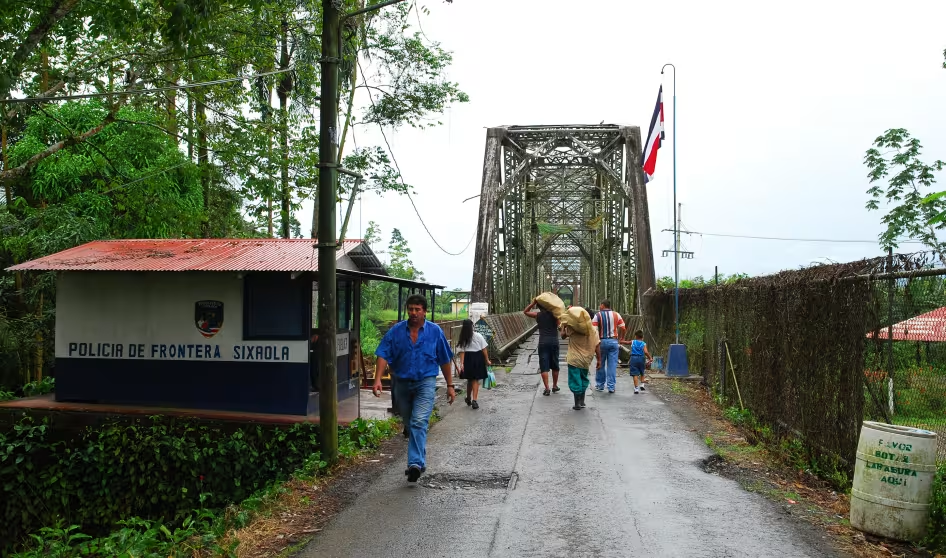
Costa Rica’s migration system faces key gaps in regularization access, labor market integration, and coordination. Nicaraguans and newer arrivals face particular barriers.
Costa Rica is a top immigrant destination country within Latin America. In recent decades, it has experienced the arrival of migrants and refugees fleeing difficult political and economic conditions in Colombia, Cuba, El Salvador, Nicaragua, and Venezuela; seasonal and circular labor migrants; investors and retirees; and extracontinental migrants en route to destinations further north. The diversity of contemporary migration patterns and populations calls for equally diverse and nuanced policy responses.
In order to effectively manage current and future migration, the government of Costa Rica may need to rethink specific aspects of its regulatory framework and institutional organization. Immigrant integration, the focus of this study, is a particularly critical policy area as the country’s immigrant population continues to grow.
This report examines the state of Costa Rica’s institutional framework and government initiatives for supporting the integration of migrants and refugees, and especially those who have arrived since 2015. It looks at four dimensions (accessibility, outreach and communication, institutional coordination, and social cohesion) in the following policy areas: regularization and registration, health, employment, and education. The analysis draws on information gathered in interviews with key governmental and nongovernmental stakeholders as well as from a review of the relevant literature to identify where the migration system is most advanced and where shortcomings remain.
Para leer este reporte en español, haga clic aquí.
Table of Contents
1 Introduction
2 Immigration to Costa Rica: Historical, Legal, and Institutional Context
A. Notable Migration Trends during the Three Migration Cycles
B. Legal and Institutional Framework
3 Assessing Costa Rica’s Integration Policies and Practices
A. Dimensions for Analysis
B. Findings
4 Conclusions and Recommendations
A. Registration and Regularization
B. Health
C. Employment
D. Education
E. Looking Ahead
Latin America and Caribbean Initiative
The Initiative combines rigorous research with direct engagement of governments, institutions, and stakeholders to help build orderly, rights-respecting migration systems across one of the world's most dynamic migration regions.
About the Global Program
The Global Program bridges policy advice, research, and candid dialogue to design effective migration policies, drawing on global evidence and anticipating the forces reshaping how people move.



Related Content