
Muzaffar Chishti
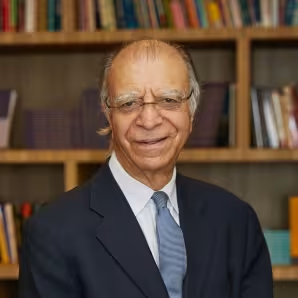
Muzaffar Chishti, a lawyer, is an MPI Senior Fellow and Director of the MPI office at New York University School of Law. His work focuses on U.S. immigration policy at the federal, state, and local levels; the intersection of labor and immigration law; immigration enforcement; civil liberties; and immigrant integration.
Prior to joining MPI, Mr. Chishti was Director of the Immigration Project of the Union of Needletrades, Industrial & Textile Employees (UNITE).
Mr. Chishti serves on the board of the New York Immigration Coalition. He has served as Chairman of the Boards of Directors of the National Immigration Forum and the National Immigration Law Center, as a member of the American Bar Association’s Coordinating Committee on Immigration, and on the board of the Asian American Federation.
Mr. Chishti has testified extensively on immigration policy issues before Congress and is frequently quoted in the media. In 1992, as part of a U.S. team, he assisted the Russian Parliament in drafting its legislation on forced migrants and refugees. In 2025, he received the Outstanding American by Choice recognition from U.S. Citizenship and Immigration Services Director Ur Jaddou; he is also a 1995 recipient of the Ellis Island Medal of Honor and 1994 recipient of the New York State Governor's Award for Outstanding Asian Americans.
Mr. Chishti was educated at St. Stephen's College, Delhi; the University of Delhi; Cornell Law School; and the Columbia School of International Affairs.
- Media Inquiries
-
Michelle Mittelstadt
202 266 1910 [email protected]
Explore Content by Muzaffar Chishti
Showing 111-120 of 236 total results
Strategic Leverage: Use of State and Local Laws to Enforce Labor Standards in Immigrant-Dense Occupations
Immigrants experience labor violations at twice the rate of U.S.-born workers. State and local governments have unique tools to fill the enforcement gap left by federal retreat.

Trump Administration Ratchets up Pressure on “Sanctuary” Jurisdictions
After courts blocked the Trump administration’s 2017 order cracking down on “sanctuary” cities, the Justice Department turned to other authorities.

Shifting Gears, Trump Administration Launches High-Profile Worksite Enforcement Operations
Chile's immigrant population quadrupled over two decades, outpacing every other country in Latin America and stoking backlash and a rightward political shift.

Tens of Thousands in United States Face Uncertain Future, as Temporary Protected Status Deadlines Loom
The proposed terminations of temporary statuses during the first Trump term put hundreds of thousands at risk of deportation, with few legal pathways to stay.

Will White House Immigration Wish List Tank Emerging DREAMer Momentum in Congress?
The Trump administration's sweeping October 2017 immigration demands threatened to derail a bipartisan deal for Dreamers.

Trump Administration Rescinds DACA, Fueling Renewed Push in Congress and the Courts to Protect DREAMers
In its first term, the Trump administration rescinded the Deferred Action for Childhood Arrivals (DACA) program, seeking to strip protection from roughly 790,000 Dreamers.
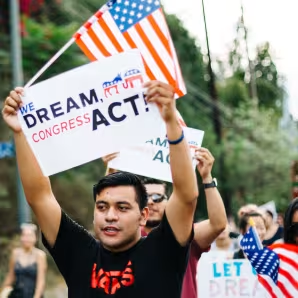
The Trump Administration at Six Months: A Sea Change in Immigration Enforcement
In a sharp departure from the Obama administration, the first six months of the first Trump term shifted immigration enforcement practices and generated deep anxiety among some immigrant communities.

Despite Political Resistance, Use of Temporary Worker Visas Rises as U.S. Labor Market Tightens
Despite political headwinds, use of temporary work visas surged to record or near-record levels by 2016 and 2017, as a tightening U.S. labor market drove employer demand.

Texas Leads Resurgence in Restrictive State Actions on Immigration Enforcement
Texas's 2017 Senate Bill 4, requiring local law enforcement to cooperate with immigration authorities, revived a wave of state-level activity.
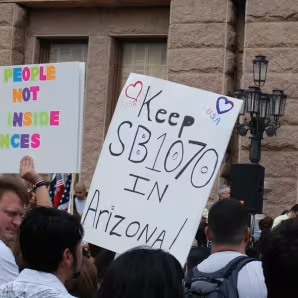
Despite Little Action Yet by Trump Administration on Sanctuary Cities, States and Localities Rush to Respond to Rhetoric
While the Trump administration had taken no concrete steps to penalize “sanctuary” cities as of April 2017, jurisdictions rushed to set immigration policies of their own.
