U.S. Immigration Reform
All Content
Showing 91–100 of 172 results
A Decade after 9/11, Enforcement Focus Prevails in the United States; Broader Immigration Reforms Remain Stalled
The Obama administration's 2011 deportation record underscored how fully the post-9/11 enforcement paradigm had become settled.

Up for Grabs: The Gains and Prospects of First- and Second-Generation Young Adults
First- and second-generation young adults are one-quarter of 16–26‑year‑olds in the United States,. They have made clear educational gains but experience uneven access to good jobs.

Through the Prism of National Security: Major Immigration Policy and Program Changes in the Decade since 9/11
Since 9/11, U.S. immigration has been reshaped around national security, with the creation of DHS, expanded data sharing, nationality-based screening, and higher enforcement.
U.S. Immigration Policy since 9/11: Understanding the Stalemate over Comprehensive Immigration Reform
Post‑9/11 enforcement expansions, partisan polarization, and complex trade‑offs have stalled comprehensive U.S. immigration reform.

Mexican and Central American Immigrants in the United States
Mexican and Central American immigrants are central to the U.S. labor force yet experience lower educational attainment, higher poverty, and more legal vulnerability.
The Role of Immigration in Fostering Competitiveness in the United States
Immigration strengthens U.S. innovation and competitiveness, but rigid visa caps and small employment-based quotas limit employer selection.
Obstacles and Opportunities for Regional Cooperation: The U.S.-Mexico Case
The U.S.-Mexico case shows regional migration cooperation is possible despite obstacles if interests align, especially on border management and co-development.
Steps to Fix the U.S. Immigration System: What Can the Administration Do?
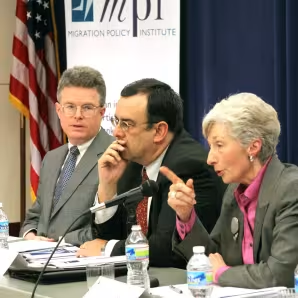
MPI report release with authors MPI's Donald Kerwin, Margie McHugh, and Doris Meissner who engage in a discussion with Eva Millona, Executive Director, Massachusetts Immigrant and Refugee Advocacy Coalition; and Juan P. Osuna, Acting Director, Executive Office for Immigration Review, U.S. Department of Justice, on what the U.S. administration can do to fix immigration policy absent congressional action.
Executive Action on Immigration: Six Ways to Make the System Work Better
Six executive actions could improve U.S. border control, integration, legal admissions, and fairness in enforcement without new laws.
E-Verify: Strengths, Weaknesses, and Proposals for Reform
E-Verify’s gains in speed and coverage are undercut by data errors, identity fraud, and gaps in worker protections.