Demographic Profiles
All Content
Showing 351–360 of 630 results
A Tumultuous Decade: Employment Outcomes of Immigrants in the Czech Republic
Postcommunist immigrants in the Czech Republic match native employment rates but are concentrated in low-skilled work despite above-average education levels.

Education Reform in a Changing Georgia: Promoting High School and College Success for Immigrant Youth
Georgia's education reforms consistently miss immigrant youth and English Learners, deepening graduation and college access gaps for one in five young Georgians.

Refugees and Asylees in the United States
In 2012, the United States authorized up to 76,000 refugee admissions and resettled 58,179.

Green-Card Holders and Legal Immigration to the United States
In 2012, more than 1 million people obtained lawful permanent resident status, with 53 percent arriving as status adjusters already in the United States.

Naturalization Trends in the United States
Naturalized immigrants in the United States had median household incomes exceeding that of the U.S. born in 2012.
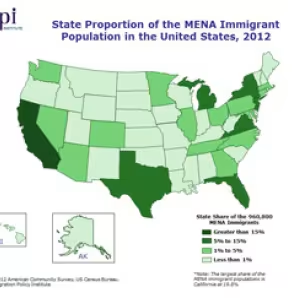
Middle Eastern and North African Immigrants in the United States
Middle Eastern and North African immigrants in the United States held college degrees at higher rates than U.S.-born adults in 2011.
Mexicans in Hawaiʻi: Challenges and Prospects
This briefing at the State Capitol in Honolulu presented key demographic and socioeconomic information about the Mexican-origin population in Hawai’i.

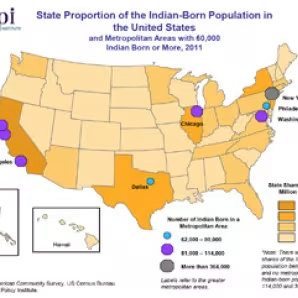
Indian Immigrants in the United States
In 2011, 75 percent of Indian-born adults in the United States held a bachelor's degree or higher.
The Gambia: Migration in Africa's "Smiling Coast"
The Gambia is simultaneously an emigration, immigration, and transit country, with immigrants comprising 16 percent of the total population in 2010 and the country serving as a gateway for irregular migration to Europe.
Deferred Action for Childhood Arrivals at the One-Year Mark: A Profile of Currently Eligible Youth and Applicants
One year in, the Deferred Action for Childhood Arrivals (DACA) program reached 49 percent of eligible youth, with uptake sharply divided by state, national origin, and access to education.