Millions of Previously Protected U.S. Immigrants Have Been Exposed to Deportation

A woman handles rejected immigration paperwork.
Credit: iStock.com/Pressmaster
Highlights
The Trump administration has ended temporary deportation protections and access to work authorization for as many as 2.5 million unauthorized immigrants, according to MPI estimates. The estimate likely represents a maximum, considering some people may have held more than one protection or sought other legal statuses such as asylum.
- The changes during the second Trump term mark a departure from decades of enforcement practices that weighed humanitarian circumstances alongside immigration violations.
- The largest number of people newly exposed to deportation are those who previously held Temporary Protected Status (TPS). Designations for 13 countries have been ended.
- Through policy tweaks and delays in renewal, protections have also been weakened for certain crime victims, abused or neglected children, and unauthorized immigrants who arrived as children.
- Longtime residents whose immigration court cases had been paused or whose previous removal orders were administratively closed have also been exposed to removal.
The Trump administration has exposed to removal from the United States millions of noncitizens who previously held a variety of liminal legal statuses and protections from deportation. Significant public attention has focused on the end of Temporary Protected Status (TPS) for nationals of 13 countries as well as parole for Cubans, Haitians, Nicaraguans, and Venezuelans (collectively known as the CHNV program). The administration has also systematically chipped away at a wide range of deportation protections for victims of human trafficking and other crimes, abused and neglected children, and unauthorized immigrants who arrived as children. And it has pushed to reopen years-old deportation cases that were closed without resolution. While these individuals do not have legal status, they previously had been protected against deportation and could apply for work authorization.
The administration said in October that it had revoked or terminated protections for 2.2 million noncitizens with TPS or parole;1 the Migration Policy Institute (MPI) estimates that up to 2.5 million people could be affected in all (see Table 1). (MPI estimates are based upon the best available data, and there is likely considerable overlap between categories, as people may have held more than one protection; it is also possible that individuals with these statuses sought other legal protections, such as asylum.) Some removals of protections have faced court challenges and may be ultimately reversed. Even twilight-status protections that remain in place, such as Deferred Action for Childhood Arrivals (DACA), have seen participation decline in part because of new renewal challenges or lengthy wait times.
"Unlike recent administrations, the second Trump term has employed a one-size-fits-all approach to enforcement that ignores extenuating circumstances."
Table 1. Liminal Statuses Rescinded During the Second Trump Term, 2026
|
Status |
Maximum Number of Status Grants Terminated or Expired |
|---|---|
| TOTAL |
2,510,000 |
|
Temporary Protected Status (TPS) |
1,024,000 |
|
CBP One |
937,000 |
|
Cuban, Haitian, Nicaraguan, and Venezuelan (CHNV) Parole |
532,000 |
|
Deferred Enforced Departure (DED) |
18,000 |
The executive branch’s ability to unilaterally end temporary protections is rooted in broad discretion in immigration, including granting liminal statuses and deploying resources for immigration enforcement. Unlike recent administrations, the second Trump term has employed a one-size-fits-all approach to enforcement that ignores extenuating circumstances. The administration has described this approach as restoring integrity to the immigration system, ending “misuse” of TPS, and “closing the gaps that undermine public safety and national security.”2 Abandoning temporary legal protections could be critical for its broader enforcement goals, since as many as 6.3 million people held a liminal status as of mid-2024, according to MPI estimates, accounting for up to 40 percent of the 15.8 million unauthorized immigrants.3 (This estimate is also likely high due to possible double-counting.)
This article analyzes how the Trump administration has deviated from the historical approach to discretion in immigration enforcement and been much more restrictive in renewing or creating new protections from deportation. In doing so, it has opened the door to removing large numbers of noncitizens previously protected from removal and preventing them from working legally.
Box 1. Twilight Statuses Targeted During the Second Trump Term
The Trump administration has sought to end or roll back an array of legal protections preventing people from being deported. These include:
- Temporary Protected Status (TPS): Created by Congress in 1990, TPS protects nationals of countries to which safe return is not possible due to natural disaster or political or economic upheaval.
- Cuban, Haitian, Nicaraguan, Venezuelan (CHNV) Parole: Under the Biden administration, approved nationals from these countries who were outside the United States and had a U.S.-based sponsor were able to buy an airline ticket to fly in and receive parole.
- CBP One Parole: From 2023 to 2025, migrants in Mexico were able to schedule an appointment at a U.S. border post to be screened for entry.
- Uniting for Ukraine: A parole program for Ukrainians displaced by Russia’s 2022 full-scale invasion.
- Operation Allies Welcome: A parole program for vulnerable Afghans, including those who had assisted U.S. efforts, following the 2021 withdrawal from Afghanistan.
- Deferred Enforced Departure (DED): A form of relief used since 1990, based on humanitarian concerns in the country of origin.
- U-Visa Applicants: Victims of certain crimes who help law enforcement are eligible for a U visa; many people with pending applications had previously also received deferred action.
- T-Visa Applicants: Victims of human trafficking may be eligible for a T visa; many people with pending applications had previously also received deferred action.
- Special Immigrant Juvenile Status (SIJS): Status for abused or neglected children who cannot be removed or reunited with their parent(s); while awaiting a visa, these minors typically previously received deferred action.
- Deferred Action for Childhood Arrivals (DACA): Created by the Obama administration for eligible unauthorized immigrants who arrived as minors.
Sources: Jill H. Wilson, Temporary Protected Status and Deferred Enforce Departure (Washington, DC: Congressional Research Service, 2025); U.S. Embassy in El Salvador, “DHS Continues to Prepare for the End of Title 42” (press release, August 4, 2023); U.S. Citizenship and Immigration Services (USCIS), “Re-Parole Process for Certain Ukrainian Citizens and Their Immediate Family Members,” updated October 11, 2026; U.S. Department of Homeland Security (DHS), “Operation Allies Welcome,” updated January 22, 2025; DHS, U Visa Immigration Relief for Victims of Certain Crimes: An Overview for Law Enforcement (Washington, DC: DHS, accessed November 19, 2026); USCIS, “Victims of Human Trafficking: T Nonimmigrant Status,” updated December 22, 2025; USCIS, “Special Immigrant Juveniles,” updated April 16, 2026; USCIS, “Consideration of Deferred Action for Childhood Arrivals,” updated January 24, 2025.
The Evolution of Prosecutorial Discretion and Liminal Statuses
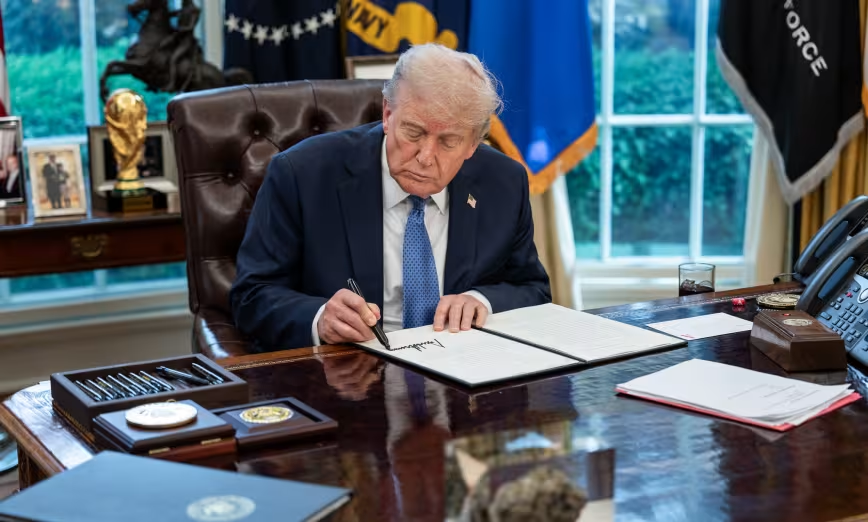
The Trump administration’s moves represent a U-turn from decades of precedent on prosecutorial discretion. Because they have finite capacity, law enforcement officers’ ability to determine whether to act against a particular individual is integral to immigration enforcement, and administrations over the years have set priorities based on resources and humanitarian concerns.4 While deviating from these guidelines was allowed, historically prosecutorial discretion rested on weighing commitments to the integrity of the law and humanitarian principles. At the same time, the U.S. government has long used temporary legal protections from deportation to safeguard individuals who would be unsafe in their origin country but lack a legal ability to remain in the United States. Modern prosecutorial discretion guidelines are laid out in various agencies memos over the last 50 years.
The first was the 1976 memo written by then U.S. Immigration and Naturalization Service (INS) General Counsel Sam Bernsen establishing “the ultimate source for the exercise of prosecutorial discretion in the federal government is the power of the president.”5 In 2000, then INS Commissioner Doris Meissner told officers to exercise discretion and consider the “totality of the circumstances” in making enforcement decisions, including a person’s length of residence in the United States, criminal history, cooperation with law enforcement, and humanitarian concerns.6 After INS was folded into the new Department of Homeland Security (DHS), 2005 guidance by William Howard, then the principal legal advisor for U.S. Immigration and Customs Enforcement (ICE), specified that people who had filed for a U or T visa were not to be pursued for removal.7
Subsequent administrations from both parties thus adopted prosecutorial discretion guidelines that generally built on each other. A 2007 memo from Julie Myers, then ICE assistant secretary, outlined specific discretionary guidance directing officers to release nursing mothers in most cases.8 Memos in 2011 by then ICE Director John Morton outlined specific favorable and adverse considerations for officers to consider when making enforcement decisions9 and provided guidance regarding victims of crimes.10 A 2014 memo by Homeland Security Secretary Jeh Johnson established specific guidance for ICE, U.S. Customs and Border Protection (CBP), and U.S. Citizenship and Immigration Services (USCIS) at all stages of enforcement decisions.11 Between these various guidelines, a 2012 Supreme Court ruling in Arizona v. the United States called officials’ “broad discretion” “a principal feature of the removal system.”12
Only in the first Trump administration did enforcement priorities start to deviate from this trend. In 2017 John Kelly, then secretary of Homeland Security, stated DHS “no longer will exempt classes or categories of removable aliens from potential enforcement,” effectively making every noncitizen without legal status a potential target.13 Under the Biden administration Homeland Security Secretary Alejandro Mayorkas returned to historical norms, prioritizing individuals posing a threat to public safety or national security and recent border arrivals.14 But those guidelines were rescinded on the first day of the second Trump term and replaced with guidance similar to that of the first Trump administration.15
Under current policy, many temporary protections from deportation have been removed and officials have affirmatively adopted policies rejecting deferred enforcement, including for individuals with applications in backlogs for legal status. With approximately $240 billion for immigration enforcement appropriated by Congress over the second Trump term, DHS’s mission is better funded than ever, potentially removing the need to consider how to allocate limited resources.16
Removals of Nationality-Group Protections
The largest group of noncitizens made vulnerable to deportation by the Trump administration are those previously covered under protections based on their nationality.
Temporary Protected Status
TPS, created by Congress in 1990, provides a reprieve from removal for people already in the United States whose countries have suffered natural disaster or political or economic crisis. Since its creation, administrations have used the program to protect individuals of 28 nationalities.17 TPS for Somalia, which was redesignated for more than 30 years, was the longest-running TPS designation.18
At the start of the current Trump term, nearly 1.3 million noncitizens of 17 nationalities held TPS, with the largest groups from Venezuela and Haiti.19 Officials allowed 13 designations to expire.20 Evidence suggests some unauthorized immigrants with active TPS were deported before the protection ended, including Venezuelan national Darian Maldonado Medina, although the government has contested his status.21
Nationals of four countries had TPS as of this writing—El Salvador, Lebanon, Sudan, and Ukraine—covering more than 274,000 individuals as of March 2025.22 Still, the Trump administration has generated confusion by declining to say when or if these statuses will expire. By law, DHS must announce the expiration of a country’s TPS designation at least 60 days ahead of time; the time periods set out for the Ukraine, Sudan, and El Salvador designations have lapsed, but because the statuses were not formally terminated, individuals’ protections and work authorization remain, albeit in protracted limbo.23
Parole Programs
The Biden administration relied heavily on humanitarian parole to ease pressure from record arrivals at the U.S.-Mexico border, allowing some noncitizens to enter the United States temporarily. The Trump administration quickly moved to end these programs. CBP One was terminated for new arrivals on Day One, however the administration’s efforts to end parole for people already in the country under the program were unsuccessful (the case remained on appeal as of this writing).24 CHNV was terminated in 2025 after litigation that eventually reached the Supreme Court, and recipients lost their parole.
Two programs, Uniting for Ukraine (U4U) and Operation Allies Welcome (OAW), were created in response to Russia’s invasion of Ukraine and the U.S. exit from Afghanistan.25 In January 2025, the Trump administration paused renewal and benefit applications for these parolees; after litigation, the administration once again began processing renewal applications but added additional vetting.26
Table 2. Recipients of Parole via Programs the Trump Administration Has Sought to End, 2024
|
Program |
Maximum Number of Parolees |
|---|---|
| TOTAL |
1,779,000 |
|
CBP One |
937,000 |
|
Cuban, Haitian, Nicaraguan, Venezuelan (CHNV) Parole Program |
532,000 |
|
Uniting For Ukraine (U4U) |
233,000 |
|
Operation Allies Welcome (OAW) |
77,000 |
Many recipients likely went on to apply for other statuses such as asylum or qualified for TPS, although many may now lack protection from deportation. Among the recipients of these statuses caught up in increased enforcement was Emmanuel Damas, a CHNV parolee from Haiti, who was arrested by local police for domestic assault, handed over to ICE, and in March 2026 died in ICE detention.27 Additionally, U4U recipient Mykhailo Shekhtman, a truck driver, was arrested by Oklahoma state troopers and turned over to ICE in February.28
Deferred Enforced Departure (DED) was created in 1990 to replace Extended Voluntary Departure (a form of relief that dated back to 196029) to protect Chinese nationals after the Tiananmen Square massacre.30 Unlike TPS, DED was not congressionally approved but is instead based in the president’s power over foreign relations.31 An eligible noncitizen does not register for DED; the deferral is triggered if a protected migrant becomes subject to removal.
Under the second Trump administration, three groups’ DED designations have expired: Lebanese, Liberians, and Palestinians (see Table 3).32 As of this writing, DED was designated only for people from Hong Kong, covering an estimated 3,860 individuals as of 2021 (the most recent estimate available); it is set to expire February 5, 2027. Even still, several noncitizens from Hong Kong have reportedly been arrested by ICE.33
Table 3. Expired Deferred Enforced Departure Designations
|
Designation |
Estimated Eligible Population |
Date of Expiration |
|---|---|---|
| TOTAL |
17,840 |
|
|
Palestinians |
6,000 |
August 13, 2025 |
|
Lebanese |
11,000 |
January 25, 2026 |
|
Liberians |
840 |
June 30, 2026 |
Removals of Protections Based on Individuals’ Circumstances
Several protections exist for certain unauthorized immigrants based on their individual circumstances—either having arrived in the country as a minor, been a victim of a crime or human trafficking, or as a mistreated child. While the Trump administration has not sought to end these protections, it has eroded defenses against status holders’ removal in various ways.
Deferred Action for Childhood Arrivals
In perhaps one of the most far-reaching uses of executive discretion, in 2012 the Obama administration created DACA to provide removal protection and access to work authorization to certain unauthorized immigrants who arrived as minors. The Trump administration in its first term tried to dismantle DACA entirely, but has made no such attempt during the second term. However, it has taken several actions to weaken the protection against deportation held by more than 436,000 DACA holders as of June 2026.34 DACA has been closed to new applicants since 2017, but under court order USCIS continues to process renewals.35 As of October 2026, the average renewal processing time was seven months, creating lapses that can make DACA recipients lose their jobs and potentially become targets for deportation.36 The number of DACA holders has declined by nearly 97,000 since the end of the Biden administration, although some of this could be attributed to reasons aside from Trump administration changes.37
In April 2026, in the Matter of Santiago-Santiago, the Board of Immigration Appeals (BIA)—an executive-branch office that reviews immigration court rulings—ruled that having DACA or another type of deferred action does not automatically warrant termination of removal proceedings.38 The decision on its own does not expose DACA holders to deportation (barring extraordinary circumstances such as having committed a crime) but means a lapse in renewal could subject them to removal.
This chipping away at DACA’s protections has led many holders to be arrested. Nearly 300 DACA recipients were estimated to have been arrested by ICE in the first year of the second Trump term, and dozens deported.39
Key Numbers
All data as of June 2026
436,000
DACA holders
480,000
pending U visa petitions
123,000
pending T visa applications
U and T Visas
U and T visas were created by the 2000 Victims of Trafficking and Violence Protection Act and allow holders to eventually transition to a green card. Up to 10,000 U visas can be granted yearly to victims of certain crimes who help law enforcement during the crime’s investigation or prosecution.40 T visas are for victims of human trafficking and are capped at 5,000 per year.41 Typically, people who are eligible but cannot receive a visa because of the caps can be granted deferred action and work authorization. As of June 30, 2026, there were more than 480,000 pending U visa petitions,42 with an average processing time of 15 months,43 and nearly 123,000 pending T visa applications,44 with an average processing time of 31 months.45
On January 30, 2025, ICE rescinded longstanding guidance which had instructed agents to refrain from civil enforcement for crime victims and to affirmatively ask noncitizens if they had ever been victimized, instead directing agents to target “all inadmissible and removable aliens,” including applicants for T and U visas.46 After litigation, the new guidelines were paused in May 2026 and protection from deportation was restored to people with pending U or T visas, although they may still be deported after review of their case.47
Although the new guidance has been paused, individuals have nonetheless been subjected to enforcement. In one instance, a U visa petitioner from Mexico who cooperated with police after his daughter’s murder was arrested by ICE last April.48
Special Immigrant Juveniles
Established in 1990, Special Immigrant Juvenile Status (SIJS) is for abused, neglected, or abandoned children in state juvenile court proceedings who cannot be reunited with one or both parents.49 People with SIJS have a pathway to a green card, although they face significant wait times due to annual caps; while waiting, they may be eligible for deferred action.50
In June 2025, the administration unsuccessfully sought to rescind 2022 USCIS guidance automatically considering deferred action for people with SIJS while awaiting their visa.51 The following year, it announced that petitions—both for first-time status and renewals—filed after May 10, 2026 would no longer receive automatic consideration for deferred action.52 USCIS also no longer treats SIJS as a “particularly strong factor” for deferred action, potentially raising the threshold.53
From October 2025 through June 2026, more than 42,600 SIJ petitions were approved, while 33,600 remained pending.54 It is unclear how many people are affected by the new policy. Reports suggest that even people with deferred action have been arrested by ICE.55
Reviving Old Cases
The Trump administration has also focused enforcement on noncitizens with longstanding removal orders who were previously deprioritized by ICE, often due to foreign relations concerns (such as nationals of countries that would not accept deportees).56 Many were people who fled Cambodia, Laos, and Vietnam in the late 20th century and were ordered removed decades ago.
For instance, Vietnam will not accept deportees who arrived in the United States prior to 1995;57 these immigrants have long had their removal deferred and were not detained but were required to check in with ICE regularly. The first Trump administration unsuccessfully sought to force Vietnam to accept these people.58 Since 2025, some have been sent to third countries, including one man sent to South Sudan and then ultimately repatriated to Vietnam.59 Additional individuals from countries including Cuba, Iran, Iraq, and Venezuela have been targeted for this enforcement.60
In addition, the Trump administration has resumed immigration court cases that previously were administratively closed, sometimes decades ago.61 Administrative closure occurs when an immigration judge puts a temporary pause on a case before the immigration courts or the BIA; it offers no legal relief but keeps individuals in limbo with neither legal status nor active deportation proceedings.
The Trump administration has halted administrative closures and the Supreme Court declined to restore the process in October 2026.62 As such, thousands of administratively closed cases have been put back on the immigration court calendar.63 Some are asylum cases while many others involve individuals in removal proceedings who have affirmative cases pending with USCIS, such as applicants for a U or T visa or SIJS.64
Increased Consequences with Decreased Options
At a time when ICE faces pressure to meet ambitious arrest and deportation targets, these various efforts to chip away at protections from arrest and deportation have raised the stakes for millions. Many are now in precarious situations, unable to work legally, and vulnerable to deportation, and while some have other legal options, such as by seeking asylum, none are straightforward. The asylum process is plagued with roadblocks including the possibility of having one’s case immediately directed to immigration courts or thrown out because of a rule that applicants generally must apply within one year of arriving in the United States.
This erosion of liminal statuses and discretion in immigration enforcement also increases the fear among unauthorized immigrants, aiding the administration’s push for “self-deportations.” While the historical norm has been for the executive branch to use discretion to balance humanitarian concerns with immigration law enforcement, this administration has reset the scales.
The authors thank Hannah Hintermeister for her research assistance.
Sources
Arizona v. United States. 2012. 567 U.S. 387.
Bernsen, Sam. 1976. Legal Opinion Regarding Service Exercise of Prosecutorial Discretion. Memorandum from the General Counsel to the Commissioner, Immigration and Naturalization Service (INS), July 15, 1976.
Board of Immigration Appeals 2026. Matter of Santiago-Santiago. 29 I&N Dec. 589.
Bush, George. 1990. Executive Order 12711—Policy Implementation with Respect to Nationals of the People’s Republic of China. April 11, 1990.
Capps, Randy, Muzaffar Chishti, Julia Gelatt, Jessica Bolter, and Ariel G. Ruiz Soto . 2018. Revving up the Deportation Machinery: Enforcement and Pushback under Trump. Washington, DC: Migration Policy Institute (MPI).
Center for Human Rights and Constitutional Law et al. N.d. ICWC v. Noem Practice Advisory and Toolkit. Accessed November 10, 2026.
Chishti, Muzaffar and Ariel G. Ruiz Soto. 2026. Attacked as “De Facto Amnesty,” U.S. Temporary Status Is Abruptly Eroded. Migration Information Source, May 28, 2026.
Daniel, Seth. 2026. Family Is Seeking Answers in Case of Haitian Man Who Died in ICE Custody. Dorchester Reporter, March 17, 2026.
De La Cruz, Maricela. 2026. DACA Renewal Delays Leave Recipients in Limbo across California. KCRA, October 29, 2026.
Dunst, Charles. 2018. Trump Administration Quietly Backs Off on Deporting Vietnamese Immigrants. WRAL, November 22, 2018.
Falzetta, Joseph and Deng Machol. 2026. Vietnamese Man Deported from U.S. to South Sudan Is Repatriated after Months in Detention. Associated Press, June 19, 2026.
García, Uriel J., Alejandra Martinez, Alejandro Santos Cid, and Alex Nguyen. 2026. Migrants Who Planted Roots in Texas Are Being Swept Up in the Immigration Crackdown. Here Are Five of Their Stories. KRGV, September 22, 2026.
Howard, William J. 2005. Memorandum for All OPLA Chief Counsel: Prosecutorial Discretion: Prosecutorial Discretion. U.S. Immigration and Customs Enforcement (ICE) memo, October 24, 2005).
Immigrant Legal Resource Center (ILRC). 2024. What Is Special Immigrant Juvenile Status (SIJS)? Explainer, May 2024.
---. 2026. What Is Happening with Deferred Action for Special Immigrant Juveniles (SIJs)? Practice advisory, April 2026.
Immigrant Legal Resource Center (ILRC) Attorneys. 2026. Navigating Removal Proceedings While Pursuing Survivor-Based Forms of Relief at USCIS. San Francisco: ILRC, 2026.
Johnson, Jeh. 2024. Policies for the Apprehension, Detention, and Removal of Undocumented Immigrants. Memorandum from the secretary of Homeland Security, November 20, 2024.
Justice Action Center. N.d. Svitlana Doe v. Noem (Humanitarian Parole Termination). Accessed November 9, 2026.
Kelly, John. 2017. Enforcement of the Immigration Laws to Serve the National Interest. Memorandum from the secretary of Homeland Security, February 20, 2017.
Kittle, Sarah. N.d. How to Respond to a 90-Day Notice from ICE. s accessed November 14, 2026.
Kine, Phelim and Eric Bazail-Eimil. 2026. Legally in the US, Hong Kong Citizens Caught in ICE Crackdown. Politico, October 10, 2026.
Lurie, Dawn, Alexander Madrak, and John Mazzeo. 2026. DHS Allows Salvadoran TPS Beneficiaries to Work and Remain, For Now. Seyfarth Shaw Through the Immigration Lens blog, September 9, 2026.
---. 2026. TPS Turbulence and Timing Questions for Ukraine and Sudan. Seyfarth Shaw Through the Immigration Lens blog, October 19, 2026
Mahoney, Kate and Merle Kahn. 2025. Responding to DHS Motions to Recalendar Administratively Closed Proceedings. San Francisco: Immigrant Legal Resource Center.
Martínez, Gabriela. 2026. ICE Arrested a Grandfather Who Helped Police Investigate His Daughter’s Murder. Spotlight PA, May 15, 2026.
Mayorkas, Alejandro N. 2021. Guidelines for the Enforcement of Civil Immigration Law. Memorandum from the secretary of Homeland Security, September 30, 2021.
Meissner, Doris. 2000. Memorandum to Regional Directors: Exercising Prosecutorial Discretion. U.S. Justice Department memo, Washington, DC, November 17, 2000.
Morton, John, 2011. Exercising Prosecutorial Discretion Consistent with the Civil Immigration Enforcement Priorities of the Agency for the Apprehension, Detention, and Removal of Aliens. ICE memo, June 17, 2011.
---. 2011. Prosecutorial Discretion: Certain Victims, Witnesses, and Plaintiffs. ICE memorandum, June 17, 2011.
Moslimani, Mohamad. 2024. How Temporary Protected Status Has Expanded under the Biden Administration, Washington, DC: Pew Research Center.
Myers, Julie L. 2007. Memorandum for All Field Office Directors: Prosecutorial and Custody Discretion. ICE memorandum, November 7, 2007.
National Immigration Project. 2026. A.C.R. v. Noem. Updated October 6, 2026.
Office of Representative Delia Ramirez. 2026. Ramirez, Garcia Demand Answers from DHS on Conflicting Data on Detention, Deportation of DACA Recipients. Press release, March 6, 2026.
Ortiz Blanes, Syra and Veronica Egui Brito. 2025. Trump Administration Deports Venezuelan Father with Temporary Protected Status. Miami Herald, updated October 5, 2025.
Romero, Laura. 2026. Supreme Court Declines to Restore Policy Allowing Immigration Judges to Close Deportation Cases. ABC News, October 27, 2026.
Ruiz Soto, Ariel G., Julia Gelatt, and Jennifer Van Hook. 2026. Following Years of High Border Arrivals, the U.S. Unauthorized Immigrant Population Hits New Peak. MPI commentary, July 29, 2026.
Safe Passage Project. N.d. What Is Special Immigrant Juvenile Status (SIJS)? Accessed November 10, 2026.
Silva, Daniella. 2026. Judge Blocks Trump's Termination of Parole for Migrants Who Legally Entered U.S. Using Biden-Era App. NBC News, March 31, 2026.
Sivaprasad Wadhia, Shoba et al. 2021. Letter to Secretary of Homeland Security Alejandro N. Mayorkas on Prosecutorial Discretion. August 24, 2021.
Trump, Donald J. 2025. Protecting the American People Against Invasion. The White House, January 20, 2025.
Ulloa, Jazmine. 2026. Trump’s Immigration Dragnet Sweeps Up Ukrainian Truckers Who Fled War. The New York Times, November 3, 2026.
U.S. Citizenship and Immigration Services (USCIS). 2022. Policy Alert: Special Immigrant Juvenile Classification and Deferred Action. PA-2022-10, Camp Springs, MD, March 7, 2022.
---. 2024. Count of Active DACA Recipients by Month of Current DACA Expiration as of December 31, 2024. Updated December 31, 2024.
---. 2024. DED Covered Population—Palestinians. Updated October 11, 2024.
---. 2024. Temporary Protected Status and Deferred Enforced Departure for Lebanon. Presentation, October 23, 2024.
---. 2025. Victims of Criminal Activity: U Nonimmigrant Status. Updated December 22, 2025.
---. 2025. Victims of Human Trafficking: T Nonimmigrant Status. Updated December 22, 2025.
---. 2026. Chapter 1—Purpose and Background. USCIS Policy Manual, volume 6, part J, updated October 27, 2026.
----. 2026. Count of Active DACA Recipients by Month of Current DACA Expiration as of June 30, 2026. Updated June 30, 2026.
--. 2026. DED Covered Country—Liberia. Updated July 1, 2026.
---. 2026. I-821D, Consideration of Deferred Action for Childhood Arrivals. Updated June 1, 2026.
---. 2026. Number of I-360 Petitions for Special Immigrant with a Classification of Special Immigrant Juvenile (SIJ). July 2026.
---. 2026. Number of Form I-914, Application for T Nonimmigrant Status, by Fiscal Year, Quarter, and Case Status, Fiscal Years 2008–2026. Updated July 2026.
---. 2026. Number of Form I-918 Petitions for U Nonimmigrant Status by Fiscal Year, Quarter, and Case Status, Fiscal Years 2009–2026. Updated July 2026.
---. 2026. Number of Service-wide Forms by Quarter, Form Status, and Processing Time, April 1, 2026–June 30, 2026. Updated July 2026.
---. 2026. Policy Memorandum: Special Immigrant Juvenile Classification and Deferred Action. PM-602-0198, Camp Springs, MD, April 10, 2026.
---. 2026. Temporary Protected Status. Updated October 20, 2026.
---. 2026. Under President Trump’s Leadership, USCIS Takes Unprecedented 2.2 Million Enforcement Actions Protecting Americans Across the Nation. Press release, October 29, 2026.
---. N.d. Immigration and Citizenship Data. Accessed November 10, 2026.
U.S. Customs and Border Protection (CBP). 2025. CBP Releases December 2024 Monthly Update. Press release, January 14, 2025.
U.S. Department of Homeland Security (DHS). 2025. Operation Allies Welcome. Updated January 22, 2025.
U.S. Embassy in El Salvador. 2023. DHS Continues to Prepare for the End of Title 42. Press release, August 4, 2023.
U.S. Senate Committee on Foreign Relations. 2026. At What Cost? Inside the Trump Administration’s Secret Deportation Deals. Washington, DC: U.S. Senate.
U.S. State Department. 2022. Repatriation: Agreement between the United States of America and Vietnam. Hanoi: U.S. State Department.
Vitello, Caleb. N.d. Interim Guidance on Civil Immigration Enforcement Actions Involving Current or Potential Beneficiaries of Victim-Based Immigration Benefits. Memorandum, Policy No. 11005.4, ICE, accessed November 9, 2026.
Wilson, Jill H. 2024. Temporary Protected Status and Deferred Enforced Departure. Washington, DC: Congressional Research Service (CRS).
---. 2025. Temporary Protected Status and Deferred Enforce Departure. Washington, DC: CRS.
---. 2026. Temporary Protected Status: History and Issues for Congress. Washington, DC: CRS.
Zatz, Marjorie S. and Nancy Rodriguez. 2018. The Limits of Discretion: Challenges and Dilemmas of Prosecutorial Discretion in Immigration Enforcement. Law and Social Inquiry 39, 3: 666–89.
About the U.S. Immigration Policy Program
The U.S. Immigration Policy Program provides analysis of U.S. immigration pathways, the impacts of enforcement and other policies, and the characteristics of immigrant populations.
Notes
-
1
U.S. Citizenship and Immigration Services (USCIS), “Under President Trump’s Leadership, USCIS Takes Unprecedented 2.2 Million Enforcement Actions Protecting Americans Across the Nation” (press release, October 29, 2026).
-
2
U.S. Citizenship and Immigration Services (USCIS), “Under President Trump’s Leadership, USCIS Takes Unprecedented 2.2 Million Enforcement Actions Protecting Americans Across the Nation” (press release, October 29, 2026).
-
3
Ariel G. Ruiz Soto, Julia Gelatt, and Jennifer Van Hook, “Following Years of High Border Arrivals, the U.S. Unauthorized Immigrant Population Hits New Peak” (MPI commentary, July 29, 2026).
-
4
Shoba Sivaprasad Wadhia et al., “Letter to Secretary of Homeland Security Alejandro N. Mayorkas on Prosecutorial Discretion,” August 24, 2021; Marjorie S. Zatz and Nancy Rodriguez, “The Limits of Discretion: Challenges and Dilemmas of Prosecutorial Discretion in Immigration Enforcement,” Law & Social Inquiry 39, no. 3 (2014): 666-89.
-
5
Sam Bernsen, “Legal Opinion Regarding Service Exercise of Prosecutorial Discretion” (memorandum from the General Counsel to the Commissioner, Immigration and Naturalization Service [INS], July 15, 1976).
-
6
Doris Meissner, “Memorandum to Regional Directors: Exercising Prosecutorial Discretion” (U.S. Justice Department memorandum, November 17, 2000).
-
7
William J. Howard, “Memorandum for All OPLA Chief Counsel: Prosecutorial Discretion: Prosecutorial Discretion” (U.S. Immigration and Customs Enforcement [ICE] memorandum, October 24, 2005).
-
8
Julie L. Myers, “Memorandum for All Field Office Directors: Prosecutorial and Custody Discretion” (U.S. Immigration and Customs Enforcement [ICE] memorandum, November 7, 2007).
-
9
John Morton, “Exercising Prosecutorial Discretion Consistent with the Civil Immigration Enforcement Priorities of the Agency for the Apprehension, Detention, and Removal of Aliens” (U.S. Immigration and Customs Enforcement [ICE] memorandum, June 17, 2011).
-
10
John Morton, “Prosecutorial Discretion: Certain Victims, Witnesses, and Plaintiffs” (U.S. Immigration and Customs Enforcement [ICE] memorandum, June 17, 2011).
-
11
Jeh Johnson, “Policies for the Apprehension, Detention, and Removal of Undocumented Immigrants” (memorandum from the secretary of Homeland Security, November 20, 2024).
-
12
Arizona v. United States, 567 U.S. 387 (2012).
-
13
John Kelly, “Enforcement of the Immigration Laws to Serve the National Interest” (memorandum from the secretary of Homeland Security, February 20, 2017).
-
14
Alejandro N. Mayorkas, “Guidelines for the Enforcement of Civil Immigration Law” (memorandum from the secretary of Homeland Security, September 30, 2021).
-
15
Donald J. Trump, “Protecting the American People Against Invasion,” White House, January 20, 2025.
-
16
An Act to Provide for Reconciliation Pursuant to Title II of H. Con. Res. 14, H.R. 1, 119th Cong., Public Law 119-21, July 4, 2025; Secure America Act, S. 2, 119th Cong., Public Law 119-98, June 10, 2026.
-
17
Jill H. Wilson, Temporary Protected Status: History and Issues for Congress (Washington DC: Congressional Research Service (CRS), 2026).
-
18
Jill H. Wilson, Temporary Protected Status and Deferred Enforced Departure (Washington, DC: Congressional Research Service, 2025).
-
19
Jill H. Wilson, Temporary Protected Status and Deferred Enforced Departure (Washington, DC: Congressional Research Service, 2025).
-
20
Muzaffar Chishti and Ariel G. Ruiz Soto, “Attacked as ‘De Facto Amnesty,’ U.S. Temporary Protected Status Is Abruptly Eroded,” Migration Information Source, May 28, 2026.
-
21
Syra Ortiz Blanes and Veronica Egui Brito, “Trump Administration Deports Venezuelan Father with Temporary Protected Status,” Miami Herald, updated October 5, 2025.
-
22
U.S. Citizenship and Immigration Services (USCIS), “Temporary Protected Status,” updated October 20, 2026; Jill H. Wilson, Temporary Protected Status and Deferred Enforced Departure (Washington, DC: Congressional Research Service, 2025).
-
23
Dawn Lurie, Alexander Madrak, and John Mazzeo, “TPS Turbulence and Timing Questions for Ukraine and Sudan,” Seyfarth Shaw Through the Immigration Lens blog, October 19, 2026; Dawn Lurie, Alexander Madrak, and John Mazzeo, “DHS Allows Salvadoran TPS Beneficiaries to Work and Remain, For Now,” Seyfarth Shaw Through the Immigration Lens blog, September 9, 2026.
-
24
Daniella Silva, “Judge Blocks Trump's Termination of Parole for Migrants Who Legally Entered U.S. Using Biden-Era App,” NBC News, March 31, 2026.
-
25
U.S. Department of Homeland Security (DHS), “Operation Allies Welcome,” updated January 22, 2025.
-
26
Justice Action Center, “Svitlana Doe v. Noem (Humanitarian Parole Termination),” accessed November 9, 2026.
-
27
Seth Daniel, “Family Is Seeking Answers in Case of Haitian Man Who Died in ICE Custody,” Dorchester Reporter, March 17, 2026.
-
28
Jazmine Ulloa, “Trump’s Immigration Dragnet Sweeps Up Ukrainian Truckers Who Fled War,” The New York Times, November 3, 2026.
-
29
Jill H. Wilson, Temporary Protected Status and Deferred Enforced Departure (Washington, DC: Congressional Research Service, 2024).
-
30
George Bush, “Executive Order 12711—Policy Implementation with Respect to Nationals of the People’s Republic of China,” April 11, 1990.
-
31
Jill H. Wilson, Temporary Protected Status and Deferred Enforced Departure (Washington, DC: Congressional Research Service, 2024).
-
32
U.S. Citizenship and Immigration Services (USCIS), “DED Covered Population—Palestinians,” updated October 11, 2024; USCIS, “Temporary Protected Status and Deferred Enforced Departure for Lebanon” (presentation, October 23, 2024); USCIS, “DED Covered Country—Liberia,” updated July 1, 2026.
-
33
Phelim Kine and Eric Bazail-Eimil, “Legally in the US, Hong Kong Citizens Caught in ICE Crackdown,” Politico, October 10, 2026.
-
34
U.S. Citizenship and Immigration Services (USCIS), “Count of Active DACA Recipients by Month of Current DACA Expiration as of June 30, 2026,” updated June 30, 2026.
-
35
U.S. Citizenship and Immigration Services (USCIS), “I-821D, Consideration of Deferred Action for Childhood Arrivals,” updated June 1, 2026.
-
36
Maricela De La Cruz, “DACA Renewal Delays Leave Recipients in Limbo across California,” KCRA, October 29, 2026.
-
37
U.S. Citizenship and Immigration Services (USCIS), “Count of Active DACA Recipients by Month of Current DACA Expiration as of December 31, 2024,” updated December 31, 2024.
-
38
Matter of Santiago-Santiago, 29 I&N Dec. 589 (Board of Immigration Appeals, 2026).
-
39
Office of Representative Delia Ramirez, “Ramirez, Garcia Demand Answers from DHS on Conflicting Data on Detention, Deportation of DACA Recipients” (press release, March 6, 2026).
-
40
U.S. Citizenship and Immigration Services (USCIS), “Victims of Criminal Activity: U Nonimmigrant Status,” updated December 22, 2025.
-
41
U.S. Citizenship and Immigration Services (USCIS), “Victims of Human Trafficking: T Nonimmigrant Status,” updated December 22, 2025.
-
42
U.S. Citizenship and Immigration Services (USCIS), “Number of Form I-918 Petitions for U Nonimmigrant Status by Fiscal Year, Quarter, and Case Status, Fiscal Years 2009–2026,” updated July 2026.
-
43
U.S. Citizenship and Immigration Services (USCIS), “Number of Service-wide Forms by Quarter, Form Status, and Processing Time, April 1, 2026–June 30, 2026,” updated July 2026.
-
44
U.S. Citizenship and Immigration Services (USCIS), “Number of Form I-914, Application for T Nonimmigrant Status, by Fiscal Year, Quarter, and Case Status, Fiscal Years 2008–2026,” accessed November 10, 2026.
-
45
U.S. Citizenship and Immigration Services (USCIS), “Number of Service-wide Forms by Quarter, Form Status, and Processing Time, April 1, 2026–June 30, 2026,” updated July 2026.
-
46
Caleb Vitello, “Interim Guidance on Civil Immigration Enforcement Actions Involving Current or Potential Beneficiaries of Victim-Based Immigration Benefits” (memorandum, Policy No. 11005.4, U.S. Immigration and Customs Enforcement, accessed November 9, 2026).
-
47
Center for Human Rights and Constitutional Law et al., “ICWC v. Noem Practice Advisory and Toolkit,” accessed November 10, 2026.
-
48
Gabriela Martínez, “ICE Arrested a Grandfather Who Helped Police Investigate His Daughter’s Murder,” Spotlight PA, May 15, 2026.
-
49
U.S. Citizenship and Immigration Services (USCIS), “Chapter 1—Purpose and Background,” USCIS Policy Manual, volume 6, part J, updated October 27, 2026; Immigrant Legal Resource Center (ILRC), “What Is Special Immigrant Juvenile Status (SIJS)?” (explainer, May 2024).
-
50
Safe Passage Project, “What Is Special Immigrant Juvenile Status (SIJS)?” accessed November 10, 2026.
-
51
U.S. Citizenship and Immigration Services (USCIS), “Policy Alert: Special Immigrant Juvenile Classification and Deferred Action” (PA-2022-10, Camp Springs, MD, March 7, 2022).
-
52
Immigrant Legal Resource Center (ILRC), “What Is Happening with Deferred Action for Special Immigrant Juveniles (SIJs)?” (practice advisory, April 2026).
-
53
National Immigration Project, “A.C.R. v. Noem,” updated October 7, 2026.
-
54
U.S. Citizenship and Immigration Services (USCIS), “Number of I-360 Petitions for Special Immigrant with a Classification of Special Immigrant Juvenile (SIJ) by Fiscal Year, Quarter, and Case Status, Fiscal Years 2010–2026,” accessed November 10, 2026.
-
55
Marc Perrusquia, “ICE Arrests Numbers of Young Immigrants Despite Protected Status,” Institute for Public Service Reporting, November 5, 2025.
-
56
Randy Capps, Muzaffar Chishti, Julia Gelatt, Jessica Bolter, and Ariel G. Ruiz Soto, Revving Up the Deportation Machinery: Enforcement and Pushback under Trump (Washington, DC: MPI, 2018).
-
57
U.S. State Department, Repatriation: Agreement between the United States of America and Vietnam (Hanoi: U.S. State Department, 2022).
-
58
Charles Dunst, “Trump Administration Quietly Backs Off on Deporting Vietnamese Immigrants,” WRAL, November 22, 2018.
-
59
Joseph Falzetta and Deng Machol, “Vietnamese Man Deported from U.S. to South Sudan Is Repatriated after Months in Detention,” Associated Press, June 19, 2026; U.S. Senate Committee on Foreign Relations, At What Cost? Inside the Trump Administration’s Secret Deportation Deals (Washington, DC: U.S. Senate, 2026).
-
60
Sarah Kittle, “How to Respond to a 90-Day Notice From ICE,” Chaldean News, accessed November 14, 2026; Uriel J. García, Alejandra Martinez, Alejandro Santos Cid, and Alex Nguyen, “Migrants Who Planted Roots in Texas Are Being Swept Up in the Immigration Crackdown. Here Are Five of Their Stories,” KRGV, September 22, 2026.
-
61
Kate Mahoney and Merle Kahn, Responding to DHS Motions to Recalendar Administratively Closed Proceedings (San Francisco: Immigrant Legal Resource Center, 2025).
-
62
Laura Romero, “Supreme Court Declines to Restore Policy Allowing Immigration Judges to Close Deportation Cases,” ABC News, October 27, 2026.
-
63
Kate Mahoney and Merle Kahn, Responding to DHS Motions to Recalendar Administratively Closed Proceedings (San Francisco: Immigrant Legal Resource Center, 2025).
-
64
Immigrant Legal Resource Center (ILRC) Attorneys, Navigating Removal Proceedings While Pursuing Survivor-Based Forms of Relief at USCIS (San Francisco: ILRC, 2026).


Related Content