ICE’s Fast-Growing Detention Network Faces Scrutiny amid Record Deaths and Alleged Waste
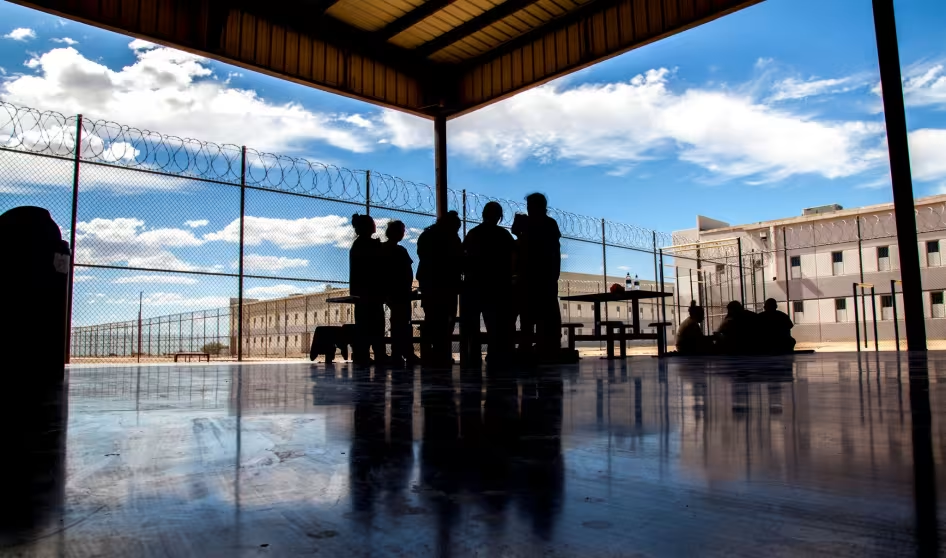
The Eloy immigration detention facility in Arizona.
Credit: ICE
Highlights
The Trump administration has expanded immigration detention to unprecedented levels, drawing scrutiny over a record number of detainee deaths, reports of poor conditions, and alleged waste.
- A record number of people died in U.S. Immigration and Customs Enforcement (ICE) custody in fiscal year 2026, with reports of lack of access to medical care, substandard food and sanitation, overcrowding, and allegations of abuse.
- The number of ICE detention facilities more than doubled since the Trump administration returned to office, from 134 in January 2025 to 272 in July 2026. The administration has said it wants to use some of the $240 billion provided by Congress for immigration enforcement to build capacity to detain up to 100,000 noncitizens at a time.
- The U.S. Supreme Court has agreed to review a policy allowing authorities to indefinitely detain immigrants arrested by ICE.
The massive expansion of the U.S. immigration detention system, which was already the world’s largest, has been accompanied by mounting revelations of harsh conditions and a record number of detainee deaths. Together, these developments have brought new scrutiny to detention as a tool in the Trump administration’s scaling up of deportations.
The U.S. Supreme Court in coming months will hear a challenge to the administration’s policy of mandating detention of all immigrants arrested by U.S. Immigration and Customs Enforcement (ICE), foreclosing any opportunity for release on a bond. Many states and localities, both Democratic and Republican led, have pushed back against the quick buildup of detention sites in their jurisdictions.
This legal and political fallout comes on the heels of a $45 billion surge in funding for ICE, some of which the agency has said it will use to build capacity to hold 100,000 detainees, compared to the 40,000 it was equipped to hold in January 2025, at the end of the Biden administration.1 As of July 2026, the latest publicly available data, ICE held an average of 66,000 detainees daily.2 To scale up, ICE has sought to convert warehouses into detention facilities, prompting pushback from local communities. With many of these conversions and other projects now abandoned, questions have been raised about the cost to taxpayers.
Evidence of human costs are mounting, too. Thirty-seven people died in ICE custody in fiscal year (FY) 2026, the most in the agency’s history.3 And so far during the second Trump term, 60 detainee deaths have been reported. Reports of harsh conditions and poor medical care have intensified controversy over the detention system writ large. Notably, the system was not designed for punishment, unlike the criminal justice system, but to ensure that individuals appear at court hearings and then comply with removal orders. As the Supreme Court weighs the legality of mandatory detention, there is evidence of a rising number of detainees accepting the government's offer to leave the country voluntarily rather than fight their deportation, suggesting that poor detention conditions may incentivize asylum seekers to abandon their cases.
This article examines the mandatory detention policy and conditions in immigration detention facilities.
Thirty-seven people died in ICE custody in FY 2026, the most in the agency’s history.
Detention as Coercion?
Under a policy issued in July 2025, ICE has maintained that a 1996 law, the Illegal Immigration Reform and Immigrant Responsibility Act (IIRIRA), allows immigrants arrested inside the United States after entering illegally to be subject to mandatory detention and generally unable to seek bond. That new interpretation treats these immigrants as “applicants for admission,” a widely contested position that multiple federal courts have ruled is inconsistent with Congress’s intent.4 Politico had catalogued 13,500 individual cases in which federal judges had ruled against ICE’s arguments as of mid-October.5
ICE maintains that it can detain a noncitizen during the entire period while the removal proceedings are pending. But once an immigration judge issues a formal removal order, under the Supreme Court’s 2001 ruling in Zadvydas v. Davis, a noncitizen may be detained for only up to six months, unless the government can establish a significant likelihood of removal in the reasonably foreseeable future or the person is a public safety threat.6 Last week, the Fifth U.S. Circuit Court of Appeals ruled that unauthorized immigrant detainees do not necessarily have a constitutional right to a bond hearing, although other appeals courts have upheld that right, either on statutory or constitutional grounds.7
In coming months, the Supreme Court will hear arguments on the ICE policy. The case’s outcome could be complex. Even if justices side with the administration’s interpretation of the statute, they may determine the policy does not meet constitutional due-process requirements, at least for long-term residents. A ruling against the administration could mean immigrants regain access to a bond hearing, but judges would have discretion to grant bond and at what amount.
Voluntary Departure on the Rise
While immigration detention is not meant to be punitive, some advocates and attorneys contend that ICE uses the length and conditions of detention (see below), among other pressures, to coerce unauthorized immigrants to leave the country on their own. Many noncitizens “self-deport” before being arrested, while others leave after being detained, through the formal process of voluntary departure, instead of legally contesting their removal. Between January 20, 2025, and July 2026, ICE granted about 170,000 voluntary departures or voluntary returns, according to Migration Policy Institute (MPI) analysis.8
Going through voluntary departure speeds up one’s deportation, results in less time in detention, and expands ICE’s capacity to hold people. As part of its Project Homecoming, the administration had placed case managers across 40 ICE detention sites as of July 2026.9 The project provides eligible unauthorized immigrants a $3,000 cash incentive to depart the United States, government-funded travel, and forgiveness of fines for being in the country without legal status.10 Detainees accounted for about half of the 200,000 Project Homecoming participants (including those with confirmed and pending departures) by July 2026.11 The Vera Institute of Justice found that 31 percent of detainees’ cases that were resolved resulted in voluntary departure from September 2025 to February 2026, compared to 5 percent of cases during the last six months of the Biden administration (July 2024 to December 2024).12 Detainees participating in Project Homecoming reportedly spent an average of 17 days in detention as of July, compared to about 50 days for detainees overall.13
The latest available data show the time spent in detention has also varied by detainees’ criminal history. At the start of the second Trump term, the average time in detention rose sharply among immigrants without criminal charges or convictions, reaching about 76 days (see Figure 1). Partial data for July 2026 show that the average for these detainees fell to 31 days, suggesting many opted for voluntary departure. Average time in detention for immigrants who had been convicted of a crime or were facing charges was more stable.
Figure 1. Average Days in ICE Detention, by Detainees’ Criminal Status, October 2023–July 2026*
Detention Infrastructure, Standards, and Conditions
Increases in immigration arrests appear to have outpaced detention capacity and contributed to worsening conditions, including at ICE facilities and those operated by states and other federal agencies. Challenges stem not only from overall lack of detention capacity, but limited bed space for vulnerable groups including families with children and individuals with complex medical issues.
ICE’s network includes multiple types of detention facilities, each with different standards for medical care, food service, hygiene, recreation, access to legal representation, and other requirements. The standards vary depending on whether the facility is solely for ICE detainees and whether it is owned and operated by ICE, a state or local government, or a private contractor (see Table 1). For instance, dedicated facilities for ICE detainees generally follow Performance-Based National Detention Standards, which are the most comprehensive, while those housing a mix of ICE detainees and others follow the looser National Detention Standards. More accommodating Family Residential Standards guide facilities for immigrant families.
Increases in immigration arrests appear to have outpaced capacity and contributed to worsening detention conditions.
Table 1. Immigration Detention Facility Types, Operational Models, and Applicable Standards
|
Facility Type |
Operational Model |
Conditions Standard |
|---|---|---|
| Staging and Temporary Hold Rooms | Short-term, 12-hour holding cells typically located at U.S. Immigration and Customs Enforcement (ICE) offices or processing hubs, used for tracking, processing, or transport | Performance-Based National Detention Standards |
| Service Processing Centers | Owned by ICE and typically operated by private, contracted security companies, housing only ICE detainees | Performance-Based National Detention Standards |
| Contract Detention Facilities | Privately owned and operated detention centers that contract with ICE to lease bed space only for immigrant detainees | Performance-Based National Detention Standards |
| Dedicated Intergovernmental Service Agreements (IGSAs) | State or local facility that contracts with ICE to dedicate an entire facility, wing, or specific housing unit exclusively for ICE detainees | Performance-Based National Detention Standards or Contract-specific standards |
| Non-Dedicated IGSAs | State or local facility that contracts with ICE to provide bed space to house a mix or co-locate ICE detainees with other inmates | National Detention Standards |
| Family Residential Center | Privately owned and operated detention centers contracted by ICE through state or local government, akin to IGSAs | Family Residential Standards |
| U.S. Marshals Service Agreements | Facility managed or contract by U.S. Marshals Service where ICE rents shared or overflow bed space | Federal Performance Detention Standards |
The inspector general of the U.S. Department of Homeland Security (DHS) has consistently found that some detention facilities do not fully meet the standards. For example, an inspector general inspection found that, in May 2025, the Krome North Processing Center in Miami was 25 percent over capacity, and that ICE staff did not comply with some food service, use-of-force, and medical standards.14 Another inspection in March 2025 found that officers at the Winn Correctional Center in Louisiana wrongly used a chokehold on one detainee and stabbed another with a pen so that it broke the skin, while the facility itself had leaking holes in the ceiling and multiple vents.15 Among other issues at the state-run facility known as Alligator Alcatraz in Florida, which closed in June 2026, officials put dozens of detainees in small metal enclosures for up to two hours at a time, the inspector general found in January 2026, a practice it described as “highly unconventional and does not align with standards for humane treatment.”16
Overcrowding in ICE holding rooms designed for short stays has become a major concern. Between January and June 2025, 18 percent of immigrants held in holding rooms were there for longer than ICE’s 12-hour limit—many were there for multiple days—compared to 4 percent in 2024.17 Citing “exceptional circumstances,” ICE increased the holding cell limit to 72 hours in June 2025 (a federal judge struck down the increase the following June).18 That September, a federal district court temporarily prohibited ICE from detaining immigrants in overcrowded conditions at 26 Federal Plaza in New York City, where ICE had held as many as 150 people arrested at immigration court and elsewhere in the region. ICE violated that order, leading the judge to make the injunction permanent in September 2026 and order ICE to improve detention conditions and mitigate overcrowding.19
As of October 2026, at least 60 immigrants had died in ICE custody less than two years into the second Trump term (see Figure 2).20 That compares to 26 deaths during the four years of the Biden administration and 49 deaths during the four years of the first Trump term. In several cases, independent investigators have found that detainees died after receiving substandard medical care, including one incident when officials failed to perform CPR after a heart attack and another when they did not look inside a detainee’s cell during a wellness check to confirm he was alive.21
Figure 2. Deaths in ICE Detention, 2003-26
DHS has vigorously denied that poor conditions exist in ICE detention. Officials have claimed detainees receive health screenings within 12 hours of arrival, a full assessment within 14 days, access to medical appointments, and 24-hour emergency care.22
Beyond the questions of medical care, there has been persistent reporting that some detainees are not given sufficient nutrition or receive spoiled food or water, are placed into solitary confinement, and are not regularly given access to showers or hygiene products. DHS has denied these claims.
Billions of Dollars to Expand Detention
Congress has offered a dramatic amount of funds to expand ICE’s detention capacity. It provided $45 billion for immigration detention through FY 2029 in the One Big Beautiful Bill Act, in addition to a portion of the $31 billion provided for enforcement under the Secure America Act. This funding led ICE to more than double its detention facilities from 134 in January 2025 to 272 by July 2026, not including holding rooms.23 The average daily population in ICE detention increased from 39,000 to 66,000 over the same period (see Figure 3).
Figure 3. Average Daily Population in ICE Detention, October 2023–July 2026*
However, large sums of money have been allocated to splashy detention projects that have since been rolled back quietly. The Government Accountability Office (GAO) found that the Trump administration implemented new detention initiatives without a plan, resulting in extensive waste.24 The Defense Department, for instance, assembled tents for 5,000 beds at the naval station at Guantanamo Bay but then took them down after DHS determined they did not meet detention standards. Senate inspectors in August 2026 found DHS had sent approximately 852 detainees to Guantanamo Bay since February 2025, at a cost of over $100 million.25 At the time, 445 government personnel were working on immigration detention at Guantanamo Bay, even though there were no detainees. Additionally, DHS paid roughly $1.1 billion for 11 commercial warehouses it aimed to use for detention, only to later try and sell seven of them amid local community pushback and questions over the feasibility of connecting to local water and sewer services, resulting in a loss of $7.7 million in nonrecoverable costs and $12.8 million in utilities, security, and other services.
Investments in other initiatives have also been determined to have been wasted. GAO found the administration overspent millions of dollars for meals and services by not accounting for the fluctuating size of the detainee population at Fort Bliss, in El Paso.26 GAO also found that DHS did not follow its normal procedure to negotiate costs when it contracted with Florida to pay $249 per detainee per day at Alligator Alcatraz and the Baker County Detention Center, compared to ICE’s median rate of $92.
Meanwhile, private detention companies have received significant contracts. GEO Group and CoreCivic, which run ICE’s largest detention facilities, reported more than $2 billion in revenue in 2025, after opening nine new facilities,27 and a combined $1.4 billion in the second quarter of 2026.28 This money is in addition to CoreCivic’s $1.6 billion in net proceeds from the sale of four facilities to DHS, which the company continues to operate. Critics argue these companies boost profits by skimping on health care, food quality, and other areas.29
Impacts on Economies and Local Pushback
ICE claims new detention centers bring jobs, tax revenue, and security, especially to small or economically distressed communities. But towns across the country have opposed new facilities, citing concerns about transparency, zoning, water use, and detainee conditions.30
While research on the economic impacts of immigration detention facilities is limited, findings suggest that, aside from direct job revenue, prisons in general provide little net benefits on private employment, unemployment rates, or sustained community growth. A 2024 study found that each new prison job translated into approximately one additional local job, which is less than the multiplier effect supporters often claim.31 Meanwhile, home values fell by approximately 2 to 4 percent in neighborhoods closest to new prisons. A 2023 review of research similarly concluded that prisons may provide direct or temporary employment but generally have not revitalized rural counties over the long run.32
Lack of transparency about detention expansion plans is a common source of local opposition. From Georgia to Michigan, local officials have voiced frustration about being kept in the dark about how facilities will operate and affect local infrastructure, and many have barred building or converting them. 33The U.S. Conference of Mayors has called for the Trump administration to obtain local zoning and building permits to convert warehouses and other structures into detention facilities, and for the facilities to meet local health and safety standards.34
Additionally, multiple state governments have sued to stop construction of detention facilities, and California and New Mexico have prohibited cities and counties from approving construction of any. Colorado, for instance, has filed a lawsuit to block a GEO Group-run facility outside Denver and any others in the state until the federal government conducts proper environmental review.35

Impacts of Detention on Immigrants and Families
Research has found that detention can harm immigrants’ immediate physical and psychological wellbeing while aggravating pre-existing conditions. Studies associate detention with anxiety, depression, post-traumatic stress disorder (PTSD), sleep disruption, and worsening physical health.36 These effects often persist after immigrants are released or deported and become more severe as their time in detention increases. A 2025 study of 200 immigrants detained by U.S. authorities found that those who were confined for at least six months reported substantially higher rates of poor or fair health, mental illness, and PTSD than those detained for shorter periods.37
Detention also separates families from caregivers and wage earners, creating emotional instability and financial hardship for spouses and children, including U.S. citizens. In the short term, children may have nightmares, lose their appetite, do worse in school, or become anxious, angry, or withdrawn.38 Over the long term, some face persistent aggression, attachment difficulties, depression, and PTSD. A U.S. detention-center study found that 49 percent of children who had been separated from their mothers exhibited significant emotional problems, compared with 29 percent of children who had not been separated.39 Notably, clinical evaluations of parents and children separated and detained at the U.S.-Mexico border found that nearly all met criteria for at least one mental-health diagnosis after reunification, demonstrating that ending a separation does not necessarily end its consequences.
The Future of Detention
Driven by the Trump administration’s maximalist deportation strategy and leveraging a historic surge in funding, ICE has sharply expanded immigration detention, so far to mixed results. The agency has utilized more facilities of different types, gradually grown its detention capacity, and increased the share of detainees opting to take voluntary departure. However, it has so far failed to reach its goal of 100,000 beds, detention conditions have not improved significantly, and a record number of people have died in ICE custody. The mandate for more deportations outpaced ICE’s initial capacity and it stumbled in trying to rapidly expand, resulting in allegations of significant waste.
Yet the future of ICE detention may be defined by changes that have received relatively less attention. DHS has reportedly planned to implement a “hub-and-spoke model” involving mega-center hubs processing detainees transferred from smaller facilities.40 This would replicate the ongoing operational model at ICE’s staging facility in Alexandria, Louisiana, but at the national level. 41Additionally, this new model would consolidate rather than expand the number of detention centers, and use a modular design and mobile facilities42 that allow officials to increase or reduce capacity as necessary.
ICE may also be seeking to transition part of its system from private operations to federally owned facilities. This may be in part because the Constitution’s supremacy clause insulates federal facilities from state oversight, according to immigration advocates and leadership at GEO Group.43
These changes could mean that the next administration will inherit a larger, centralized detention network, embedding today’s enforcement priorities in infrastructure that is built to last. Whether that legacy endures will depend not only on the policies of the next president but on whether shifting public opinion creates pressure to reverse course or further boosts the system now taking shape.
Sources
1A. 2026. “If You Can Keep It”: The Private Companies Profiting Off ICE. National Public Radio (NPR), February 23, 2026.
Agarwal, Neil and Jacquelyn Pavilon. 2026. Research Note: Newly Appointed Judges and the Rise of Voluntary Departure in Immigration Court. New York: Vera Institute of Justice.
American Civil Liberties Union (ACLU). 2026. District Court Grants Order Prohibiting ICE from Detaining Immigrants in Abusive Conditions at 26 Federal Plaza. Press release, September 24, 2026.
Barned-Smith, St. John. 2026. ICE Reports Say Many Detainees Died After Medical Care Failings. The San Francisco Chronicle, September 30, 2026.
Bouza, Johayra et al. 2018. The Science Is Clear: Separating Families Has Long-Term Damaging Psychological and Health Consequences for Children, Families, and Communities. Society for Research in Child Development 20.
Burke, Monica S. 2025. Nationwide Hold Room Waiver. Memorandum from Assistant Director of Custody Management, U.S. Immigration and Customs Enforcement (ICE), for All ERO Field Office Directors. June 24, 2025.
Cheney, Kyle and Jessie Blaeser. 2026. Explore the Data: More than 20,800 Rulings Against Trump in ICE Cases. Updated October 13, 2026.
Chirakijja, Janjala. 2024. The Local Economic Impacts of Prisons. Review of Economics and Statistics 106 (6): 1442-59.
City of Social Circle, Georgia. 2026. Updated Statement Regarding ICE Detention Facility 2/18/2026. Press release, February 18, 2026.
Detention Watch Network (DWN). N.d. “DWN - Deaths in ICE Custody (2003-Present). Accessed October 27, 2026.
Garsd, Jasmine. 2026. ICE Is Looking into “Mobile Detention Facilities.” NPR, September 23, 2026.
Gibson, Brittany. 2026. How Trump's “Self-Deportation” Push Has Ramped Up. Axios, July 28, 2026.
Hampton, Kathryn et al. 2011. The Psychological Effects of Forced Family Separation on Asylum-Seeking Children and Parents at the U.S.-Mexico Border: A Qualitative Analysis of Medico-Legal Documents. PLoS One 16 (11): e0259576.
---. 2022. Clinicians’ Perceptions of the Health Status of Formerly Detained Immigrants. BMC Public Health 22 (1): 575.
Jordan, David. 2002. Zadvydas v. Davis 33 U.S. 678 (2001). Washington and Lee Journal of Civil Rights and Social Justice 8 (1): 107-18.
Kim, Dae-Young. 2023. Prison-Based Economic Development: What the Evidence Tells Us. International Journal of Rural Criminology 7 (3): 357-85.
MacMillan, Douglas. 2026. Autopsy Report Classifies ICE Detainee’s Death as a Homicide. The Washington Post, January 21, 2026.
McDonald, Brent, Campbell Robertson, Zach Levitt, and Albert Sun. 2025. How Louisiana Built Trump’s Busiest Deportation Hub. The New York Times, July 31, 2025.
Romo, Vanessa. 2026. Private Prisons Announce $1.4 Billion in Revenue as Immigration Detentions Climb. NPR, August 8, 2026.
Rosenblum, Marc R. 2026. U.S. Deportations and “Self-Deportations” in the First 18 Months of the Second Trump Term. Migration Policy Institute (MPI) fact sheet, Washington, DC, October 2026.
Saadi, Altaf, Caitlin Patler, and Paola Langer. 2025. Duration in Immigration Detention and Health Harms. JAMA Network Open 8 (1): e2456164.
Schwellenbach, Nick, Luisa Clausen, and Aarushi Sahejpal. 2026. ICE, Inc.: The Top Companies Profiting from Trump’s Immigration Crackdown. POGO Investigates, February 17, 2026.
Slevin, Colleen. 2026. Colorado Sues to Stop New Immigration Detention Center from Opening in Hudson. The Colorado Sun, September 29, 2026.
Tolan, Casey and Isabelle Chapman. 2025. Immigrants Spend Days in “Miserable” ICE Hold Rooms, Violating Longstanding Policy. CNN, September 8, 2025.
U.S. Conference of Mayors. 2026. Nation’s Mayors Call for Reform of Federal Immigration Enforcement Procedures and Modernization of Immigration System. Press release, March 3, 2026.
U.S. Department of Homeland Security (DHS). 2026. CBP Home: Assistance to Voluntarily Self-Deport. Updated September 1, 2026.
U.S. Department of Homeland Security (DHS), Office of Inspector General (OIG). 2026. Results of an Unannounced Inspection of ICE’s Krome North Service Processing Center in Miami, Florida. Washington, DC: DHS OIG.
---. 2026. Results of an Unannounced Inspection of Winn Correctional Center in Winnfield, Louisiana. Washington, DC: DHS OIG.
---. 2026. Unannounced Inspection of ICE’s Florida Soft-Sided Facility (“Alligator Alcatraz”) in Ochopee, Florida. Washington, DC: DHS OIG.
U.S. Government Accountability Office (GAO). 2026. Immigration Detention: Urgent Planning Needed to Avoid Further Waste of Taxpayer Dollars. Washington, DC: GAO.
U.S. Immigration and Customs Enforcement (ICE). 2026. Venezuelan Detainee Dies in ICE Custody during Transfer in Georgia. Press release, July 15, 2026.
U.S. Senate Judiciary Committee. 2026. Congressional Oversight of Immigration Detention at Naval Station Guantanamo Bay. Washington, DC: U.S. Senate Judiciary Committee.
Villagran, Lauren. 2026. ICE Says It Can Detain Immigrants as Long as It Wants. Will the Supreme Court Agree? The Marshall Project, updated October 1, 2026.
Wang, Philip. 2026. Why ICE Is Quietly Buying Up Private Detention Centers. TIME, August 5, 2026.
Westervelt, Eric, Anusha Mathur, and Brent Jones. 2026. Mapping ICE's Expanding Footprint, and the Communities Fighting Back. NPR. March 23, 2026.
About the U.S. Immigration Policy Program
The U.S. Immigration Policy Program provides analysis of U.S. immigration pathways, the impacts of enforcement and other policies, and the characteristics of immigrant populations.
Notes
-
1
U.S. Department of Homeland and Security (DHS), “U.S. Immigration and Customs Enforcement: Budget Overview, Fiscal Year 2026,” accessed October 26, 2026.
-
2
MPI analysis of U.S. Immigration and Customs Enforcement (ICE), “Detention Management,” updated July 20, 2026.
-
3
Detention Watch Network (DWN), “DWN - Deaths in ICE Custody (2003-Present),” accessed October 27, 2026.
-
4
Lauren Villagran, “ICE Says It Can Detain Immigrants as Long as It Wants. Will the Supreme Court Agree?” The Marshall Project, updated October 1, 2026.
-
5
Kyle Cheney and Jessie Blaeser, “Explore the Data: More than 20,800 Rulings Against Trump in ICE Cases,” updated October 13, 2026.
-
6
David Jordan, "Zadvydas v. Davis 33 U.S. 678 (2001)," Washington and Lee Journal of Civil Rights and Social Justice 8, no. 1 (2002): 107-18.
-
7
Mattathias Schwartz, “Appeals Court Backs Trump on Constitutionality of Detentions,” The New York Times, October 23, 2026.
-
8
Marc R. Rosenblum, “U.S. Deportations and ‘Self-Deportations’ in the First 18 Months of the Second Trump Term” (MPI fact sheet, Washington, DC, October 2026).
-
9
Brittany Gibson, “How Trump's ‘Self-Deportation’ Push Has Ramped Up,” Axios, July 28, 2026.
-
10
U.S. Department of Homeland Security (DHS), “CBP Home: Assistance to Voluntarily Self-Deport,” updated September 1, 2026.
-
11
Brittany Gibson, “How Trump's ‘Self-Deportation’ Push Has Ramped Up,” Axios, July 28, 2026.
-
12
Neil Agarwal and Jacquelyn Pavilon, Research Note: Newly Appointed Judges and the Rise of Voluntary Departure in Immigration Court (New York: Vera Institute of Justice, 2026).
-
13
Brittany Gibson, “How Trump's ‘Self-Deportation’ Push Has Ramped Up,” Axios, July 28, 2026.
-
14
U.S. Department of Homeland Security (DHS), Office of Inspector General (OIG), Results of an Unannounced Inspection of ICE’s Krome North Service Processing Center in Miami, Florida (Washington, DC: DHS OIG, 2026).
-
15
U.S. Department of Homeland Security (DHS), Office of Inspector General (OIG), Results of an Unannounced Inspection of Winn Correctional Center in Winnfield, Louisiana (Washington, DC: DHS OIG, 2026).
-
16
U.S. Department of Homeland Security (DHS), Office of Inspector General (OIG), Unannounced Inspection of ICE’s Florida Soft-Sided Facility (“Alligator Alcatraz”) in Ochopee, Florida (Washington, DC: DHS OIG, 2026).
-
17
Casey Tolan and Isabelle Chapman, “Immigrants Spend Days in ‘Miserable’ ICE Hold Rooms, Violating Longstanding Policy,” CNN, September 8, 2025.
-
18
Monica S. Burke, Assistant Director of Custody Management, U.S. Immigration and Customs Enforcement (ICE), “Nationwide Hold Room Waiver,” Memorandum for All ERO Field Office Directors, June 24, 2025; Jazmine Ulloa and Luis Ferré-Sadurní, “Federal Judge Bars ICE From Making Arrests in Immigration Courts,” The New York Times, June 23, 2026.
-
19
American Civil Liberties Union (ACLU), “District Court Grants Order Prohibiting ICE from Detaining Immigrants in Abusive Conditions at 26 Federal Plaza” (press release, September 24, 2026).
-
20
Detention Watch Network (DWN), “DWN - Deaths in ICE Custody (2003-Present),” accessed October 27, 2026.
-
21
St. John Barned-Smith, “ICE Reports Say Many Detainees Died After Medical Care Failings,” The San Francisco Chronicle, September 30, 2026.
-
22
U.S. Immigration and Customs Enforcement (ICE), “Venezuelan Detainee Dies in ICE Custody during Transfer in Georgia” (press release, July 15, 2026).
-
23
U.S. Government Accountability Office (GAO), Immigration Detention: Urgent Planning Needed to Avoid Further Waste of Taxpayer Dollars (Washington, DC: GAO, 2026)
-
24
U.S. Government Accountability Office (GAO), Immigration Detention: Urgent Planning Needed to Avoid Further Waste of Taxpayer Dollars (Washington, DC: GAO, 2026)
-
25
U.S. Senate Judiciary Committee, Congressional Oversight of Immigration Detention at Naval Station Guantanamo Bay (Washington, DC: U.S. Senate Judiciary Committee, 2026).
-
26
U.S. Government Accountability Office (GAO), Immigration Detention: Urgent Planning Needed to Avoid Further Waste of Taxpayer Dollars (Washington, DC: GAO, 2026)
-
27
1A, “'If You Can Keep It': The Private Companies Profiting Off ICE,” National Public Radio (NPR), February 23, 2026.
-
28
Vanessa Romo, “Private Prisons Announce $1.4 Billion in Revenue as Immigration Detentions Climb,” National Public Radio (NPR), August 8, 2026.
-
29
Nick Schwellenbach, Luisa Clausen, and Aarushi Sahejpal, “ICE, Inc.: The Top Companies Profiting from Trump’s Immigration Crackdown,” POGO Investigates, February 17, 2026.
-
30
Eric Westervelt, Anusha Mathur, and Brent Jones, “Mapping ICE's Expanding Footprint, and the Communities Fighting Back,” National Public Radio (NPR), March 23, 2026.
-
31
Janjala Chirakijja, "The Local Economic Impacts of Prisons," Review of Economics and Statistics 106, no. 6 (2024): 1442-59.
-
32
Dae-Young Kim, "Prison-Based Economic Development: What the Evidence Tells Us," International Journal of Rural Criminology 7, no. 3 (2023): 357-85.
-
33
Eric Westervelt, Anusha Mathur, and Brent Jones, “Mapping ICE's Expanding Footprint, and the Communities Fighting Back,” National Public Radio (NPR), March 23, 2026.
-
34
U.S. Conference of Mayors, “Nation’s Mayors Call for Reform of Federal Immigration Enforcement Procedures and Modernization of Immigration System” (press release, March 3, 2026).
-
35
Colleen Slevin, “Colorado Sues to Stop New Immigration Detention Center from Opening in Hudson,” The Colorado Sun, September 29, 2026.
-
36
Kathryn Hampton et al., "Clinicians’ Perceptions of the Health Status of Formerly Detained Immigrants," BMC Public Health 22, no. 1 (2022): 575.
-
37
Altaf Saadi, Caitlin Patler, and Paola Langer, "Duration in Immigration Detention and Health Harms," JAMA Network Open 8, no. 1 (2025): e2456164.
-
38
Johayra Bouza et al., "The Science Is Clear: Separating Families Has Long-Term Damaging Psychological and Health Consequences for Children, Families, and Communities," Society for Research in Child Development 20 (2018).
-
39
Kathryn Hampton et al., "The Psychological Effects of Forced Family Separation on Asylum-Seeking Children and Parents at the U.S.-Mexico Border: A Qualitative Analysis of Medico-Legal Documents,” PLoS One 16, no. 11 (2021): e0259576.
-
40
City of Social Circle, Georgia, “Updated Statement Regarding ICE Detention Facility 2/18/2026” (press release, February 18, 2026).
-
41
Brent McDonald, Campbell Robertson, Zach Levitt, and Albert Sun, “How Louisiana Built Trump’s Busiest Deportation Hub,” The New York Times, July 31, 2025.
-
42
Jasmine Garsd, “ICE Is Looking into 'Mobile Detention Facilities',” National Public Radio (NPR), September 23, 2026.
-
43
Philip Wang, “Why ICE Is Quietly Buying Up Private Detention Centers,” TIME, August 5, 2026.


Related Content