Immigrant Integration During and After the COVID-19 Pandemic: Government and NGO Plans to Support Integration Success
This symposium provided government and NGO perspectives from Canada and the United States on the challenges and opportunities that the COVID-19 pandemic poses for immigrant integration.
As the Canadian and U.S. economies recovered from the COVID-19 crisis and as borders reopened, this explored what may happen if a growing number of international students, temporary workers, and permanent immigrants seek entry to these countries, along with potentially large numbers of refugees from Afghanistan. This half-day symposium addressed key issues within this context, including how the pandemic has affected immigrant families, the scale of migration, and the nature and scope of integration initiatives more broadly, as well as how the potential shift to much higher numbers of newcomers in the immediate future in Canada can be best supported by existing and enhanced services.
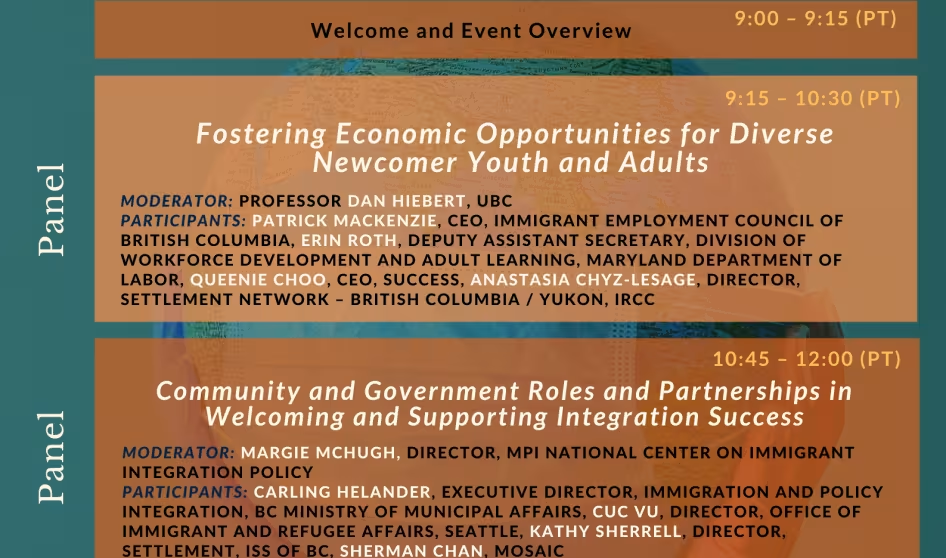
The symposium featured two panel discussions that provided perspectives of government and NGO leaders from Canada and the United States, exploring planning efforts as well as the opportunities and challenges today’s historic confluence of circumstances pose for integration efforts.
Sponsors
Co-sponsored by the University of British Columbia (Killiam Connection Award program and the Centre for Migration Studies), the Migration Policy Institute’s National Center on Immigrant Integration Policy, the Immigrant Employment Council of British Columbia, and AMSSA (Affiliation of Multicultural Societies and Service Agencies of BC).
About the National Center on Immigrant Integration Policy
The Center is a national hub connecting policymakers, educators, community leaders, and service providers with evidence-informed policy research, technical assistance, and data to advance effective immigrant integration at U.S., state, and local levels.

Related Content