Deferred Action for Childhood Arrivals (DACA) at Two: New MPI Findings as Renewal Approaches
A discussion of MPI's estimates on the size of the DACA population nationally and for 25 key states, as well as application rates and analysis of the program’s challenges and achievements.
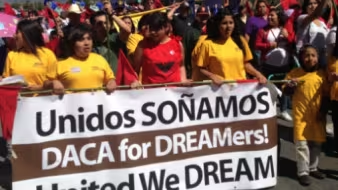
In 2012, the Obama administration granted temporary relief from deportation to unauthorized immigrants who had entered the United States as children. The Deferred Action for Childhood Arrivals (DACA) initiative—striking in its scope, structure, and significance—led more than 642,000 young adults to come forward and apply. In addition to a two-year reprieve from deportation, DACA beneficiaries are eligible to receive temporary work authorization, which can, in turn, open the door to a range of opportunities to participate more fully in the country’s economic, civic, and social life. As the initial two-year deferred action period draws to a close DHS extended the opportunity, beginning on June 5, for the policy’s beneficiaries to renew their DACA status and employment authorization for an additional two years.
In the approach leading up to the DACA’s second anniversary (August 15), MPI released a report that estimates the size of the DACA population nationally and for key states, as well as application rates and analysis of the program’s challenges and achievements. The report discusses lessons that can be applied to the program’s next phase, as well as implications for future legislation or possible executive action that might benefit other unauthorized immigrant populations. The report provides an update of MPI’s 2013 analysis of the DACA-eligible population, including a demographic and economic profile of the DACA population, with detailed information on country of origin, educational attainment, English proficiency, languages spoken at home, poverty, and labor force participation. In this webinar, MPI researchers present their findings, analysis, and the broader implications for U.S. immigration and integration policy. The webinar also marked the launch of MPI's data tool on DACA.
Speakers:
Margie McHugh, Director of MPI’s National Center on Immigrant Integration Policy
Jeanne Batalova, Senior Policy Analyst and Manager, MPI Data Hub
Sarah Hooker, MPI Policy Analyst
Moderators:
Michael Fix, MPI President
About the National Center on Immigrant Integration Policy
The Center is a national hub connecting policymakers, educators, community leaders, and service providers with evidence-informed policy research, technical assistance, and data to advance effective immigrant integration at U.S., state, and local levels.
About the U.S. Immigration Policy Program
The U.S. Immigration Policy Program provides analysis of U.S. immigration pathways, the impacts of enforcement and other policies, and the characteristics of immigrant populations.
Related Content