Refugees & Asylum

All Content
Showing 1–10 of 791 results
23rd Annual Immigration Law & Policy Conference
Featuring a keynote by Oklahoma City Mayor David Holt, immediate past president of the U.S. Conference of Mayors, and a day of smart panel discussions exploring key U.S. immigration policy and legal issues.
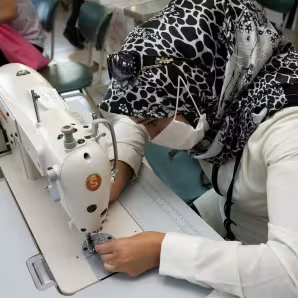
Syrian Women in Turkey Face Intersecting Barriers to Employment
Syrian women in Turkey face overlapping barriers to employment that training alone rarely resolves.
Could a Super El Niño Displace Millions from Their Homes?
The 2026 El Niño is expected to be historic, potentially prompting disasters that force millions of people from their homes.

What Drives Refugees’ High Poverty in the Early Years after U.S. Resettlement?
In their initial years after arrival, resettled refugees have high poverty rates despite strong employment, reflecting structural barriers and the focus on self-sufficiency.
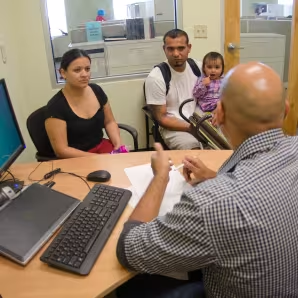
Making Labour Migration Pathways Work for Displaced People: Lessons from Latin America
As labour shortages intensify in many European countries, what would it take to make labour migration an option for people seeking safety?
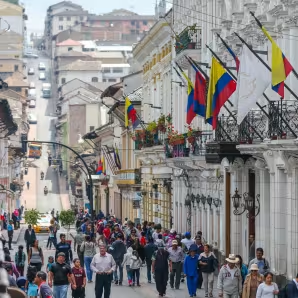
Refugees in the City: How Humanitarian Migration Transforms Urban Areas
Refugees reshape cities; they may strain services in the short term but offer long-run potential for new economic, civic, and demographic vitalization depending on responses by local leaders.

A New Prime Minister, a New Deal: Time for an ambitious UK–EU pact on small boats
The arrival of a new UK Prime Minister offers a window to strike an ambitious UK-EU deal on Channel crossings, trading increased returns for humanitarian routes from Europe.