Sarah Pierce
Sarah Pierce was a Policy Analyst for the U.S. Immigration Policy Program at MPI, focusing on U.S. legal immigration processes and actors, the employment-based immigration system, and unaccompanied child migrants.
Prior to joining MPI, Ms. Pierce practiced immigration law with a Chicago-based law firm, appearing before the immigration court, Board of Immigration Appeals, U.S. Citizenship and Immigration Services (USCIS), and U.S. consulate offices abroad. She also worked for and volunteered with a number of nonprofit organizations and government entities, including Human Rights Watch, the National Immigrant Justice Center, and the U.S. Department of Labor.
Ms. Pierce holds a master of arts in international affairs from the George Washington University, with a focus on migration and development. She also holds a J.D. from the University of Iowa College of Law and a B.A. from Grinnell College.
Explore Content by Sarah Pierce
Showing 1-10 of 61 total results
Four Years of Profound Change: Immigration Policy during the Trump Presidency
President Donald Trump's administration completed 472 executive actions from 2017 to 2021, narrowing humanitarian protections and restricting legal immigration.
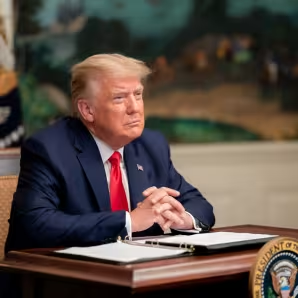
Border Déjà Vu: Biden Confronts Similar Challenges as His Predecessors
A record surge of unaccompanied minors at the U.S. border in early 2021 exposed the Biden administration's lack of preparation and reliance on the same responses that stymied its predecessors.
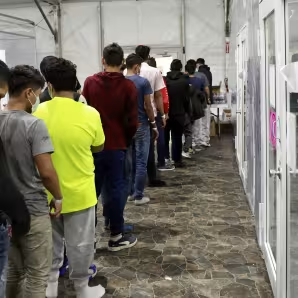
Biden Administration Is Making Quick Progress on Asylum, but a Long, Complicated Road Lies Ahead
The Biden administration's challenge to dismantle Trump-era barriers to asylum at the U.S.-Mexico border is akin to fixing a plane while flying it. This commentary examines actions taken to date and articulates a series of steps that could help establish an effective, humane asylum system that works in tandem with border management goals and efforts to reduce the drivers of migration through regional migration management measures with neighboring countries.
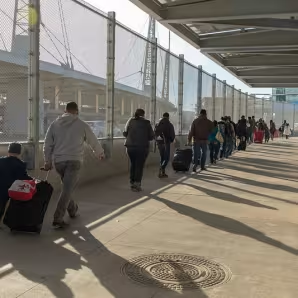
Biden Sets the Stage for a Remarkably Active First 100 Days on Immigration
President Joe Biden's first 100 days in office brought sweeping immigration executive actions, but thin Senate margins and competing crises pose steep hurdles to legislative progress.
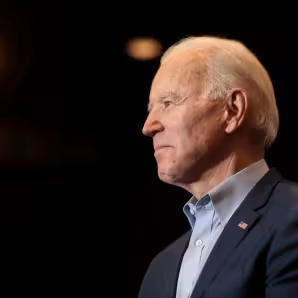
Obscure but Powerful: Shaping U.S. Immigration Policy through Attorney General Referral and Review
This report examines how attorneys general have used referral and review powers to reshape U.S. immigration law, with the Trump era marking a major expansion.
What Is Immigration Policy Expected to Look Like in a Biden Administration?
What would Biden’s immigration agenda mean for asylum, enforcement, and legal pathways?

Trump's Promise of Millions of Deportations Is Yet to Be Fulfilled
Despite 400-plus executive actions during its first term, the Trump administration deported significantly fewer unauthorized immigrants than the Obama administration did.

Broad and Blunt, the Trump Administration’s H-1B Changes Miss the Opportunity for Real Reform
The Trump administration's changes to the H-1B visa program are the most significant in three decades, promising to end the practice of replacing U.S. workers with highly skilled immigrants. While the problems the administration has identified and the interest in protecting U.S. workers are legitimate ones, its approach may cripple the H-1B program itself, as this commentary explains.

Impending USCIS Furloughs Will Contribute to a Historic Drop in U.S. Immigration Levels
USCIS furloughs, visa suspensions, and presidential bans together likely will drive an unprecedented collapse in U.S. immigration, with long-term demographic and economic impacts.

Brain Waste among U.S. Immigrants with Health Degrees: A Multi-State Profile
Some 263,000 immigrants with health degrees are underutilized due to licensing barriers—an untapped U.S. workforce that could help address COVID-19-era health-care shortages.