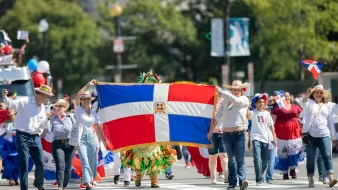
The Dominican Population in the United States: Growth and Distribution
The Dominican population in the United States experienced nearly 90 percent growth between 1990 and 2000, with shifting destinations beyond the U.S. Northeast.
This study provides an overview of the size and growth of the Dominican population in the United States, a group that experienced considerable growth in the decade between 1990 and 2000, and discusses some of the unique characteristics of this community. It also highlights the geographic distribution of Dominicans within the United States.
The Dominican population experienced a nearly 90 percent growth between 1990 and 2000, with growth expected to continue over the coming years due chiefly to immigration. Approximately 20,000 Dominicans are admitted annually as permanent residents, while another 200,000 enter the United States each year as temporary immigrants. Although Dominicans have predominantly settled in the Northeast of the United States, there is some indication that the population is shifting to other regions, particularly the South.
Nearly two-thirds of the Dominican population in the United States as of 2000 was foreign born.
Table of Contents
Size and Growth
Immigrant Inflow
Demographic Profile
Geographic Distribution: Regions, States, and Metropolitan Areas
About the U.S. Immigration Policy Program
The U.S. Immigration Policy Program provides analysis of U.S. immigration pathways, the impacts of enforcement and other policies, and the characteristics of immigrant populations.