

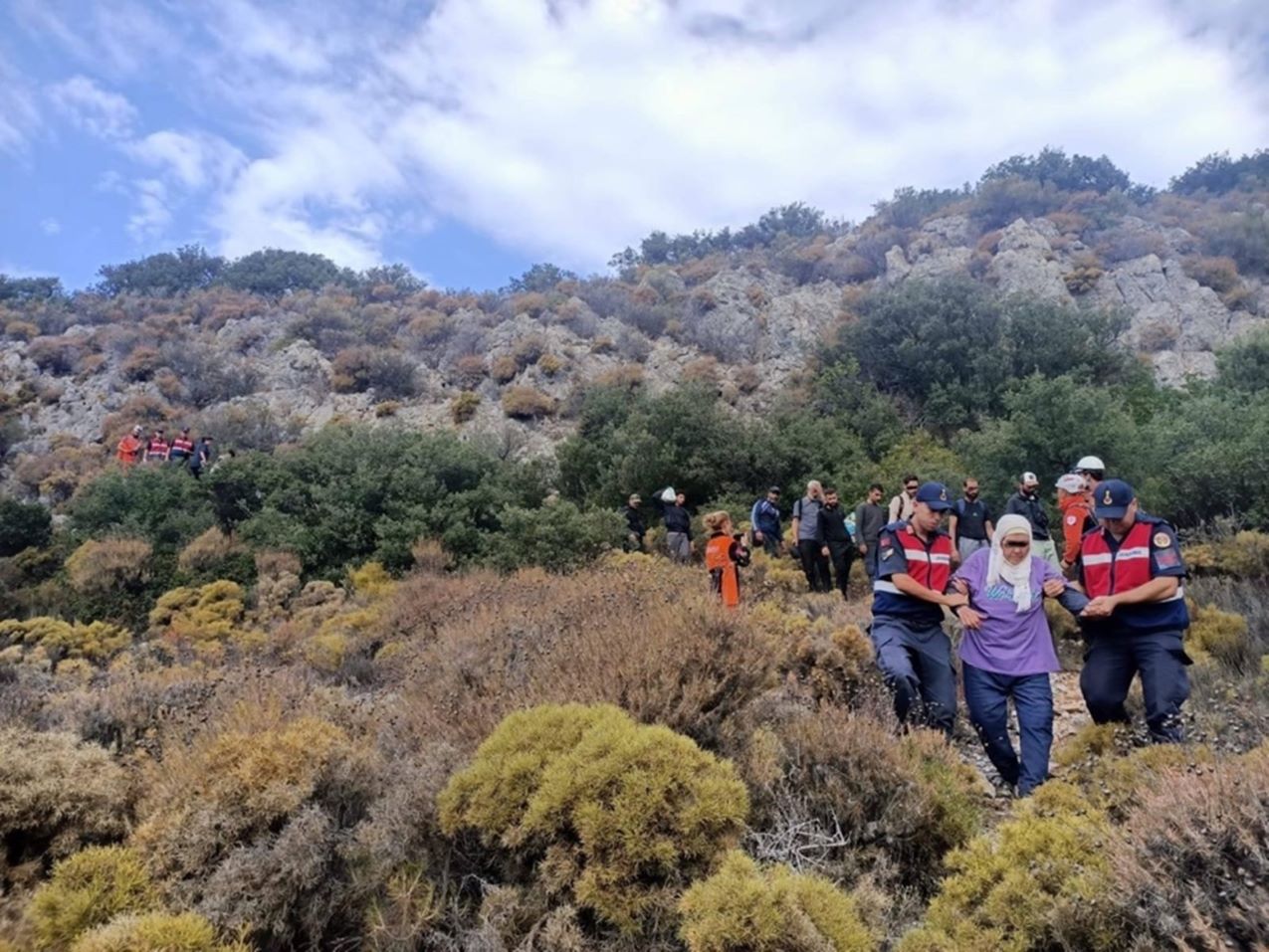
Turkish authorities assist a migrant. (Photo: Turkish Directorate General of Combating Irregular Migration and Removal Affairs)
Straddling East and West, at the intersection of South Asia, the Middle East, and Europe, Turkey has been contending with persistently high rates of irregular migration for the past decade. As asylum seekers and other migrants progress typically from East to West, they may approach Turkey as either a transit or destination country. Whether individuals intend to eventually seek asylum or are searching for economic or other opportunities, irregular migration is a challenge for Turkey and other regional states to monitor and control. The movement can take many forms, including entering, staying, or working in a country without authorization.
In Turkey, most migrants traveling irregularly are fleeing conflict zones in Afghanistan and Syria. Often, migrants traveling without authorization do so with the assistance of smugglers, including criminal groups and insurgents with ties to activities such as human trafficking, forced labor, and terrorism. Smugglers have been known to assist foreign fighters who supported extremists and sought to return to their origin countries after the territorial defeat of the Islamic State in 2019. Authorities have expressed particular concern about how smuggling can empower groups such as the Kurdistan Workers’ Party (PKK), which has engaged in attacks and clashes with the government that have resulted in thousands of deaths. The PKK and other groups obtain significant sums by facilitating migrant smuggling and human trafficking, as well as drug and arms trafficking, extortion, and other crimes. The business of smuggling migrants into Turkey and onward to the European Union is profitable and dangerous.
The Turkish government has placed a major focus on combatting this activity. As enforcement increases on various routes, smugglers often shift their operations and explore new pathways, posing new challenges to authorities. In recent years, the government has sought to build border barriers and otherwise halt irregular migration. While this has been done at times in coordination with the European Union, at various moments, migration management also has been a point of contention between Turkish and EU leaders.
This article provides an overview of the dynamics of irregular migration in Turkey, including the involvement of criminal smugglers and government enforcement.
Irregular Migration Trends and Responses
Turkey is host to the world’s largest refugee population, including about 3.2 million Syrians who benefit from temporary protection. At the same time, irregular migration has varied in recent years and reached a high of nearly 455,000 arrests by Turkish authorities in 2019, before declining temporarily during the COVID-19 pandemic (see Figure 1). Over the last decade, more than half of arrests were of migrants from Afghanistan (nearly 732,000, or 35 percent of all 2.1 million arrests during the 2014-23 period) or Syria (453,000, or 22 percent). Other top migrant groups include Iraqis, Palestinians, Turkmenistanis, Uzbekistanis, and Moroccans.
Figure 1. Irregular Migrants Arrested in Turkey, by Nationality, 2014-23

Source: Turkish Interior Ministry, Presidency of Migration Management, “Düzensiz Göç,” updated August 1, 2024, available online.
Responsibility for immigration enforcement and border control in Turkey is concentrated in the Interior Ministry. The official duties of the ministry’s Presidency of Migration Management include creating a proactive migration management policy that accounts for human rights and freedoms, complying with international standards, and review of migration management efforts. Within the Presidency of Migration Management, the Directorate General of Combating Irregular Migration and Removal Affairs is responsible for conducting work related to irregular migration, ensuring coordination between law enforcement units and other institutions involved in combating irregular migration, monitoring enforcement, and implementing readmission agreements to which Turkey is a party, including a major agreement with the European Union designed to prevent irregular migration. As part of the agreement, first signed in 2016, migrants apprehended irregularly entering EU territory from Turkey are handed over to Turkish authorities, In exchange, EU Member States accept an equivalent number of Syrian refugees from Turkey, provide billions of euros in humanitarian support as part of the “burden-sharing” principle, and agreed to work towards a system of visa-free entry for Turkish citizens traveling for short periods (this visa liberalization has not yet been enacted).
Turkish authorities have installed a range of physical and technological security measures along the borders. This includes a three-meter-high wall along much of the country’s borders with Syria and Iran, as well as towers, high-security panels and wire fences, and electronic cameras and sensors. (Bulgaria and Greece have also erected barriers along their borders with Turkey.) These efforts, targeting both land and sea borders, are designed to detect potential terrorist activities, combat smuggling of all types, and prevent unauthorized crossings.
Criminal Groups and Migrant Smuggling
Many migrants travelling irregularly into Turkey are fleeing war zones and are trying to save their lives. On their way, migrants may encounter criminal organizations and migrant smugglers and become vulnerable to kidnapping or other forms of abuse. Ninety percent of irregular migrants reaching the European Union via any route do so with the help of smugglers, according to Europol. These criminal groups offer migrants a wide range of services, including transportation, accommodation, and fake documents. And the practice can be highly lucrative, with estimated annual profits globally reaching as high as 6 billion euros in recent years. Europol has suspected that smuggling profits could double or even triple in the future. Many migrants find and communicate with smugglers via smartphone apps and messaging services, illustrating the darker side of information and communication technologies and their ability to enable crimes and put migrants in vulnerable situations.
Migrant smuggling routes vary and are constantly diversifying and changing in response to law enforcement crackdowns. Among Europol’s priorities for the 2022-25 period are combating criminal networks involved in facilitating irregular migrants across the main migration routes crossing the bloc’s external borders as well as secondary movements within the European Union.
Migrant smuggling is a particular concern in Turkey, given its geographic position along the pathway from Asia into the European Union. This creates the prospect of major revenue for criminal groups and organizations such as the PKK, which the Turkish government, the European Union, and the United States have designated as terrorists. The PKK has reportedly obtained hundreds of millions of dollars annually from human smuggling activities in recent years. Due to the profits available through these illegal activities, organizations are increasingly turning to them to support their activities. Moreover, forced migrants traveling irregularly can become vulnerable to exploitation while passing through uncontrolled areas where there are no authorities or where legal frameworks are not fully implemented, such as in northern Iraq and northern Syria. Many may brush up against—or even be persuaded or coerced into participating in—illegal activities such as drug or arms trafficking carried about by the same criminal and terror groups. For these reasons, migrant smuggling can be a gateway to a chain of other illegal activities.
Often, human smuggling networks will employ individuals operating at various stages to perform different services for migrants. For instance, one smuggler may be responsible for working with migrants to irregularly cross the border, another to move them within the country without detection, another for securing domestic accommodation, and yet another for transferring them out of the country and onward.
In Turkey, the Eastern and Southeastern Anatolia border regions are main transit routes for migrant smuggling due to difficult-to-control geographic conditions that include mountain ranges and long rural stretches. The challenging terrain and harsh climate—with hot, dry summers and cold, snowy winters—are further complicated by the presence of groups such as the PKK and its affiliates. These factors combine to make combating migrant smuggling in this region extremely difficult. Additionally, weaknesses in border security and internal unrest and conflict in neighboring countries such as Syria and Iraq are other important factors that complicate Turkey’s border security efforts. Last year, Turkish authorities arrested nearly 10,500 migrant smugglers, a record high (see Figure 2).
Figure 2. Number of Migrant Smugglers Arrested in Turkey, 2014-23

Source: Turkish Interior Ministry, Presidency of Migration Management, “Düzensiz Göç.”
Smuggler Roles
Interviews of irregular migrants by Turkish authorities illustrate the role that smugglers can play in virtually every step of an individual’s irregular migration into Turkey and, if successful, on to Europe. For instance, a 24-year-old Afghan man living in Iran decided with his wife to head to Greece given their ongoing financial difficulties. In April 2017, the man met a smuggler who said he could take them to Maku, in northwest Iran, for 1,300 tomans (about 275 euros) per person. Later, the Afghan couple was transported to the Turkish border, and met by a new group of smugglers. They walked for 11 hours overnight through snow-covered mountains and steep slopes. The couple was then taken to the Turkish border province of Van and boarded a bus to Ankara. Once in the capital, they found another smuggler, an Afghan, to take them to Greece for U.S. $1,500 (about 1,350 euros) per person. The new smuggler bought bus tickets from Ankara to the western coastal city of Izmir, where the couple was apprehended by law enforcement.
Another man, a Syrian, had his uncle's wife arrange with a smuggler to cross into Turkey for U.S. $2,000 (about 1,800 euros) per person in order to escape the conflict in Syria. The man and his family crossed as part of a 15-person group, at a section of border fencing cut earlier by the smuggler. Once in Turkey, they were taken to a village in vehicles arranged by the smuggler, where they were dropped at the house of a Turkish family. The homeowner extorted the migrants, waving a stick and shouting, “Those who pay can leave here; the rest cannot take a single step outside.” The Syrian man called his brother living in Turkey, told him that the family had been taken hostage, and asked for rescue.
Changing Dynamics along the Eastern Mediterranean Route
The Eastern Mediterranean is a very old migration route used for crossing to Europe from Turkey. This route mainly involves sea migration to Greece, although some migrants cross over land into Bulgaria. During the 2015-16 European migration and refugee crisis, it was the primary maritime route, through which approximately 1 million asylum seekers and other migrants arrived in Europe. The route is largely used by people fleeing from the Middle East and South Asia, particularly Afghans, Iraqis, and Syrians, although recently a notable number of Africans have used it. So far in 2024, Egyptians and Eritreans were among the five most common migrant nationality groups, according to the UN High Commissioner for Refugees (UNHCR).
Figure 3. Map of Eastern Mediterranean Migration Route

Source: Migration Policy Institute artist rendering.
Irregular migrants arriving in Greece may subsequently move deeper into Europe, towards countries such as Germany, Italy, the Netherlands, and the United Kingdom. With the help of smugglers, migrants using fast boats can cross the Aegean Sea to the Greek islands—including Lesvos, Evros, and Samos—in about half an hour.
With the Greek coast guard accused of pushing rafts filled with migrants out of Greek territorial waters and back into Turkish ones, many irregular migrants have shifted their route to bypass Greece and head straight for mainland Italy via large boats from coastal Turkey. This dangerous route takes about three days, hence smugglers’ use of larger sailboats or fishing vessels.
Figure 4. Migrant Arrivals in Greece via the Eastern Mediterranean Route, by Mode of Transit, 2014-23

Source: UN High Commissioner for Refugees (UNHCR), “Operational Data Portal: Mediterranean Situation, Greece,” updated August 4, 2024, available online.
Another route involves traveling from Lebanon, Syria, and Turkey’s southern coast to various points on Cyprus in Zodiac-style inflatable vessels that can carry 15-20 people. From Cyprus, migrants may travel in groups of 100-200 in larger boats towards Italy. Smugglers typically charge around 2,500-3,000 euros for a trip from Turkey to the island of Cyprus. If the route is longer, such as directly to Italy, or if it involves a VIP service with three to five people in a state-of-the-art sailboat, the price can increase. The fees vary depending on the route, the situation, weather conditions, and the danger of the migration path.
Cooperation at the Heart of Migration Control
Controlling irregular migration and combating migrant smuggling have evolved beyond issues affecting only one or two countries and are now serious matters that governments acknowledge must be addressed internationally and collectively.
The relationship between Turkey and the European Union is a demonstration of this complicated web of reliance, which can occasionally be contentious. While the EU gains are clear—reduced onward movement of spontaneous migrants—EU support can help enhance Turkish authorities’ capabilities and relieve some of the sizable burden that has fallen on them, deter migrants from passing through Turkey irregularly, and therefore deprive terrorist organizations of a revenue source. One vehicle for that support is the European Union's Action Plan for the Eastern Mediterranean Route, which is part of a broader approach to help alleviate the pressure on Member States. It focuses on preventing irregular departures, combating smuggling, strengthening border management, increasing cooperation on returns and readmissions, ensuring effective migration management, improving asylum procedures, providing adequate reception capacities, and ensuring legal migration pathways. As part of this effort, the bloc has placed an emphasis on maintaining cooperation with Turkey to combat migrant smuggling and supporting a new Joint Operational Partnership Project (SCOPE II) aimed at operational law enforcement cooperation and judicial collaboration with Turkish authorities. The European Union is also assisting implementation of Turkey's Integrated Border Management Strategy, which aims to establish a system featuring cooperation between institutions and nations to facilitate trade and traffic across its borders.
Irregular migration into Turkey and onward toward the European Union will continue to be a challenge. The nearly 41,600 migrants arriving irregularly in Greece last year were the second-most since 2016, suggesting that any temporary drop in transit during the COVID-19 pandemic has ended. In coming years, it is likely that Afghans and Syrians will continue to make up the largest groups of asylum seekers and other irregular migrants traveling via Eastern Mediterranean Route. They face various economic, security, and other pressures both in their own countries and in third countries where many displaced people have settled temporarily, including Iran, Lebanon, and Pakistan. Irregular migration in the Eastern Mediterranean will also continue to be influenced by geopolitical factors including ongoing tensions and conflicts in neighboring regions, as well as economic downturns. The spiraling consequences of the war in Gaza, the intensification of the Israel-Iran shadow war, regional economic challenges and uncertainties following the pandemic, and increasing pressure from Iran and Pakistan to expel Afghans are key factors that could increase transit in the Eastern Mediterranean. The presence of more migrants passing through this route could increase concerns about individuals associated with terrorist organizations and may also embolden criminals and other networks operating in the shadows.
Continued partnerships will remain crucial for reducing irregular migration. As border controls increase in the Western Balkans and the Eastern Mediterranean—such as through the European Union’s New Pact on Migration and Asylum, which aims to speed up returns for individuals with rejected asylum claims—irregular migrants will continue to seek alternative travel routes, including via Cyprus or to mainland Italy. Smugglers may exploit this situation, including by offering passage through new routes, fake travel documents, and transportation, thus contributing to variations in irregular regional migration.
Control of irregular migration and halt of migrant smuggling are among the most important policy priorities for Turkey and the European Union. The increasing role that digital communication is playing in illicit migration suggests there is a need for extensive research on how these digital technologies can facilitate entry and exit by migrants and smugglers. International migration has rapidly digitalized with the advancement of technology, and new digital platforms have become essential tools for migrants. Migrants have been using information and communication technologies to gather real-time information and advice during their journeys—a development that is both intriguing and concerning. Aside from facilitating irregular travel, these technologies can also be used to spread dangerous misinformation and rumors that can leave migrants stranded or reliant on extortionate smugglers. New developments suggest the need to combat irregular migration not just in person but also in the digital realm. As a country on the front lines of irregular migration, Turkey will continue to evolve its efforts to combat this irregular movement.
Sources
Baykal, Bülent, Özer Şenol, Özlem Özdemir, and Elif Başak Sarıoğlu. 2024. Digital Dimension of Migrant Smuggling Field Research and Report. Ankara: Turkish Interior Ministry, Gendarmerie General Command.
European Commission. 2023. EU Action Plan for the Eastern Mediterranean Route. Brussels: European Commission. Available online.
Europol. N.d. Facilitation of Illegal Immigration. Accessed August 9, 2024. Available online.
Frontex. 2024. Annual Risk Analysis 2024/2025. Warsaw: Frontex. Available online.
International Organization for Migration (IOM). 2024. Missing Migrants Project. Updated August 7, 2024. Available online.
Official Gazette of the Republic of Turkey. 2016. Yabancilar Ve Uluslararasi Koruma Kanununun Uygulanmasina İlişkin Yönetmelik (Sayı: 29656). Ankara: Republic of Turkey. Available online.
Turkish Interior Ministry, Gendarmerie General Command. 2022. Department of Combatting with Migrant Smuggling and Human Trafficking. Ankara: Turkish Interior Ministry, Gendarmerie General Command. Available online.
Turkish Interior Ministry, Presidency of Migration Management. 2024. 2023 Yılı İdare Faaliyet Raporu. Ankara: Turkish Interior Ministry, Presidency of Migration Management. Available online.
---. 2024. Düzensiz Göç. Updated August 1, 2024. Available online.
---. 2024. Faaliyet Raporu: 2023. Ankara: Turkish Interior Ministry, Presidency of Migration Management. Available online.
UN High Commissioner for Refugees (UNHCR). 2024. Operational Data Portal: Mediterranean Situation, Greece. Updated August 4, 2024. Available online.