Sarah Hooker
Sarah Hooker was a Policy Analyst at MPI’s National Center on Immigrant Integration Policy, where she focused on research and policy analysis related to education, workforce development, and language acquisition. She managed MPI’s field-based research on efforts to promote the high school completion, postsecondary success, and economic advancement of English Language Learners (ELLs) and immigrant youth.
Ms. Hooker holds a master’s degree from the University of Chicago’s School of Social Service Administration and a bachelor of the arts degree in Latin American studies from Pomona College in Claremont, CA.
Explore Content by Sarah Hooker
Showing 1-10 of 11 total results
Health and Social Service Needs of U.S.-Citizen Children with Detained or Deported Immigrant Parents
U.S.-citizen children of deported parents face cascading harm—hardship, mental health crises, and instability. Schools represent the most trusted site for delivering services.
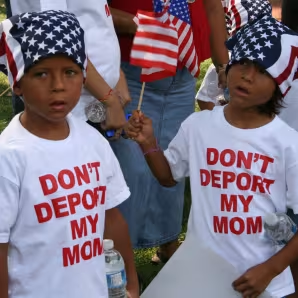
Implications of Immigration Enforcement Activities for the Well-Being of Children in Immigrant Families: A Review of the Literature
Parental deportation inflicts trauma and family dissolution on children of unauthorized immigrants. For many, health and social services remain structurally out of reach.
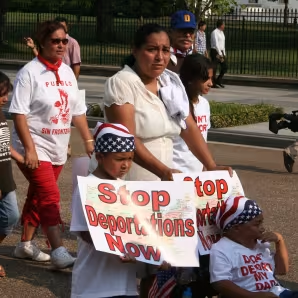
States and Districts with the Highest Number and Share of English Language Learners
California led English Learner (EL) concentration in 2012–13, and the top 25 school districts enrolled nearly one-quarter of all EL students nationwide.

Top Languages Spoken by English Language Learners Nationally and by State
Spanish is spoken by 71 percent of English Learner students in the United States, but wide state variation makes a uniform language instruction strategy inadequate for many.
Lessons from the Local Level: DACA's Implementation and Impact on Education and Training Success
DACA created new education-immigration partnerships, but financial barriers and strained adult education capacity limit grantees' academic progress.
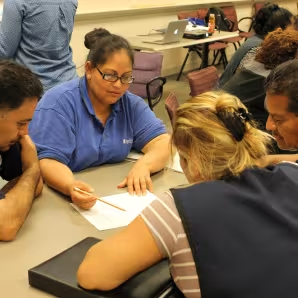
County-Level View of DACA Population Finds Surprising Amount of Ethnic & Enrollment Diversity
A review of county-level data reveals unexpected ethnic diversity and variation in college enrollment among youth potentially eligible for DACA as of 2012.
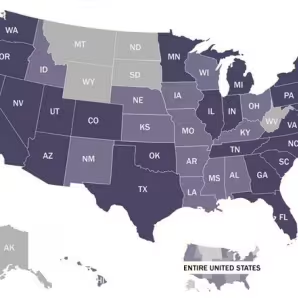
DACA at the Two-Year Mark: A National and State Profile of Youth Eligible and Applying for Deferred Action
By July 2014, 55 percent of immediately eligible DACA youth had applied. But cost barriers, education gaps, and limited outreach kept hundreds of thousands from enrolling.
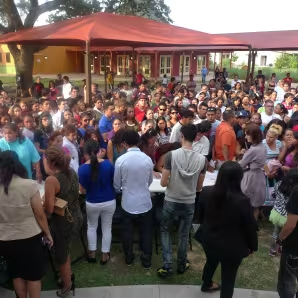
Critical Choices in Post-Recession California: Investing in the Educational and Career Success of Immigrant Youth
California's budget crisis gutted adult education and cut college enrollment by nearly half a million, deepening gaps for immigrant youth at every level of education.

Education Reform in a Changing Georgia: Promoting High School and College Success for Immigrant Youth
Georgia's education reforms consistently miss immigrant youth and English Learners, deepening graduation and college access gaps for one in five young Georgians.

Deferred Action for Childhood Arrivals at the One-Year Mark: A Profile of Currently Eligible Youth and Applicants
One year in, the Deferred Action for Childhood Arrivals (DACA) program reached 49 percent of eligible youth, with uptake sharply divided by state, national origin, and access to education.