Special Issue: Regional Migration Perspectives: Trends, Patterns, and Policies in Central America, Mexico, and the U.S.

The Migration Information Source published a Special Issue focused on the topic of migration in the United States, Mexico, and northern Central America (El Salvador, Guatemala, and Honduras). The Special Issue delves into a wide range of migration developments in this dynamic, interconnected region.
Mexico: The New Migration Narrative
For the first time, Mexico's net migration to the United States reached near zero around 2010, transforming a decades-old bilateral migration…

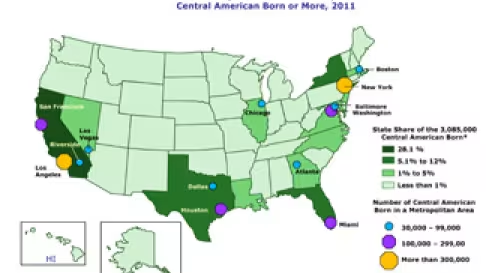
Central American Immigrants in the United States
The number of U.S. immigrants from Central America grew more than 60-fold from 1960 to 2011.
Mexican Immigrants in the United States
In 2011, Mexican immigrants in the United States numbered 11.7 million, yet 59 percent of all unauthorized immigrants were Mexican born and just 24…
Immigration in the United States: New Economic, Social, Political Landscapes with Legislative Reform on the Horizon
Immigration has been critical for the United States across its history, with large-scale arrivals coming during just four peak periods. Even as…

Honduras: The Perils of Remittance Dependence and Clandestine Migration
With remittances at 17 percent of GDP in 2011 and over three-quarters of its U.S. immigrants likely unauthorized, Honduras shows both the promise and…
Guatemalan Migration in Times of Civil War and Post-War Challenges
A weak state, natural disasters, socioeconomic challenges, and other drivers have entrenched migration as a survival strategy for Guatemalans.
Health Outcomes of Mexican Immigrant Women in the United States
Despite low health insurance coverage rates, Mexican immigrant women in the United States show unexpectedly favorable health outcomes in some areas.
Beyond Remittances: Reframing Diaspora-Driven Development in El Salvador
For Salvadoran diaspora associations, real development impact comes not from remittances but from how they engage as governance actors.