ICE Arrests and Deportations from the U.S. Interior

iStock.com/A-Digit
Learn how U.S. Immigration and Customs Enforcement works within the U.S. interior, identifying people for arrest, detention, and removal.
Immigration enforcement takes place not just at U.S. borders but also in the nation’s interior. The U.S. Department of Homeland Security (DHS) has responsibility for all federal immigration enforcement, with two of its agencies each playing separate major roles. U.S. Customs and Border Protection (CBP) screens noncitizens entering the country and apprehends those attempting to enter without authorization. In the U.S. interior, U.S. Immigration and Customs Enforcement (ICE) is responsible for arresting, detaining, and removing noncitizens who have violated immigration laws. Therefore, ICE plays the major role in enforcement away from the border, shaping the size and scope of deportations and returns from within the country.
Who Can Be Deported?
While the public tends to think of deportations as affecting only unauthorized immigrants, lawfully present immigrants who have not become U.S. citizens can become removable under certain conditions (which is why this explainer uses the term “noncitizen,” which encompasses all categories of potentially removable individuals).
The following groups of people are deportable:
- Migrants who crossed a U.S. border illegally or who overstayed a visa.
- Immigrants on a temporary visa who have violated the terms of their visa, for example by getting a job on a visa that does not permit work.
- Legal permanent residents (also known as green-card holders) or temporary visa holders who have been convicted of a wide range of crimes, including driving under the influence, firearm or drug possession, theft, or a violent crime.
Unauthorized immigrants who have a valid form of temporary protection such as Temporary Protected Status (TPS), humanitarian parole, or deferred action (including Deferred Action for Childhood Arrivals, or DACA) are generally not deportable. But because these statuses are granted on a temporary or discretionary basis, they could potentially be revoked, thus making individuals removable.
The U.S. government must issue a removal order before a noncitizen can be deported. Individuals can contest their removal by proving that they are eligible for a form of protection such as asylum.
Interior Enforcement by the Numbers
Noncitizens arrested by ICE are typically placed into removal proceedings in immigration court, unless there is an existing removal order that the agency can execute. Given the 3.6 million cases pending in immigration court as of October 2024, people placed in removal proceedings usually wait years before their initial hearing. While in court proceedings, migrants may be placed into immigration detention or into a non-detained tracking program (called alternatives to detention); they also could be released without tracking and required to periodically check in with ICE. As of early 2025, the agency was funded for 41,500 detention beds—far fewer than would be required to detain all removable migrants—so the vast majority are not detained.
In FY 2024, ICE had a $9.1 billion budget and about 21,000 personnel, 7,700 of them dedicated to enforcement and removal operations.
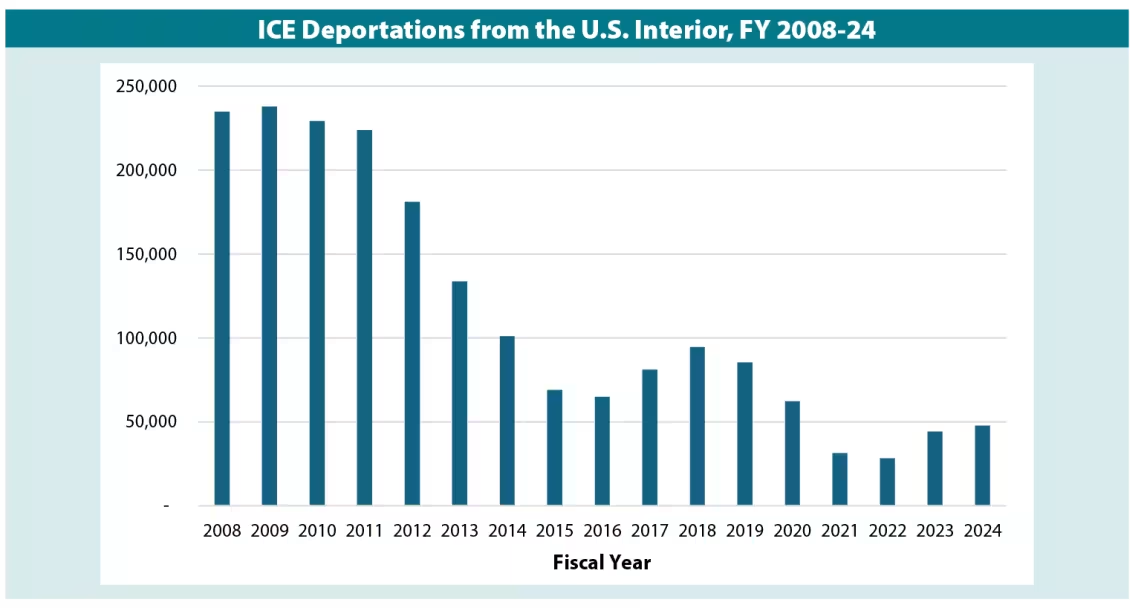
DHS carried out an average of 352,000 deportations per year in fiscal years (FY) 2020-24. Of those deportations, ICE was responsible for an average of 146,000 annually. CBP also carries out deportations (and sometimes hands migrants it apprehends over to ICE for deportation). The vast majority of ICE and CBP deportations during this period were migrants who had recently crossed the U.S.-Mexico border. ICE in FY 2020-24 carried out an average 43,000 deportations per year of noncitizens arrested in the U.S. interior.
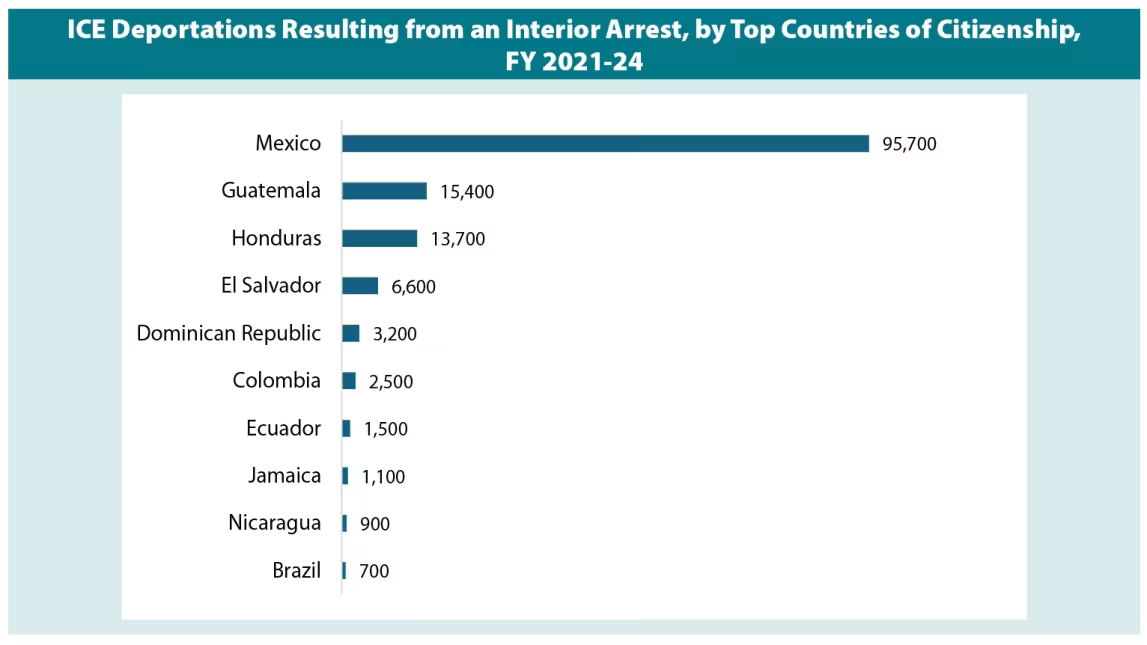
ICE has generally focused its limited resources on arresting and removing migrants from the U.S. interior who pose public safety threats. Most interior removals are of immigrants who come into contact with the criminal justice system: 79 percent of ICE deportations from the interior in FY 2021-24 were of someone with a criminal conviction. And most removals from the interior are of migrants from Mexico or northern Central America.
A Shift from Interior to Border Removals
The number of people deported by ICE from the U.S. interior has been on a downward trend over the past 15 years, from an average of 155,000 removals per year in fiscal years 2009-16, falling to 81,000 in FY 2017-20, and plummeting further to 38,000 in FY 2021-24. Meanwhile, the number of noncitizens deported by ICE after a border arrest grew substantially over the past four years, reaching 224,000 in FY 2024, as the agency shifted resources from interior to border enforcement amid high border arrivals. This shift reflected a focus on deterring new border crossings. Additionally, deportations at the border are faster, easier, and cheaper for DHS to execute since they do not require locating and arresting migrants in communities in the interior.
A Removal Order Is Not Necessarily a Removal
Just because a person is ordered removed does not always mean the deportation is carried out. About 1.5 million noncitizens have outstanding removal orders; they have not been removed for a range of reasons, including that they cannot be located by U.S. immigration authorities (they are termed “absconders”) or because their country of origin will not accept their return. ICE cannot simply put deportees on planes; once someone has a final removal order, the agency must secure the home country’s agreement to accept the deportee and arrange transportation.
Explaining Key Terms
Deportation: A non-legal term to describe the removal or enforcement return of a noncitizen from the United States.
Removal: The mandatory departure from the United States of a noncitizen based on a formal order of removal. Removals can happen from the U.S. interior or at the border. Either an immigration judge or certain DHS officials can issue a removal order. Judges do so in an immigration court process if they find that the noncitizen does not have a basis to stay in the country.
DHS officers issue removal orders in a process called expedited removal, which means the case does not go before an immigration judge and thus can be decided much more quickly. Noncitizens with less than two years of U.S. residence and without a lawful status or protection claim can be placed into this streamlined removal process. Expedited removal provides fewer due process protections than immigration court proceedings.
Enforcement Return: The departure out of the United States of a noncitizen who has been deemed deportable but granted voluntary departure or return.
How ICE Identifies People for Arrest
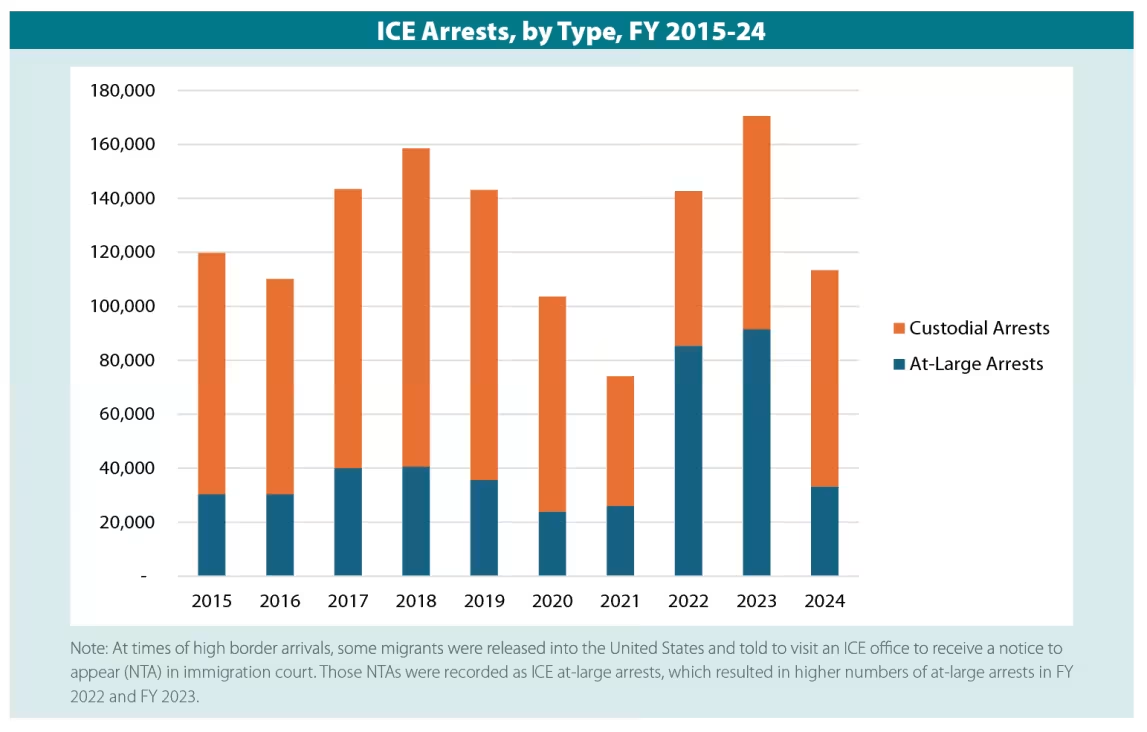
Interior enforcement starts when ICE locates and arrests a deportable noncitizen. While ICE enforcement operations at worksites or in the community (known as “at-large arrests”) often grab headlines, most ICE arrests occur through a transfer from local sheriff’s or police departments.
When local authorities arrest someone, they check the fingerprints against national security and immigration databases. Potential matches with immigration databases are forwarded to ICE, which checks for known violations of immigration laws or prior removal orders and decides whether to make a detainer request (in other words, ask local law enforcement to hold the noncitizen for up to an additional 48 hours for immigration purposes). If someone arrested is found to have a prior removal order or is known to be in the country without authorization, ICE can take custody and begin processing them for removal. ICE also interviews noncitizens who are serving sentences in federal and state prisons and local jails so they can be readily removed upon release, if removable.
These “custodial” arrests resulting from the criminal justice pipeline have typically significantly outpaced at-large arrests, which are far more labor- and resource-intensive for ICE and bring greater danger as armed agents go to homes, workplaces, or elsewhere in the community. At-large arrests can also occur when unauthorized immigrants not in immigration detention go to an ICE office for a scheduled check-in.
ICE accesses numerous databases—including commercial databases, motor vehicle and driver’s records, and utility records—to locate removable noncitizens.
At-large arrests have constituted a minority of all ICE arrests in most years, for example comprising just 29 percent of arrests in FY 2024. The arrests of groups of people at their workplace typically garner substantial media attention and create fear in immigrant communities. While recent data on worksite arrests are not available, historically, arrest numbers were low, peaking at under 7,000 in FY 2008.
ICE does not need a warrant to enter public spaces such as building lobbies and waiting areas. But in spaces not open to the public, including homes, schools, and areas labeled “private,” ICE needs to obtain consent to enter or have a judicial warrant signed by a federal judge. ICE may arrest a noncitizen if it has probable cause—a “reason to believe”—that the person may be deportable and is likely to escape if not taken into custody.
“Sanctuary” Cities
Some jurisdictions and state and local law enforcement entities fully cooperate with immigration enforcement and honor all ICE detainers. Others, commonly known as “sanctuary” jurisdictions, limit cooperation with ICE detainer requests, depending on state and local laws and policies. Some jurisdictions will not hold removable noncitizens for ICE but will facilitate a handoff by notifying the federal agency of the date and time that the individual will be released from their custody.
The degree of cooperation with ICE can determine how many noncitizens are placed into removal proceedings from a given locality. For example, the share of ICE arrests taking place in California shrank as the state passed successive laws tightening restrictions on cooperation.
Other Forms of State-Local Cooperation with ICE
Law enforcement agencies can volunteer to enhance their cooperation with ICE through what are known as 287(g) agreements, which deputize trained state and local personnel to enforce aspects of federal immigration law. There are two types: Jail agreements or Warrant Service Officer (WSO) arrangements. Under the jail model, designated state and local law enforcement personnel are trained to screen noncitizens’ immigration status and issue detainers. Under the WSO model, local law enforcement officials are trained to fill a narrower role: simply to issue administrative immigration arrest warrants and hold migrants for ICE. As of December 2024, ICE had jail agreements with 60 law enforcement agencies and 75 WSO agreements.
What Are the Consequences of Removal?
Anyone ordered removed from the United States is barred from re-entry for at least several years. The bars differ by category based on how the removal occurred:
- Five-year bar for those ordered removed through expedited removal.
- 10-year bar for noncitizens ordered removed by an immigration judge.
- 20-year bar for a previously removed noncitizen who receives a second removal order.
- Lifetime bar for those with repeated immigration violations or who were convicted of certain felonies.
Who Is Deported from the U.S. Interior?
Historically, Mexicans and northern Central Americans (Salvadorans, Guatemalans, and Hondurans) have comprised the vast majority of all removals. From FY 2021-24, these nationalities represented 87 percent of all interior deportations—Mexicans accounting for 63 percent and northern Central Americans another 24 percent. This trend has held for decades.
This concentration is due in part to the fact that the United States has repatriation agreements with these four countries. The U.S. government struggles to remove noncitizens to certain countries that accept few or no returnees. In December 2024, ICE released a list of 15 “recalcitrant” countries, with China, Cuba, India, and Venezuela on the list. That said, in FY 2024, ICE carried out removals and returns to 192 countries, a likely record.
Resources
-
U.S. Immigration and Customs Enforcement (ICE), List of 287(g) Agreements, December 2024.
-
ICE, Fiscal Year 2024 Annual Report, December 2024.
-
Immigrant Legal Resource Center, State Map on Immigration Enforcement 2024, November 2024.
-
NOLO, Crimes That Will Make an Immigrant Deportable, January 2024.
-
Migration Policy Institute, Revving Up the Deportation Machinery: Enforcement under Trump and the Pushback, May 2018.
About the U.S. Immigration Policy Program
The U.S. Immigration Policy Program provides analysis of U.S. immigration pathways, the impacts of enforcement and other policies, and the characteristics of immigrant populations.


Related Content