From Immigrant Detention to a More Effective U.S. Immigration Custody System
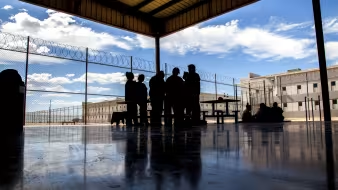
The sprawling U.S. immigration detention system has long been controversial for its conditions of care, detention numbers, and costs. This discussion provides a vision for a reimagined immigration custody system.
The sprawling U.S. immigration detention system has long been controversial for its conditions of care, number of immigrants and asylum seekers detained, and costs. Prioritizing detention also has distorted the broader immigration enforcement system by causing a backlog in the immigration courts that must handle cases of detained migrants over those of the 3 million-plus nondetained people who then wait years for decisions, including those with compelling claims for asylum and other forms of relief. Responding to these conditions and likely future immigration realities both at U.S. borders and the interior necessitates rethinking the role and nature of the immigration custody system, steering it away from a punitive, detention-centered approach towards a more effective and fair approach. This represents an opportune moment for action given the substantial reduction of individuals in detention due to COVID-19, coupled with the Biden administration’s pledge to reimagine the custody system.
This discussion focused on a MPI report from its Rethinking U.S. Immigration Policy initiative that examines how the U.S. government can shift from jailers to case managers in ways that serve the national interest. Report authors laid out current conditions and costs in the system, along with their vision for a reimagined immigration custody system, including areas for congressional action and change in the U.S. Department of Homeland Security. The conversation covered priorities for custody determinations in a redesigned system, alternatives to detention, and how deterrence can ultimately be achieved when the immigration system’s border and interior enforcement, custody, supervision, and asylum adjudication measures are all effectively working together.
Speakers:
Randy Capps, Director of Research for U.S. Programs, MPI
Doris Meissner, Senior Fellow and Director, U.S. Immigration Policy Program, MPI
Nina Siulc, Director of Immigration Research, Vera Institute of Justice
Claire Trickler-McNulty, Assistant Director, Office of Immigration Program Evaluation, U.S. Immigration and Customs Enforcement, U.S. Department of Homeland Security
About the U.S. Immigration Policy Program
The U.S. Immigration Policy Program provides analysis of U.S. immigration pathways, the impacts of enforcement and other policies, and the characteristics of immigrant populations.


Related Content