The U.S. Asylum System in Crisis: First Steps for Rescue
Faced with a growing case backlog in the U.S. asylum system and seeking to reduce humanitarian protection claims at the U.S.-Mexico border, the Trump administration has made efforts to narrow access to asylum. On this webinar, experts discuss findings from a report that explores the factors that have brought the system to a crisis point and steps that can be made to restore it.
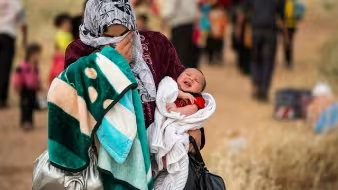
The United States has a long tradition of offering humanitarian protection to those in need. Yet in recent years, a confluence of factors has led to a large and growing backlog of asylum cases, with many applicants waiting years for a decision. This slowdown has both harmed those eligible for protection and invited misuse, with some claims filed to secure the right to remain in the country and receive the work authorization granted when cases are delayed.
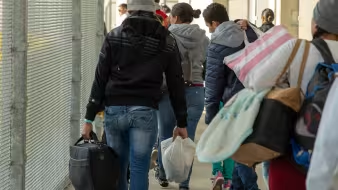
Faced with a system in crisis, the Trump administration has taken a number of actions to narrow access to asylum in the United States. These include largely eliminating gang and domestic violence as grounds for asylum and introducing a “zero-tolerance” approach to border enforcement that entails prosecuting all first-time border crossers, including adult asylum seekers, for illegal entry—a policy that for a time led to the separation of apprehended parents from their children.
This webinar marks the publication of an important MPI report that analyses the factors that have brought the U.S. asylum system to a crisis point and proposes common-sense steps that can be implemented now to jump-start rescuing it. The report co-authors and a commentator discuss the findings and measures that focus on the affirmative asylum system as the path to restoring timeliness and fairness to the system, while also deterring abuses.
Speakers:
Eleanor Acer, Senior Director, Refugee Protection, Human Rights First
T. Alexander Aleinikoff, former United Nations Deputy High Commissioner for Refugees, and University Professor, and Director of the Zolberg Institute on Migration and Mobility, The New School
Faye Hipsman, former Policy Analyst, U.S. Immigration Policy Program, MPI, and Law Student, UC Berkeley
Moderators:
Doris Meissner, Senior Fellow and Director, U.S. Immigration Policy Program, MPI
About the U.S. Immigration Policy Program
The U.S. Immigration Policy Program provides analysis of U.S. immigration pathways, the impacts of enforcement and other policies, and the characteristics of immigrant populations.