Laos

Key Statistics
Data are 2024 UN data and may differ from national statistics agencies.
51000
Immigrant Population
0.7%
Immigrant Share of Total Population
660000
Emigrant Population
All Content
Showing 1–7 of 7 results
Immigrants from Asia in the United States
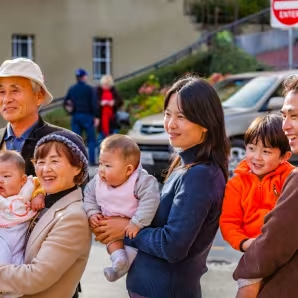
Immigrants from Asia in the United States are a fast-growing group that tends to be highly educated. But wide disparities in income and opportunity exist across national- origin communities.
Criminalizing Irregular Migrant Labor: Thailand’s Crackdown in Context
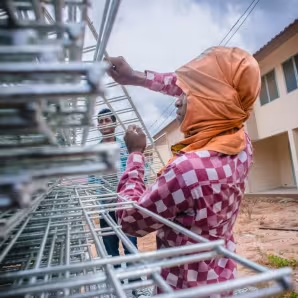
Thailand's 2017 migrant labor decree risks deepening exploitation and excluding the poorest from legal migration channels.
Achieving Skill Mobility in the ASEAN Economic Community: Challenges, Opportunities, and Policy Implications
The ASEAN's skilled-labor mobility goal is far from reality, blocked by credential recognition barriers, national restrictions, and professionals' reluctance to move within the region.

Immigrants from Asia in the United States
In 2014, people born in Asian accounted for 30 percent of U.S. immigrants, with high rates of educational attainment, sizable median incomes, and wide differences across origin groups.

The Southeast Asia-Australia Regional Migration System: Some Insights into the “New Emigration”
The Australia-Southeast Asia migration system is far more multidirectional and complex than the standard destination-sending country framing suggests.

Characteristics of the Asian Born in the United States in 2000
As of 2000, the 8.2 million immigrants from Asia made up 26 percent of the U.S. foreign-born population.

The Foreign-Born Hmong in the United States
More than 15,000 Hmong refugees began resettling in the United States in 2004, joining roughly 103,000 foreign-born Hmong in California, Minnesota, and Wisconsin.