Iraq

Key Statistics
Data are 2024 UN data and may differ from national statistics agencies.
371000
Immigrant Population
0.8%
Immigrant Share of Total Population
2313000
Emigrant Population
All Content
Showing 1–10 of 32 results
To Leave or Stay? Examining the role of counseling and reintegration assistance in the return decision-making of migrants ordered to leave the Netherlands
More counselling and better reintegration support increase uptake of assisted return in the Netherlands, but neither factor alone determines the return decisions of migrants ordered to leave.

Supporting Migrants Returning to Fragile Contexts: Lessons from Iraq and Somalia
Speakers explored challenges in designing and delivering reintegration support in for returning migrants to Iraq, Somalia, and other fragile environments.

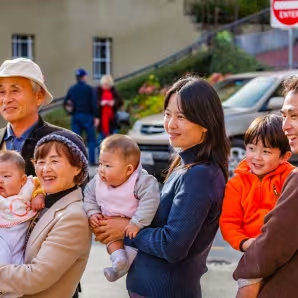
Immigrants from Asia in the United States
Immigrants from Asia in the United States are a fast-growing group that tends to be highly educated. But wide disparities in income and opportunity exist across national- origin communities.
In a Climate Tinderbox, Migration Can Spark Violence
Under what conditions does climate-driven displacement tip from a coping mechanism into a catalyst for violence?

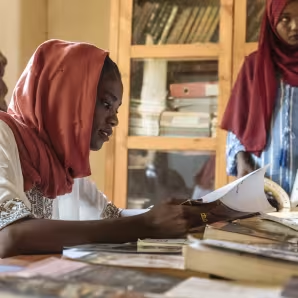
Middle Eastern and North African Immigrants in the United States
U.S. immigrants from the Middle East and North Africa are among the most educated of any foreign-born group. Heavy reliance on humanitarian visas reflect the region's ongoing instability.

Iran Faces Dwindling Water and Escalating Climate Pressures, Aggravating Displacement Threats
Iran's worsening water crisis and climate extremes are fueling internal displacement and emigration, while sanctions prevent adaptation efforts and millions of Afghan refugees face compounding climate risks.

Embedding Reintegration Assistance for Returning Migrants in the Local Context: The role of referrals
Effective reintegration of returning migrants depends on coordinated referral systems that link predeparture assistance with local services in countries of origin.
Middle Eastern and North African Immigrants in the United States
U.S. immigrants from the Middle East and North Africa tend to be highly educated but face high poverty rates and rely heavily on humanitarian and diversity visa pathways.
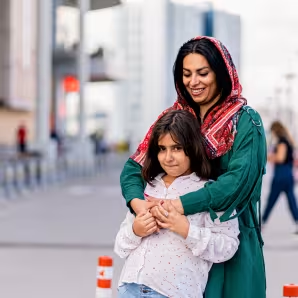
A Bridge to Firmer Ground: Learning from International Experiences to Support Pathways to Solutions in the Syrian Refugee Context
This report draws on international cases to highlight models that could expand Syrian refugees’ access to protection, social safety nets, and education.

Faith and Mental Health Help Shape the Integration of Muslim Refugees in Germany
For Muslim refugees in Germany, faith is a vital coping resource. But anti-Muslim sentiment, underfunded Islamic organizations, and mental health barriers can undermine successful integration.