Jordan

Key Statistics
Data are 2024 UN data and may differ from national statistics agencies.
5280000
Immigrant Population
45.7%
Immigrant Share of Total Population
659000
Emigrant Population
All Content
Showing 1–10 of 20 results
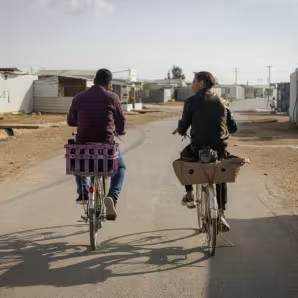
The Fragile Yet Unmistakable Long-Term Integration of Syrian Refugees in Jordan
More than a decade into Syria’s civil war, more than 1.4 million Syrians in Jordan faced fragile, partial integration, with return uncertain and donor support declining.
Middle Eastern and North African Immigrants in the United States
U.S. immigrants from the Middle East and North Africa are among the most educated of any foreign-born group. Heavy reliance on humanitarian visas reflect the region's ongoing instability.

Diverging Paths: The Impacts of COVID-19 on Migration in the Middle East and North Africa
COVID-19 sharpened divides in the MENA region: The mass departure of migrant workers allowed high-income Gulf states to pursue labor reforms, while North Africa and Lebanon faced compounding crises.
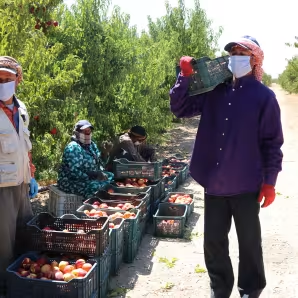
Climate Migration 101: An Explainer
Climate change is reshaping migration globally—but most displacement remains internal and temporary, and no international legal framework protects those forced to move.

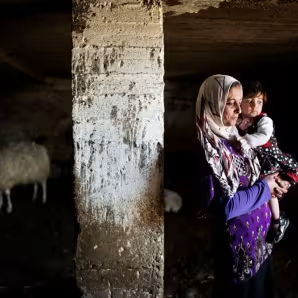
Generations of Palestinian Refugees Face Protracted Displacement and Dispossession
Seventy-five years of displacement left 5.9 million Palestinian refugees stateless across the Middle East, with no political solution in sight and the agency serving them chronically underfunded.
Middle Eastern and North African Immigrants in the United States
U.S. immigrants from the Middle East and North Africa tend to be highly educated but face high poverty rates and rely heavily on humanitarian and diversity visa pathways.
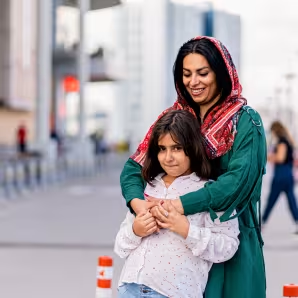
A Bridge to Firmer Ground: Learning from International Experiences to Support Pathways to Solutions in the Syrian Refugee Context
This report draws on international cases to highlight models that could expand Syrian refugees’ access to protection, social safety nets, and education.

Strengthening Refugee Protection in Low- and Middle-Income Countries
With 85 percent of the world's 25.4 million refugees in low- and middle-income countries as of 2017, development actors must help close critical protection gaps.
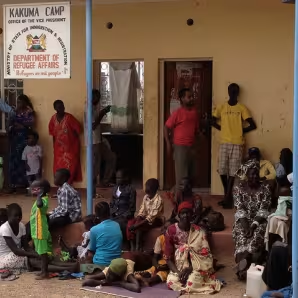
The Educational and Mental Health Needs of Syrian Refugee Children
Syrian refugee children face severe educational disruption and trauma—nearly half display PTSD symptoms—and need sustained, culturally tailored support in host countries.

Syrians on the Edge: The Status of Refugees in Neighboring Countries
A discussion on the effect of the Syrian refugee crisis on Turkey, Lebanon, Jordan, and Iraq.