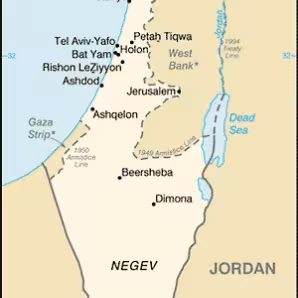
Israel

Key Statistics
Data are 2024 UN data and may differ from national statistics agencies.
2092000
Immigrant Population
22.3%
Immigrant Share of Total Population
325000
Emigrant Population
All Content
Showing 1–9 of 9 results
Immigrants from Asia in the United States
Immigrants from Asia in the United States are a fast-growing group that tends to be highly educated. But wide disparities in income and opportunity exist across national- origin communities.

Diverging Paths: The Impacts of COVID-19 on Migration in the Middle East and North Africa
COVID-19 sharpened divides in the MENA region: The mass departure of migrant workers allowed high-income Gulf states to pursue labor reforms, while North Africa and Lebanon faced compounding crises.

Generations of Palestinian Refugees Face Protracted Displacement and Dispossession
Seventy-five years of displacement left 5.9 million Palestinian refugees stateless across the Middle East, with no political solution in sight and the agency serving them chronically underfunded.
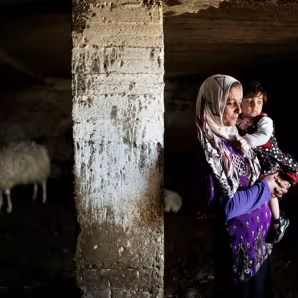
The World Is Witnessing a Rapid Proliferation of Border Walls
The number of border walls has grown sixfold since the Cold War. Research shows they serve mainly as political symbols, failing to stop migration, raising costs, and deepening instability.

Can Diaspora Bonds Supercharge Development Investment?
Many countries attempting diaspora bonds have fallen short, pointing to the limits of diasporas’ altruism as a development finance strategy.

A Warm Welcome for Some: Israel Embraces Immigration of Jewish Diaspora, Sharply Restricts Labor Migrants and Asylum Seekers
Israel's two-tier immigration system grants full citizenship to Jewish diaspora members while offering labor migrants no legal pathway to stay and asylum seekers virtually no protection.

Immigrants from Asia in the United States
In 2014, people born in Asian accounted for 30 percent of U.S. immigrants, with high rates of educational attainment, sizable median incomes, and wide differences across origin groups.

Characteristics of the Asian Born in the United States in 2000
As of 2000, the 8.2 million immigrants from Asia made up 26 percent of the U.S. foreign-born population.

Israel: Balancing Demographics in the Jewish State
Israel's migration policies are shaped by the government's goal of preserving a Jewish demographic majority.