The Health Costs to Children of Stepped-Up U.S. Immigration Enforcement

Evidence suggests heightened U.S. immigration enforcement will have major and lasting effects on the physical and mental health of unauthorized immigrants and their children.
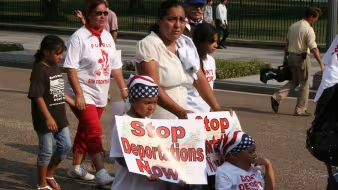
Arrests of unauthorized immigrants are up nationally as the Trump administration begins the process of delivering on its pledge of mass deportations and finding ways to make life uncomfortable enough for people to “self-deport.” While immigration enforcement may be more present in some places than others, communities across the United States are feeling the effects. Many U.S. communities have reported lower foot traffic in stores, restaurants, and other places where immigrants usually congregate. Similarly, many school districts have seen lower student attendance rates as some parents hesitate to send their children to school. In places with large immigrant populations such as New York, Seattle, and Chicago, health-care providers have noted lower numbers of individuals in their waiting rooms, an increase in no-shows, and patients with concerning symptoms hesitating to show up due to fear of immigration enforcement.
Long-held principles guiding law enforcement practices call for order and due process to be carried out within the context of their broader societal consequences. Such norms are of particular importance in immigration enforcement, given its wider impacts on the health of children and families, as well as workplace and community well-being. So the question then becomes: How can immigration enforcement operations be carried out in ways that produce the least amount of harm to individuals, children in particular?
The Impact on Community Health
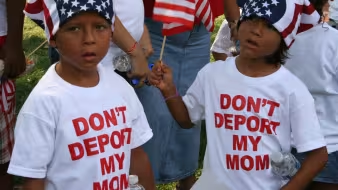
A large body of academic research conducted during prior periods of high immigration enforcement activity shows that no matter the actual level of enforcement, heightened fear of arrest and deportation has major and lasting effects on the physical and psychological health and well-being of unauthorized immigrants and particularly on their children, most of whom are U.S. born.
A climate that emphasizes immigration enforcement can have direct consequences on the health status of unauthorized and mixed-status families by discouraging access to health care. Avoiding health clinic visits due to fear of enforcement can lead to further, and more costly, complications. Mild symptoms that go undiagnosed can turn a manageable situation into permanent damage. Some individuals need life-saving treatments such as dialysis. Higher-risk groups such as people with chronic diseases, pregnant women, and newborns need consistent health care.
The threat of deportation can be a major source of stress that also affects physical health. Studies have found that stress related to immigration enforcement may have consequences for pregnant women and their babies in utero. In 2008, close to 400 workers were arrested at a meat processing plant in Iowa, in one of the largest worksite operations in U.S. history. Nearly all were Latino and presumed to be unauthorized immigrants. This event triggered a high level of fear within the broader Latino community in Iowa. A study found that Latina women in Postville, Iowa who had been in late pregnancy at the time of the arrests had a higher risk of preterm labor compared to non-Latina White women. Babies born to Latina women during that period also had a 24 percent increased risk of low birth weight compared to babies born earlier that year.
Collective stress and stigma against specific communities can also lead to anxiety and depression, which can disrupt daily activities and reduce productivity at work and at school. A Migration Policy Institute (MPI) study during the period of increased arrests by U.S. Immigration and Customs Enforcement (ICE) under the first Trump term found that close to 6 in 10 Latino high school-age youth surveyed either knew someone who had been deported or feared they, or a relative could be deported. More than half of Latino students had experienced anxiety, post-traumatic stress disorder (PTSD), or depression. A recent survey of views of immigration policy during the second Trump term shows similar trends, with 41 percent of lawfully present immigrants saying they were stressed and having trouble eating or sleeping, due to enforcement fears. The impact is being felt disproportionately by the Latino community.
Sensitive Locations
Some immigrants report feeling unsafe leaving their homes due to the fear of being targeted, thereby reducing opportunities for positive and healthy interactions within communities. Health clinics, schools, and religious institutions—previously were off limits to immigration enforcement but no longer are given the administration’s lifting of the “sensitive locations” policy. (While faith-based organizations are no longer protected from immigration enforcement, a court order has blocked ICE activity in certain places of worship in 36 states.) Already, immigration officers have gone to U.S. schools to conduct surprise “wellness checks” on students who arrived as unaccompanied children.
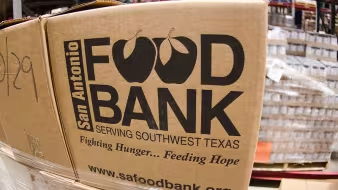
As a result of lifting the sensitive locations policy, individuals may have lost access to information vital to individual and community health and well-being. Health-care facilities and schools are among locations that play a central role in providing individuals with key information in trusted environments. Federally qualified health clinics, for example, offer preventive care for all individuals regardless of immigration status. School-provided services are an opportunity to ensure the well-being of children, through vaccination schedules, meal programs, and mental health services. And faith groups not only offer spiritual guidance and community support during hard times, but they also use some of their resources to serve the less fortunate through information-sharing, food banks, and by providing shelter and related services. Immigration enforcement in such locations restricts access to vital information for broader community health and well-being.
Spillover Effects on the Broader Community
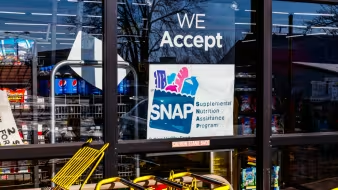
U.S.-born children living in mixed-status families with an unauthorized immigrant parent are especially vulnerable in the current environment. (In 2023, children in immigrant households of all legal statuses represented one-quarter of all children in the United States.) Children must depend on their parents to enroll in programs for low-income populations such as Medicaid, the Children’s Health Insurance Program (CHIP), or Special Supplemental Nutrition Program for Women, Infants, and Children (WIC). Studies have shown that past high-enforcement periods had chilling effects on immigrant participation in public benefits, including for U.S.-citizen children in mixed-status families and eligible noncitizens, due to the fear of immigration consequences.
In turn, lower access to nutritional assistance and health insurance coverage for children in mixed-status families has been associated with higher food insecurity, lesser health outcomes, and a rise in childhood poverty. In the aftermath of the 1996 federal restrictions on immigrant access to public benefits, the negative consequences on the health of children of noncitizens were shown to be disproportionately high and persistent over time.
More broadly, fear caused by enforcement rhetoric from officials can sow distrust in institutions and discourage interactions and information-sharing with government agencies overall. In the face of public health crises such as the COVID-19 pandemic, and the current measles outbreak, public messaging and recommendations such as vaccination campaigns must be trusted so that all individuals, regardless of their immigration status, can participate in keeping communities healthy.
Adjusting Enforcement
Whether the Trump administration’s mass deportation efforts reach their goals or not, the indiscriminate nature of the immigration enforcement is undoubtedly already having adverse consequences on the health of immigrants, their children, and the broader community. Early surveys suggest that the current climate is already showing a chilling effect on health-care access that will likely depress the participation of U.S.-born children in mixed-status households in health and nutritional programs. Past experiences suggest that lower health outcomes can be expected for these children, as well as for pregnant women and their newborns. There is a clear relationship between high immigration enforcement actions, physical and mental stress, poor health outcomes, and the risk of mental health problems that carry into adulthood.
Based on past studies and media coverage of recent enforcement actions, the climate of fear and anxiety can transcend immigration status and lead to stigmatizing broader groups that are perceived to be unauthorized immigrants. For a long time, people of Mexican origin, born in the United States or not, have been subject to this stigma. Other communities including Asians, Central Americans, Haitians, and more recently, Venezuelans who have been linked to the South American gang Tren de Aragua are now being caught up in such stereotypes.
Concerns about discrimination and due process are spreading. Lawyers, school officials, health practitioners, faith leaders, civil-rights activists, and elected officials are reporting signs of the deleterious fallout on their communities, immigrant and U.S. born alike, from the new enforcement practices.
One way to ensure immigration enforcement does not jeopardize society’s evident interest in public health and community well-being would be to revisit the lifting of ICE’s sensitive locations policy and re-enshrine the idea of safe spaces.
The administration has shown some willingness, albeit temporarily, to consider the impact of enforcement on specific industries, in particular farms, eating establishments, and hotels. Considering the impact on families through the way immigration enforcement takes place should be a logical next step. This would ensure that immigrants and their children can get needed preventive health care and medical treatment, at a minimum, as well as safe access to faith-baith institutions and schools, which are important places for immigrant parents to share and receive health information for themselves and their children.
About the U.S. Immigration Policy Program
The U.S. Immigration Policy Program provides analysis of U.S. immigration pathways, the impacts of enforcement and other policies, and the characteristics of immigrant populations.

Related Content