Making Asylum Systems Work in Europe
The Common European Asylum System (CEAS) is greatly in need of reform. Its deficiencies became fully evident amid drastic increases in the number of people seeking refuge in Europe during 2015 and 2016. Beyond huge pressures placed on southern EU Member States Italy, Greece, and Spain by the Dublin Regulation, flaws in the other CEAS pillars worsened as well. Reception conditions and asylum procedures, for example, have varied widely by Member State, contributing to secondary movements of asylum seekers to just a few countries within Europe.
This initiative, led by MPI Europe and the Bertelsmann Stiftung, aimed to contribute to the capacity building of national asylum systems so they can function more effectively. The research here identifies common challenges and obstacles preventing EU Member States from effectively transposing EU asylum legislation into operational on-the-ground action, also analysing national asylum policies, practices, and mechanisms used successfully to address obstacles, with a view to their transferability. Finally, it aims to promote exchange and cooperation in Member States to facilitate the harmonisation of asylum policies and practices across Europe.
Showing 1–2 of 2 results
Chasing Efficiency: Can operational changes fix European asylum systems?
Since Europe's 2015–16 migration crisis, EU countries have tested operational asylum reforms, yielding mixed but instructive results.
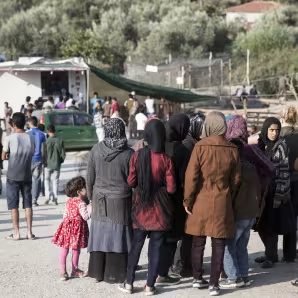
Cracked Foundation, Uncertain Future: Structural weaknesses in the Common European Asylum System
Structural deficiencies embedded across every stage of the Common European Asylum System long predated the 2015–16 migration crisis, and legal reform alone cannot resolve them.